
Embroidery vs. Woven Labels vs. Heat Press for Custom Apparel Sourcing (2026 Guide)
 ·
Updated October 1, 2026
·
20 min read
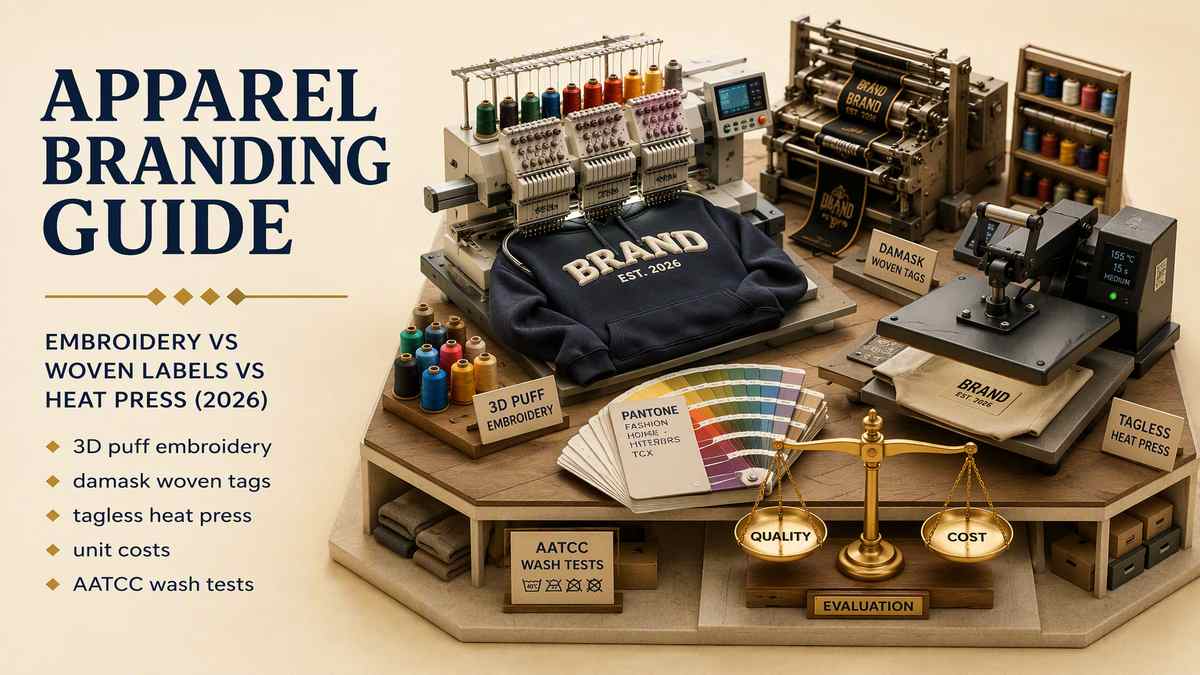
Direct Answer: In 2026, choosing between Computer Embroidery, Damask Woven Labels, and Tagless Heat Press for custom apparel manufacturing in China comes down to placement zone, fabric weight, skin comfort, and manufacturing cost structure. The 10-second rule for fashion brands is clear: (1) Tagless Heat Press Transfers (\$0.08–\$0.25/pc) are the undisputed standard for inside back neck size and care labels on t-shirts, activewear, and underwear, providing 100% scratch-free skin comfort and full-color fidelity; (2) High-Density Damask Woven Labels (\$0.03–\$0.10/pc) are the gold standard for main neck labels, hem fold tags, and outer brand signatures on shirts and jackets, offering ultra-soft ultrasonic cut edges and indestructible wash longevity; (3) Custom Embroidery & 3D Puff Embroidery (\$0.25–\$0.90/pc) is the premier choice for heavyweight hoodies (350–500gsm), left chest logos, outerwear patches, and structured caps, delivering high-end tactile luxury that will never peel or fade across hundreds of laundry cycles.
When launching a private label clothing brand or merchandise collection with Chinese apparel manufacturers in Zhejiang (Ningbo, Yiwu) and Guangdong (Guangzhou, Dongguan), your choice of branding execution defines whether customers perceive your product as a \$15 cheap promotional tee or an \$85 premium designer garment.
Many new fashion founders make critical mistakes: sewing scratchy hot-cut labels that customers cut off with scissors, putting heavy embroidery on lightweight jersey tees that causes fabric puckering, or using low-grade heat transfer adhesives that crack in commercial laundry dryers.
In this comprehensive 2026 garment sourcing guide, we put Embroidery, Woven Labels, and Heat Press into a head-to-head showdown across 7 manufacturing dimensions, map out the 4 key branding zones on garments, break down AATCC 61 wash testing standards, expose 3 common factory shortcuts, and provide a 5-step SOP to source custom apparel branding with zero defects.
Embroidery vs. Woven Labels vs. Heat Press: Head-to-Head Comparison
To evaluate these three apparel branding technologies side by side, review this comparative manufacturing matrix:
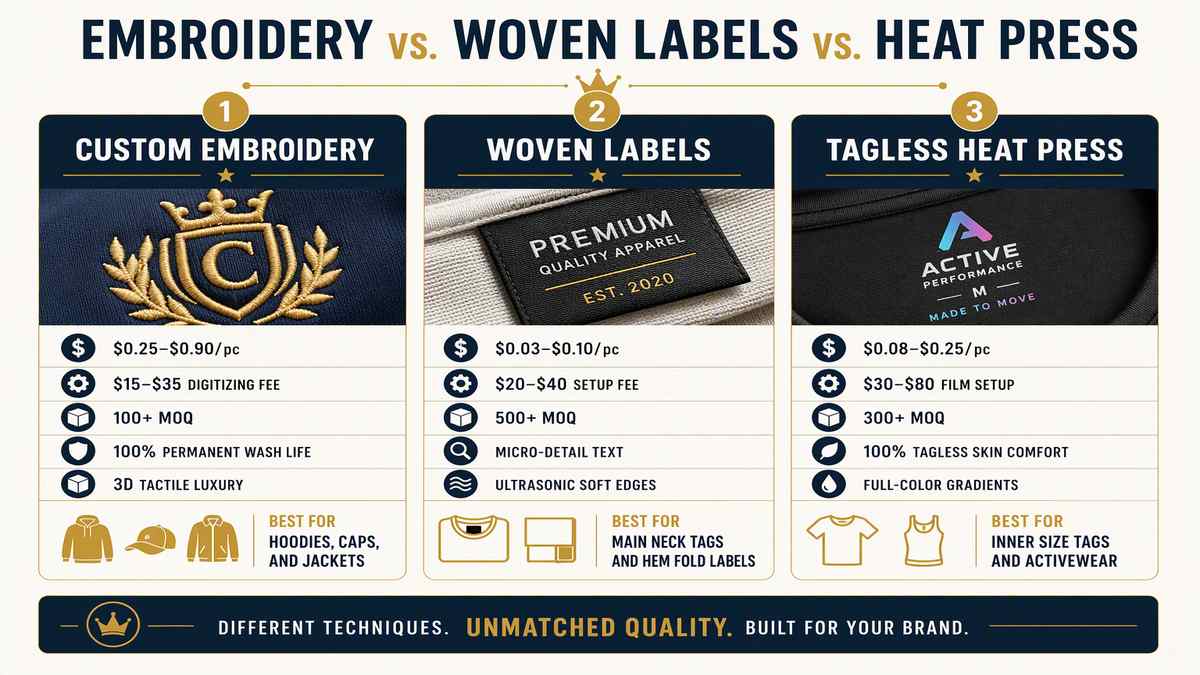
| Evaluation Dimension | 1. Custom Embroidery (电脑刺绣 / 3D绣) | 2. Woven Labels (高密提花织唛) | 3. Tagless Heat Press (无感热转印) |
|---|---|---|---|
| Unit Application Cost (USD) | $0.25 – $0.90 (Based on stitch count: 5k–15k). | $0.03 – $0.10 (Lowest unit cost). | $0.08 – $0.25 (Moderate). |
| Setup & Tooling Fees | $15 – $35 (One-time Digitizing fee). | $20 – $40 (Loom setup & sample card). | $30 – $80 (Film printing plate). |
| Typical Minimum Order (MOQ) | 100 – 300 pcs (Flexible). | 500 – 1,000 pcs (Stocked for repeat batches). | 300 – 500 pcs. |
| Direct Skin Comfort Level | Moderate (Requires soft backing interlining). | High (Requires Ultrasonic Soft Cut). | Maximum 100% (Zero scratch, tagless). |
| Fine Detail & Micro-Text | Limited (Minimum text height: 4.0 mm). | High Precision (Text down to 1.5 mm). | Photorealistic (Micro-text down to 1.0 mm). |
| Wash Durability & Lifespan | 100% Permanent (Never fades or peels). | Indestructible (Outlasts the garment). | High (50+ hot wash cycles with PU/Silicone). |
| Best Garment Fabric Types | Heavyweight cotton hoodies, fleece, denim, caps. | Woven shirts, jackets, knitwear, hem tags. | Lightweight tees, activewear, swimwear, modal. |
In-Depth Technical Breakdown of the 3 Apparel Branding Methods
To choose the right method for your garment tech pack, let us examine the mechanical engineering principles behind each technique:
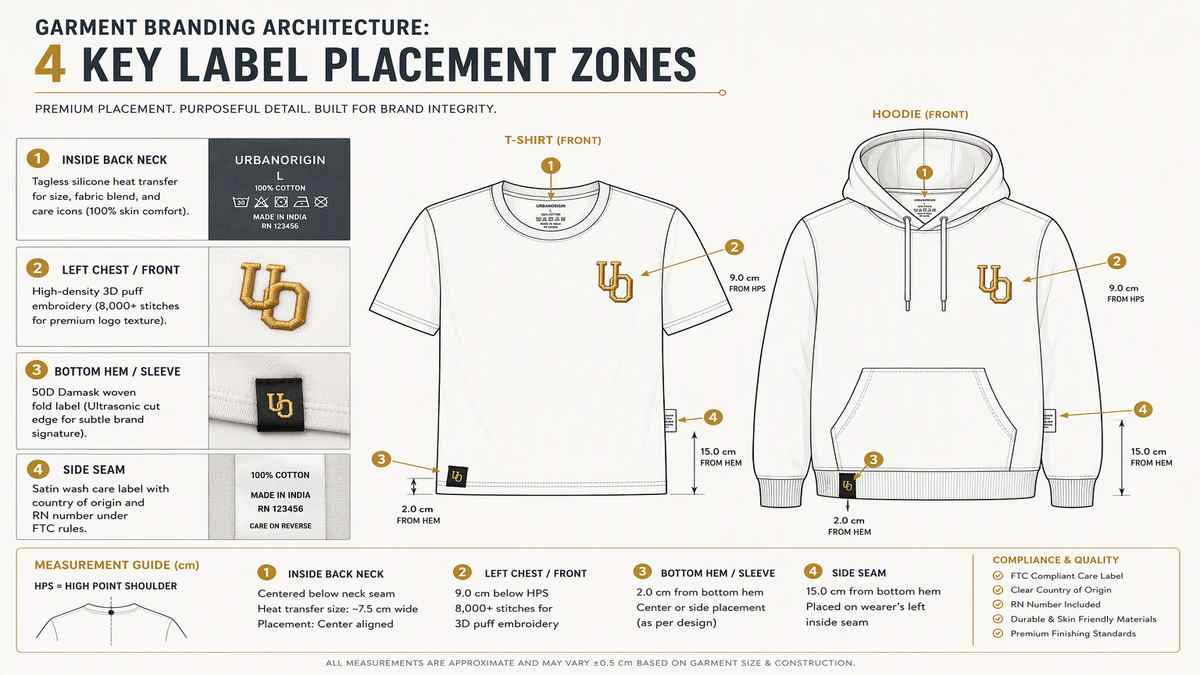
Garment Branding Architecture: 4 Key Label Placement Zones
High-end streetwear and fashion brands combine multiple branding techniques across four standardized zones:
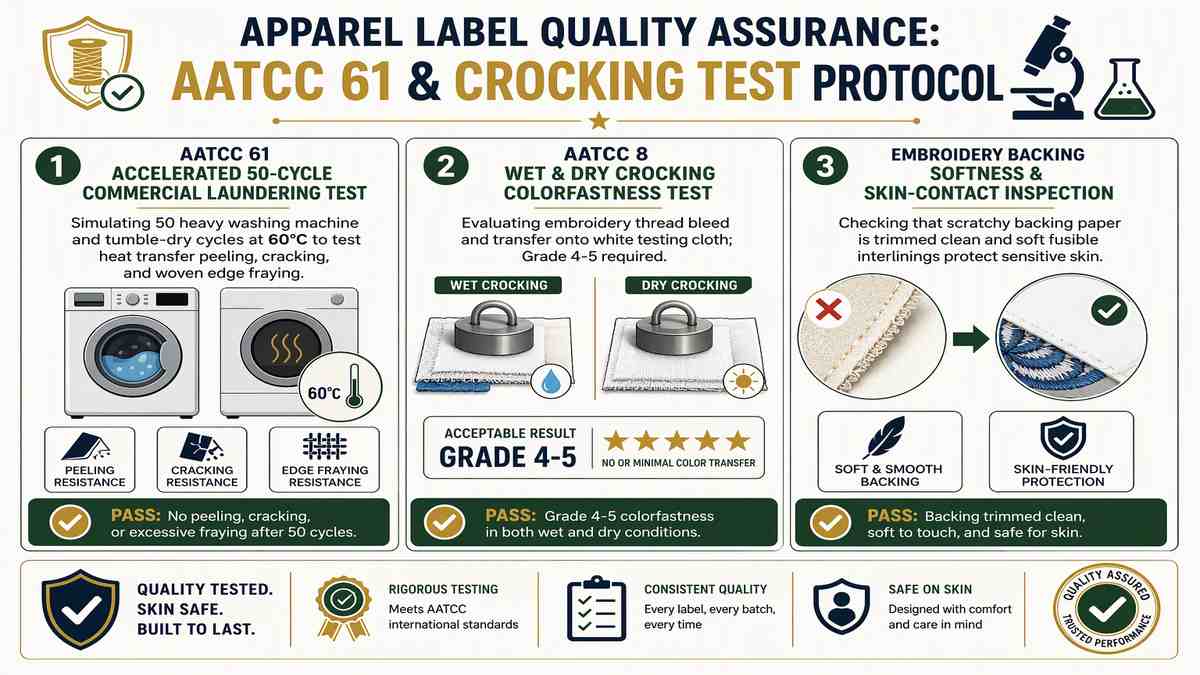
Quality Assurance: AATCC 61 Wash Durability & Crocking Test Protocol
To guarantee that your apparel labels withstand strict commercial laundering, mandate these three textile testing protocols:
3 Dirty Tricks in Apparel Branding & How to Prevent Them
Low-cost garment factories cut corners on branding trims to boost profit margins. Watch out for these three practices:
5-Step SOP for Sourcing Custom Apparel Labels & Embroidery in China
Follow this standard operating procedure to execute your private label apparel branding with zero defects:
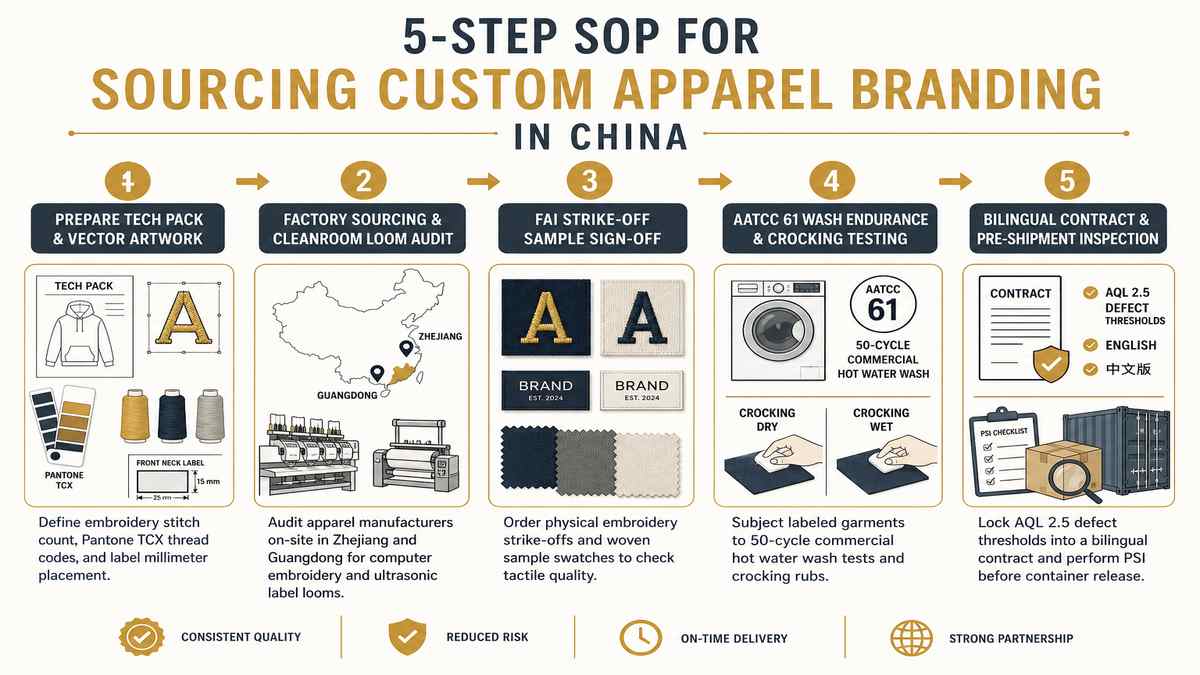
- Prepare Garment Tech Pack & Vector Artwork: Build full CAD tech packs specifying exact millimeter placement for neck transfers, embroidery stitch counts, and exact Pantone Fashion Home + Interiors (TCX) color codes, as detailed in our guide on how to put your logo on products from China.
- Audit Apparel Manufacturer & Tooling Lines: Audit bidding cut-and-sew factories in Zhejiang and Guangdong under our China factory audit checklist review, checking automated computer embroidery heads and ultrasonic label looms.
- Sign Enforceable Bilingual Manufacturing & Trim Contract: Lock label specifications, wash durability warranties, and defect penalties into an enforceable bilingual manufacturing sales contract under PRC law, leveraging insights from our guide on silkscreen vs laser vs heat transfer printing methods.
- Inspect Physical Strike-Off Swatches with FAI Sign-off: Order physical fabric strike-offs (embroidered swatches, woven label mockups, and pressed transfers) and execute a formal first article inspection (FAI) sample review before approving full garment sewing.
- Perform AATCC 61 Wash Testing & Pre-Shipment Inspection (PSI): Conduct accelerated laundry testing and execute a comprehensive pre-shipment inspection (PSI) in China under strict AQL 2.5 standards for stitching tension, label centering, and fold alignment before releasing container balances.
Illustrative Scenario: How a Los Angeles Brand Perfected Hoodie Branding
To see how multi-layered branding builds massive perceived luxury, review this streetwear apparel case study:
A streetwear clothing brand in Los Angeles, California developed a custom 450gsm heavyweight French terry cotton hoodie (3,000-unit initial production run, \$54,000 total order value).
- The Initial Single-Print Flaw: The factory initially suggested screen-printing the entire brand package (neck, chest, and hem) to save costs. However, during Sourcing Pioneer’s initial FAI sample review, the printed neck label felt rubbery against the skin, and the screen-printed chest logo lacked the heavy luxury aesthetic needed for an \$85 retail price point.
- The Multi-Tiered Branding Upgrade: Sourcing Pioneer re-engineered the branding architecture: (1) Inside neck: Tagless 1-color matte grey silicone heat transfer (\$0.12/pc), (2) Left chest: 8,500-stitch 3D Puff Embroidery in matte black thread (\$0.48/pc), and (3) Left bottom hem: 50D Damask woven fold label with ultrasonic soft edges (\$0.06/pc). Total extra trim cost: only \$0.66 per hoodie.
- Strict Laundry & Crocking Sign-Off: Production samples underwent 50 cycles of AATCC 61 commercial laundering with zero thread loosening, zero transfer peeling, and Grade 4.5 crocking colorfastness.
- The Commercial Outcome: The 3,000 hoodies sold out within 3 weeks of launch, achieving a 4.9-star rating, zero customer itch complaints, and generating over \$250,000 in gross revenue with a 38% customer repeat repeat order rate.
Frequently Asked Questions (FAQ)
Which branding method is best for clothing neck labels?
Tagless heat press transfers are the premier choice for inside neck labels on t-shirts, athletic wear, and loungewear because they provide 100% skin comfort with zero scratching. For high-end streetwear hoodies and outerwear, damask woven labels with ultrasonic soft edges provide classic luxury brand identity.
What is the unit cost difference between custom embroidery and woven labels in China?
Woven labels cost only $0.03 to $0.10 per piece with a low setup fee of $20 to $40. Custom embroidery costs $0.25 to $0.90 per piece depending on stitch count (e.g., 5,000 to 12,000 stitches) plus a one-time digitizing fee of $15 to $35.
What is 3D puff embroidery and when should you use it?
3D puff embroidery places high-density EVA foam under the embroidery stitches, raising the logo 2mm to 3mm off the fabric surface. It is the premier choice for structured snapback hats, baseball caps, and heavy streetwear hoodie chest logos.
How do you test if heat press neck labels will peel or crack after washing?
Conduct the AATCC 61 Accelerated Laundering Test by running labeled garments through 50 commercial hot water (60C) washing and high-heat tumble drying cycles to check for edge peeling, cracking, or color fading.
What information is legally required on garment care labels under FTC rules?
Under FTC textile rules, clothing labels must clearly state: (1) Fiber content percentages (e.g., 100% Cotton), (2) Country of origin (e.g., Made in China), (3) Manufacturer identity (RN number or brand name), and (4) Care washing instructions.
Apply Premium Embroidery, Woven Labels & Heat Transfers to Your Apparel Line
Our China apparel sourcing team reviews your tech pack vector artwork, checks Pantone TCX thread matching, inspects ultrasonic label cuts, and oversees on-site AATCC 61 wash endurance testing.
Get Free Apparel Tech Pack & Branding Consultation
Questions & Comments
We read every one and reply within 24 hoursComparing embroidery stitch counts, damask woven labels, or tagless heat press transfers for your apparel tech pack, wondering about AATCC wash testing, or need on-site garment inspection in Ningbo or Guangzhou? Post your apparel sourcing questions below — our on-the-ground manufacturing specialists will guide your branding decisions.