
How to Put Your Logo on Products from China: 8 Private Label Printing Methods & Costs (2026 Guide)
 ·
Updated September 30, 2026
·
20 min read
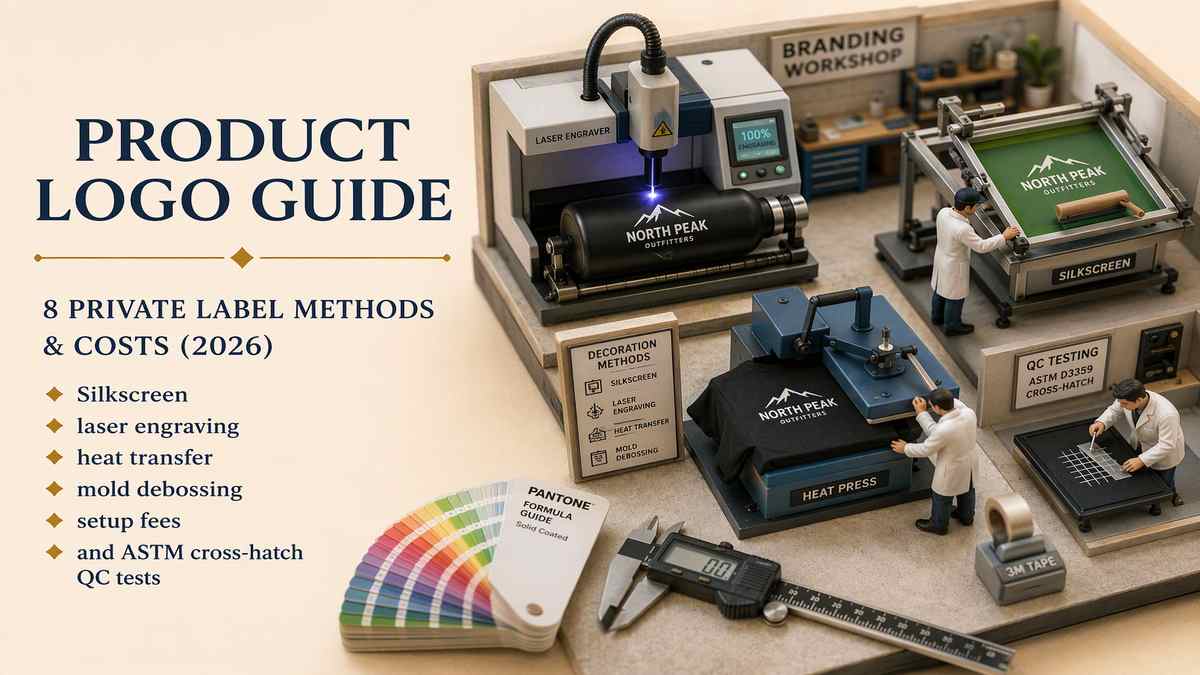
Direct Answer: Putting your custom logo on products manufactured in China is the foundation of building a profitable private label brand. In 2026, Chinese factories offer 8 primary industrial branding methods: Silkscreen Printing (lowest unit cost at \$0.03–\$0.10/pc for flat surfaces), Laser Engraving (\$0.05–\$0.20/pc with \$0 setup fees for permanent metal and wood marks), Heat Transfer (\$0.10–\$0.40/pc for full-color gradients on fabrics and drinkware), Pad Printing (\$0.04–\$0.12/pc for curved 3D plastic/metal parts), Debossing & Embossing (\$0.05–\$0.15/pc with \$30–\$80 brass molds for leather and packaging), Molded-in Tooling Engraving (\$0 unit cost with \$100–\$300 mold inserts for permanent plastic/silicone branding), Embroidery & Woven Labels (\$0.15–\$0.60/pc for textiles), and UV Flatbed Printing (\$0.15–\$0.50/pc for multi-color prototypes). Choosing the right method depends on your substrate material, curve geometry, order volume, and passing ASTM D3359 cross-hatch tape adhesion tests.
Whether you are launching an e-commerce brand on Shopify, Amazon, or TikTok Shop, adding your custom logo transforms a generic commodity into a high-margin proprietary asset. However, many new importers make costly mistakes: sending low-resolution JPEG files, failing to specify Pantone color codes, or choosing a printing method that peels off after three washes.
In this comprehensive 2026 engineering guide, we break down the 8 private label logo printing methods across unit costs, setup plate fees, and MOQs, provide a production-ready tech pack checklist, detail the essential ASTM adhesion quality control tests, and outline a 5-step SOP to execute flawless product branding with Chinese suppliers.
8 Private Label Logo Printing Methods in China: Costs, MOQs & Materials
To select the most cost-effective and durable branding method for your product, review this comparative engineering matrix:
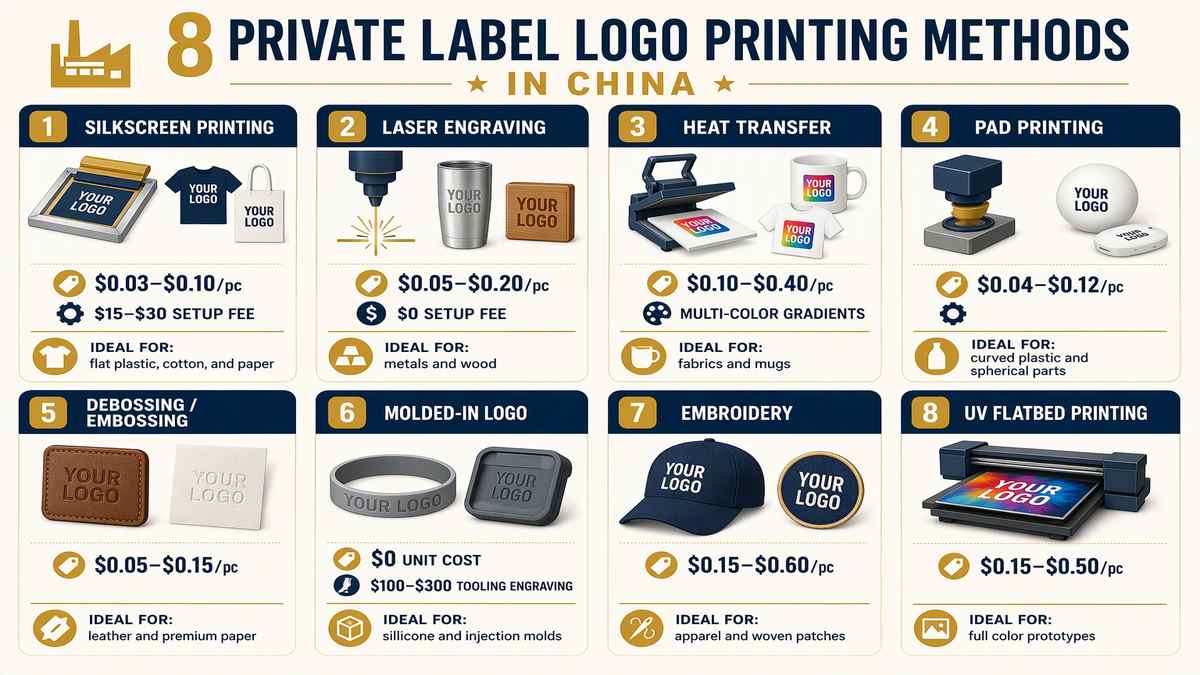
| Logo Printing Method | Unit Cost (USD) | Setup / Mold Fee | Typical MOQ | Best Substrate Materials | Durability Rating |
|---|---|---|---|---|---|
| 1. Silkscreen Printing (丝网印) | $0.03 – $0.10 | $15 – $30 per color | 500 – 1,000 pcs | Flat plastic, cotton, paper boxes, glass, flat metal. | High (Good wear resistance) |
| 2. Laser Engraving (激光雕刻) | $0.05 – $0.20 | $0 (Zero Setup) | 50 – 200 pcs | Stainless steel, aluminum alloys, wood, bamboo, genuine leather. | Permanent (Will never rub off) |
| 3. Heat Transfer Printing (热转印) | $0.10 – $0.40 | $50 – $100 per plate | 1,000 pcs | Polyester, nylon, ceramic mugs, coated plastic bottles. | Moderate to High |
| 4. Pad Printing / Tampography (移印) | $0.04 – $0.12 | $20 – $40 per steel plate | 500 – 1,000 pcs | Curved plastic housings, golf balls, pens, spherical tools. | High (Handles 3D curves) |
| 5. Debossing / Embossing (压印/烫金) | $0.05 – $0.15 | $30 – $80 (Brass stamp) | 300 – 500 pcs | Genuine leather, PU leather, paperboard, notebook covers. | Permanent (Physical 3D indent) |
| 6. Molded-in Tooling Logo (开模刻字) | $0 (Free per piece) | $100 – $300 (CNC insert) | 1,000 – 3,000 pcs | Injection molded plastics (ABS, PP, PC), compression silicone. | Indestructible (Part of material) |
| 7. Embroidery & Woven Labels (刺绣/织唛) | $0.15 – $0.60 | $20 – $50 (Digitizing) | 300 – 500 pcs | Apparel, hats, canvas bags, premium textiles. | Very High (Wash resistant) |
| 8. UV Flatbed Printing (UV平板喷绘) | $0.15 – $0.50 | $0 (Digital file) | 10 – 100 pcs | Phone cases, acrylic, prototypes, small multi-color batches. | Moderate (Cured with UV light) |
Deep-Dive: How Each Logo Printing Method Works in Chinese Factories
To choose the best method for your specific product line, let us examine the mechanical advantages and limitations of each branding technology:
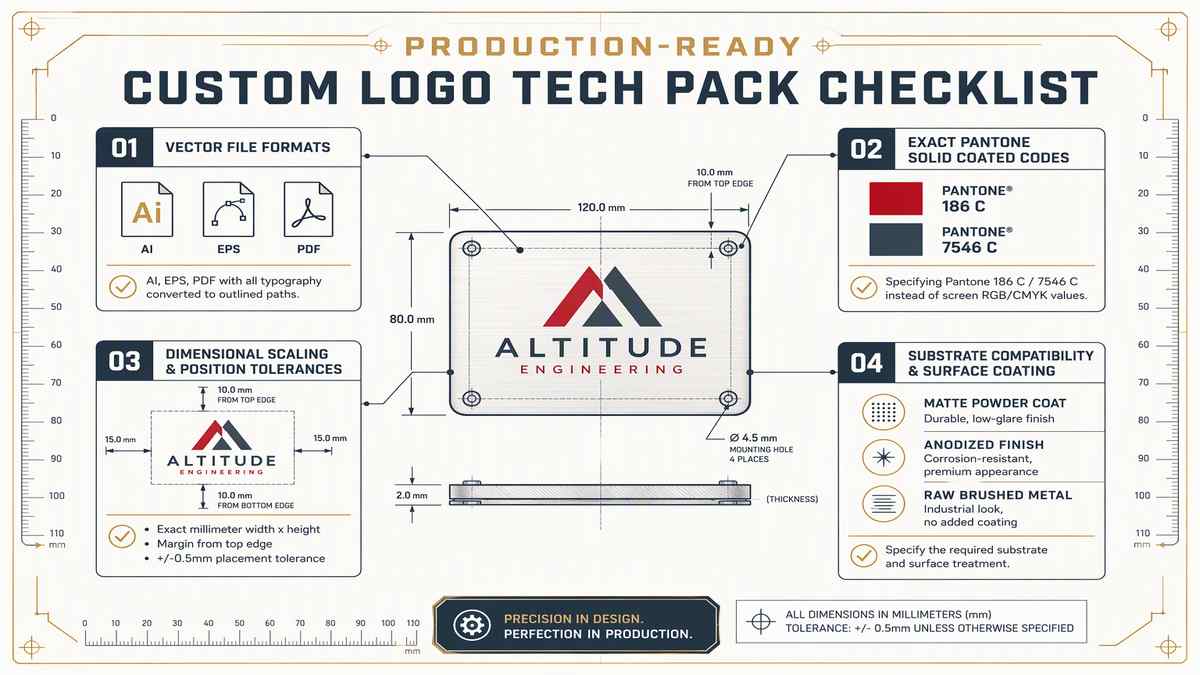
The Production-Ready Logo Tech Pack Checklist
To avoid misprints, blurred lines, and color shifts when working with Chinese factory technicians, provide this standardized branding blueprint:
3 Essential Quality Control Tests for Product Logos
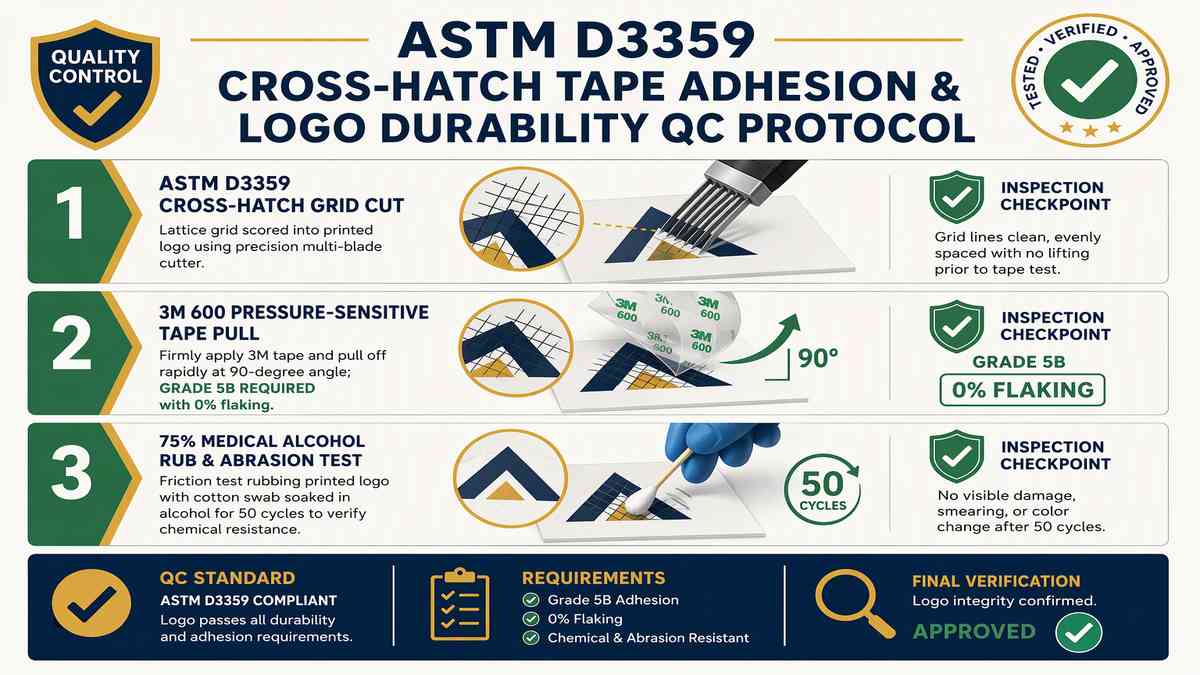
A beautiful logo that rubs off during shipping or customer use leads to negative product reviews and brand damage. Enforce these three standard factory tests:
5-Step SOP for Putting Your Private Label Logo on Products from China
To move smoothly from initial branding concept to inspected container loading, follow this 5-step procurement workflow:
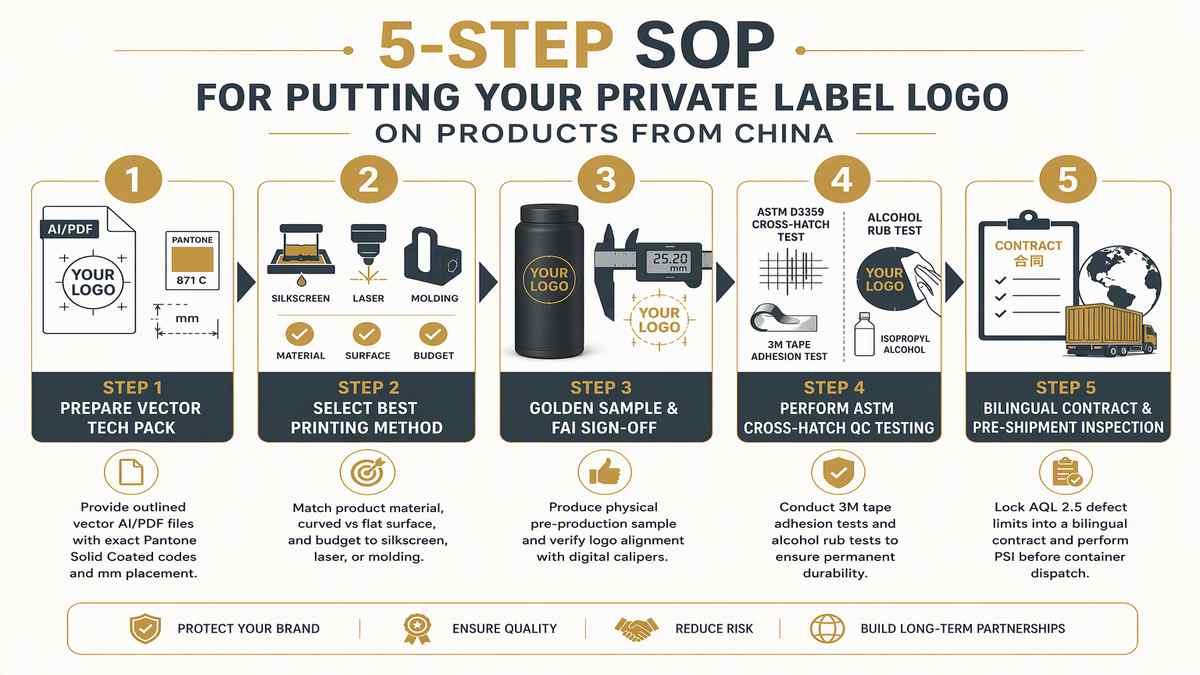
- Prepare Your Outlined Vector Tech Pack: Generate high-precision vector AI/PDF files with converted font outlines, exact Pantone C color callouts, and 2D millimeter placement dimensions.
- Match Printing Method to Material & Volume: Evaluate your order size and substrate to choose between silkscreen, laser engraving, pad printing, or heat transfer, following guidance from our Alibaba RFQ factory quotation guide.
- Produce & Sign Off on Physical Golden Samples (FAI): Never approve mass printing based on digital mockups alone. Pay for a physical pre-production sample and execute a formal first article inspection (FAI) sample review to check logo sharp alignment with digital calipers.
- Conduct On-Site Factory Audit & Lock Bilingual Contracts: Conduct an on-site factory audit checklist review and draft an enforceable bilingual sales contract under PRC law that explicitly states ASTM D3359 5B adhesion standards, AQL 2.5 defect thresholds, and factory-funded rework penalties for logo defects.
- Gate Final 70% Balance on Pre-Shipment Inspection (PSI): Dispatch an independent quality inspector to perform a comprehensive pre-shipment inspection (PSI) in China, checking print consistency, barcode readability, and tape adhesion before container dispatch.
Illustrative Scenario: How a New York Fitness Brand Perfected Bottle Branding
To see how professional logo engineering prevents expensive product returns, review this custom drinkware case study:
A fitness lifestyle brand in New York City ordered 3,000 custom matte black stainless steel insulated water bottles (\$21,000 total order value) for their direct-to-consumer launch.
- The Initial Water Transfer Disaster: The factory initially recommended low-cost water transfer decals (\$0.08/pc). However, during Sourcing Pioneer’s sample evaluation, the decals failed a standard 50-cycle dishwasher test, flaking off around the sharp edges of the typography.
- The Precision Laser Engraving Upgrade: Sourcing Pioneer advised the brand to switch to precision fiber laser engraving. Because the bottles featured a matte black powder-coated exterior, the laser cleanly burned through the black powder coat to expose the gleaming 304 stainless steel base metal. Setup fees were \$0, and unit cost increased by only \$0.12 per piece.
- Testing & Inspection Sign-off: The laser-engraved golden sample passed 100 cycles of alcohol rub testing and 10 dishwasher cycles with 100% zero degradation. Sourcing Pioneer inspected the 3,000-unit mass production run with calipers and cross-hatch checks, finding zero print flaws.
- The Commercial Outcome: The bottles launched smoothly on Shopify with a 4.9-star customer rating, zero peeling complaints, and generated over \$95,000 in first-quarter sales.
Frequently Asked Questions (FAQ)
What is the cheapest way to put a custom logo on products in China?
For small batches and metals, laser engraving is the cheapest because it has $0 setup/plate fees and costs only $0.05 to $0.20 per piece. For large production runs (1,000+ pcs) on flat surfaces, silkscreen printing is the most economical, costing $0.03 to $0.10 per piece with a one-time plate setup fee of $15 to $30 per color.
What file format do Chinese factories need to print a custom logo?
Factories require vector engineering files in Adobe Illustrator (AI), EPS, or vector PDF format with all text converted to outlined paths. You must also supply exact Pantone Solid Coated (C) color codes rather than screen RGB or CMYK values to avoid color drift.
How do you test if a printed logo will scratch off or fade?
Use the ASTM D3359 Cross-Hatch Tape Adhesion Test: score a 1mm x 1mm lattice grid into the printed logo with a blade, firmly apply 3M 600 pressure-sensitive tape, and pull off rapidly at 90 degrees (Grade 5B requires 0% flaking). Also perform a 50-cycle 75% alcohol friction rub test.
What is the difference between debossing and embossing on leather products?
Debossing presses your logo into the material, creating a sunken, indented impression. Embossing pushes the material up from underneath, creating a raised, 3D relief. Both require a custom CNC-cut metal brass stamp costing $30 to $80.
Can you put a custom logo on existing open-mold products on Alibaba?
Yes. Most Chinese factories gladly print your logo on existing open-mold stock products using silkscreen, laser engraving, pad printing, or heat transfer, typically requiring low MOQs of 200 to 500 units.
Apply Flawless Custom Logos to Your China Manufactured Products
Our China engineering and quality control team reviews your vector CAD artwork, checks Pantone color matching, oversees pre-production sample stamping, and conducts on-site ASTM adhesion testing.
Get Free Private Label Branding Consultation
Questions & Comments
We read every one and reply within 24 hoursWondering which printing method is best for your product material, need help reviewing vector tech packs or Pantone color codes, or want on-site ASTM adhesion testing in China? Post your branding questions below — our on-the-ground engineering specialists will guide your private label execution.