
Eco-Friendly & Biodegradable Packaging Options for Chinese Manufacturing (2026 Guide)
 ·
Updated October 1, 2026
·
20 min read
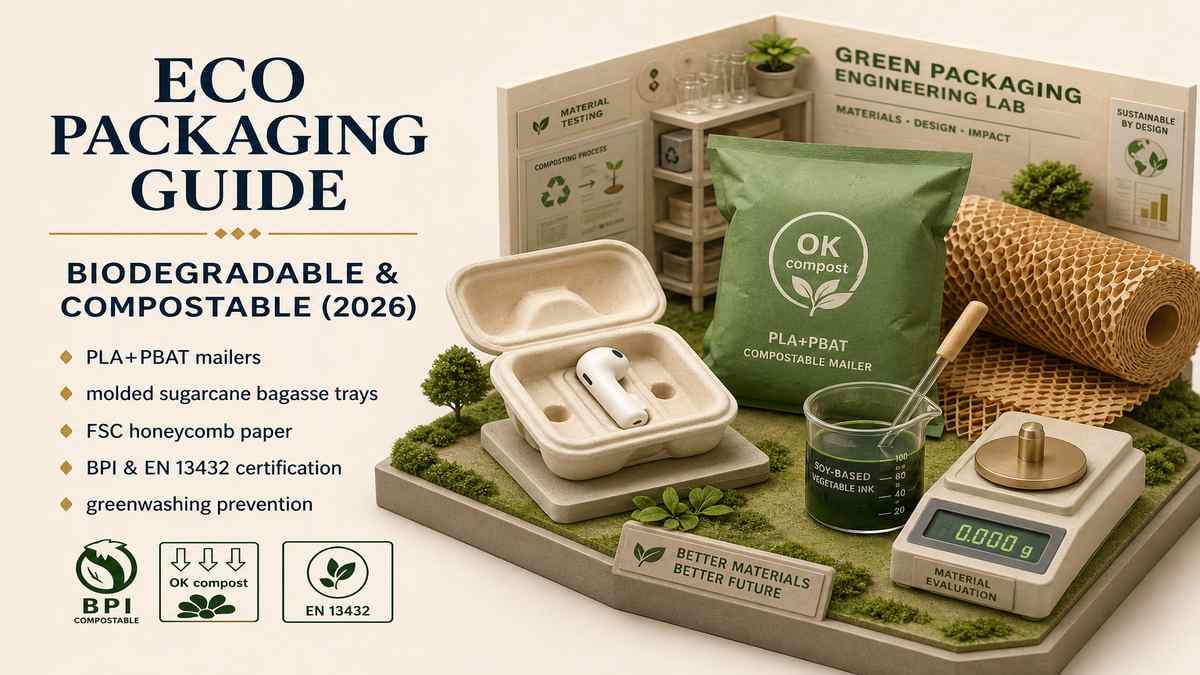
Direct Answer: In 2026, transitioning to Eco-Friendly and Biodegradable Packaging in China is no longer just a marketing luxury—it is an urgent regulatory and commercial requirement driven by strict European Union Packaging Waste Directives (PPWD) and US state-level single-use plastic bans. Chinese packaging hubs in Zhejiang, Guangdong, and Jiangsu offer five mature, scalable sustainable packaging technologies: (1) PLA+PBAT Compostable Bio-Polymer Mailers & Bags (\$0.08–\$0.22/pc), certified under BPI (ASTM D6400) and TÜV Austria (EN 13432) to decompose 100% into water, CO2, and organic biomass in 180 days; (2) Thermoformed Molded Sugarcane Bagasse & Bamboo Pulp Trays (\$0.15–\$0.45/pc) that replace plastic blister trays and EPS foam; (3) FSC-Certified Kraft & Honeycomb Cushioning Paper (\$0.10–\$0.35/pc) that replaces plastic bubble wrap; (4) Water-Based & Soy Vegetable Inks that eliminate toxic VOCs; and (5) Agricultural Mycelium Bio-Foam. The single biggest trap for overseas buyers is Greenwashing: buying illegal “oxo-degradable” plastics that fragment into toxic microplastics.
Global consumers increasingly demand plastic-free unboxing experiences, with 74% of shoppers willing to pay more for sustainable packaging.
To understand how sustainable materials fit into standard wholesale box selections, review our complete guide on the types of packaging materials for wholesale products across paperboard, plastic, and cardboard.
However, navigating China’s eco-packaging supply chain requires strict vigilance. Many low-cost factories make false environmental claims, claiming standard polyethylene with corn starch additives is “biodegradable,” or using banned fluorinated chemicals (PFAS) in molded pulp to fake water resistance.
In this technical 2026 sustainable packaging guide, we compare the top 5 eco-friendly packaging materials in China across 7 core dimensions, decode international compostability and forestry certifications, expose 3 dangerous greenwashing tricks, and share a 5-step SOP to source certified sustainable packaging in China with zero rules risk.
5 Major Eco-Friendly Packaging Materials in China: Head-to-Head Comparison
To choose the right sustainable packaging material for your product line, review this comparative manufacturing matrix:
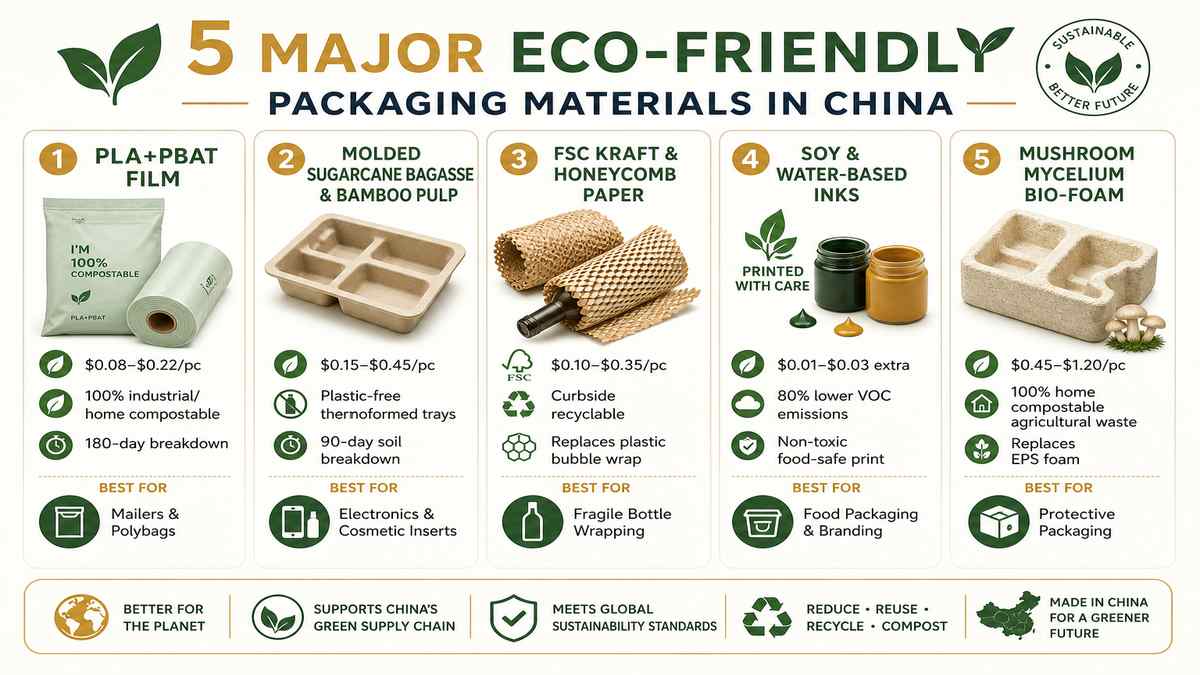
| Eco Packaging Material | Raw Material Origin | Unit Cost Range (USD) | Degradation Timeline | End-of-Life Disposal | Best Packaging Application |
|---|---|---|---|---|---|
| 1. PLA + PBAT Bio-Film | Corn starch + bio-polyesters. | $0.08 – $0.22 | 90–180 days in compost. | Industrial / Home Compost. | Apparel polybags, courier mailer bags. |
| 2. Molded Bagasse & Bamboo Pulp | Sugarcane agricultural waste + bamboo. | $0.15 – $0.45 | 60–90 days in garden soil. | Curbside Paper / Home Compost. | Electronics inner trays, cosmetic packaging. |
| 3. FSC Kraft & Honeycomb Paper | FSC-certified sustainable timber pulp. | $0.10 – $0.35 | Rapid curbside recycling. | 100% Curbside Paper Bin. | Cushioning wrap (replaces bubble wrap). |
| 4. Soy & Water-Based Inks | Soybeans & plant vegetable oils. | +$0.01 – $0.03 extra | Non-toxic de-inking in recycling. | Recyclable with paper pulp. | Full-color box printing, branding logos. |
| 5. Mycelium Bio-Foam | Agricultural stalks + mushroom roots. | $0.45 – $1.20 | 30–60 days in home garden. | 100% Backyard Soil Compost. | Heavy shock-absorbing corner blocks. |
In-Depth Technical Breakdown of the 5 Sustainable Packaging Materials
To choose the correct material specification for your sustainable packaging dielines, examine the physical properties of each option:
Global Eco-Packaging Certification Hierarchy: BPI, TÜV, FSC & PFAS-Free
To ensure your sustainable packaging clears customs and avoids consumer lawsuits, mandate these official third-party certifications:
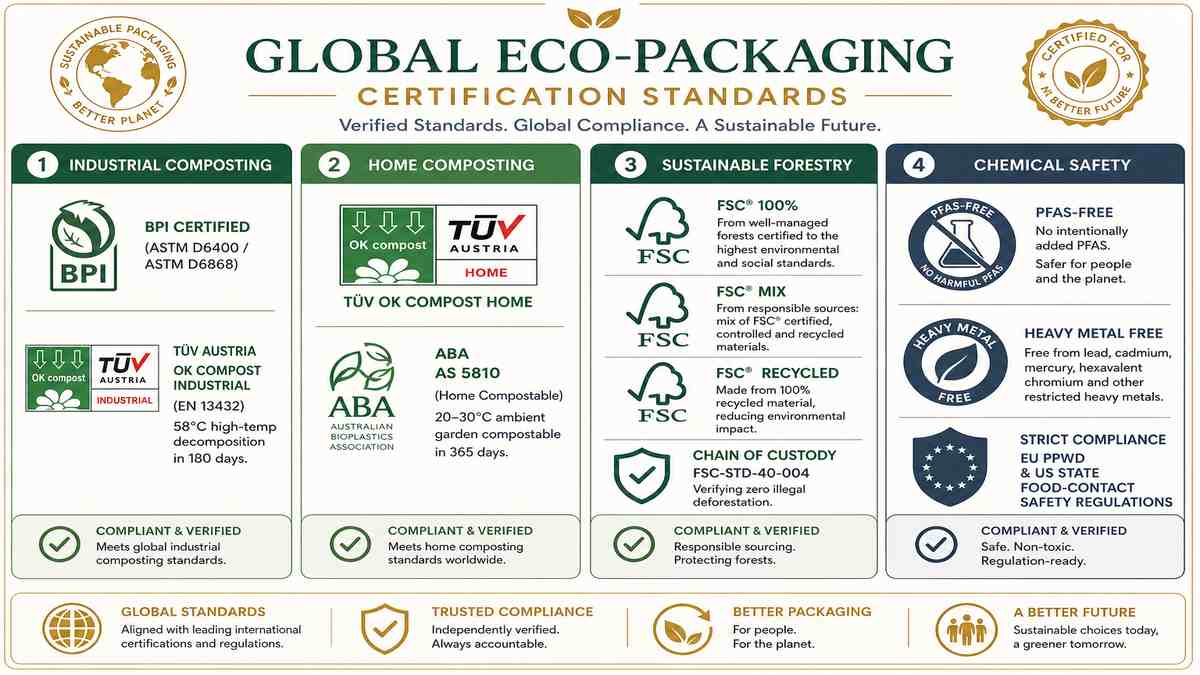
Importers purchasing sustainable paper packaging should check supplier certification under official forestry standards published by the Forest Stewardship Council (FSC) Standards.
Real 100% Compostable PLA vs. Fake Oxo-Degradable Plastics
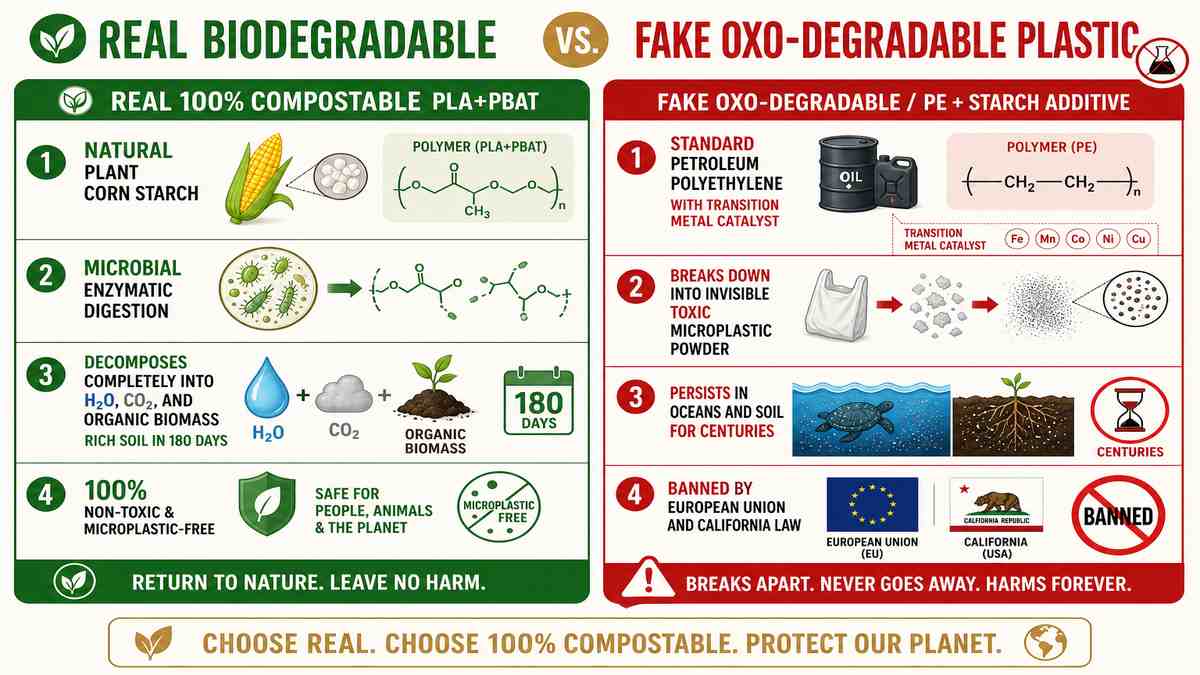
The biggest rules hazard in eco-packaging is confusing genuine bio-polymers with illegal oxo-fragmenting plastics:
To check the mechanical strength of custom shipping boxes made from recycled paperboard, examine our technical guide on custom shipping boxes and corrugated flute types for outer transit protection.
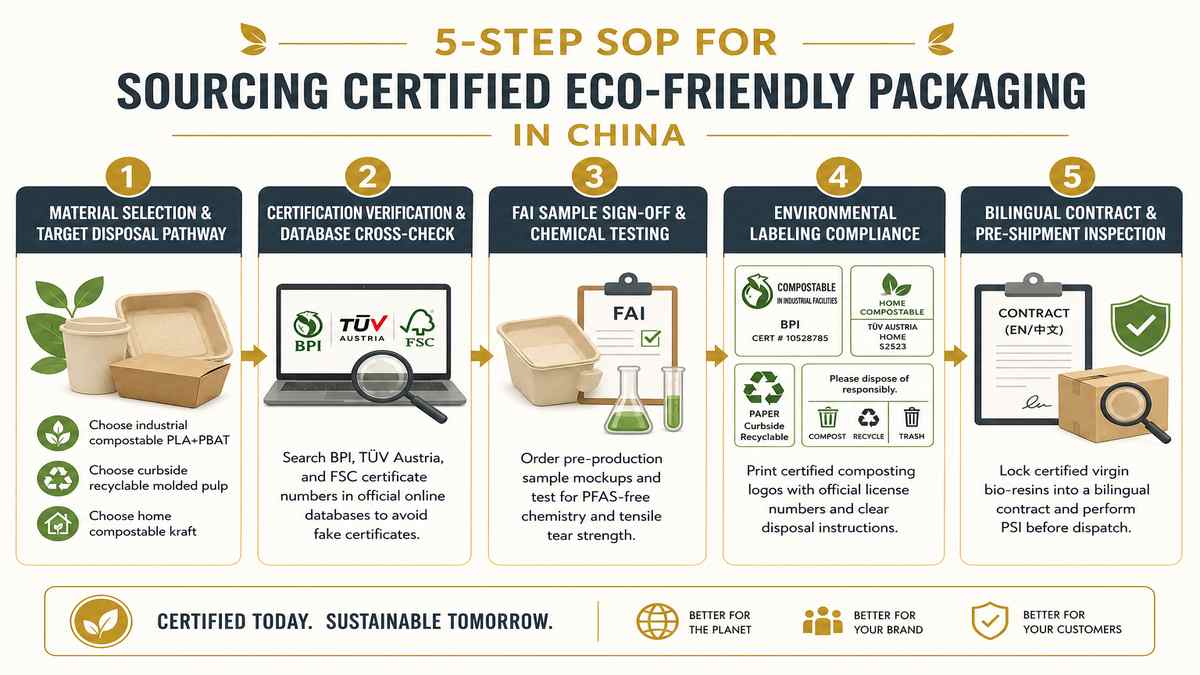
5-Step SOP for Sourcing Certified Eco-Friendly Packaging in China
Follow this standard operating procedure to source certified sustainable packaging in China with zero greenwashing risk:
To ensure custom brand artwork on sustainable packaging remains crisp without damaging recyclability, follow our guide on how to put your logo on products from China for eco-friendly printing methods.
To confirm that eco-packaging manufacturing facilities operate under calibrated quality standards, audit suppliers certified under ISO 9001 Quality Management Standards.
- Select Material Format & Disposal Pathway: Choose industrial compostable PLA+PBAT for mailers, molded bagasse pulp for inner trays, or FSC-certified kraft paper for outer boxes.
- Check Certificate License Numbers in Official Databases: Request official BPI, TÜV Austria, and FSC certificate numbers and check them directly in online public registry databases to detect forged certificates.
- Audit Packaging Converter & Bio-Resin Silos: Audit bidding eco-packaging factories in Zhejiang or Guangdong under our China factory audit checklist review, checking virgin bio-resin tracking and PFAS-free chemistry.
- Sign Enforceable Bilingual Sustainable Packaging Contract: Lock certified virgin resin grades, 100% PFAS-free warranties, and defect penalties into an enforceable bilingual manufacturing sales contract under PRC law.
- Inspect Physical FAI Samples with Pre-Production Sign-off: Order physical pre-production sample mockups for a formal first article inspection (FAI) sample review, testing tensile seal strength and printed certification logo legibility.
Before releasing final container balances, perform an on-site pre-shipment inspection (PSI) in China under AQL 1.5 standards to check seal strength and moisture barrier coatings.
Illustrative Scenario: How an Organic Skincare Brand Achieved Zero Plastic
To see how certified sustainable packaging engineering drives brand equity and premium retail placement, review this organic cosmetics case study:
A clean beauty skincare brand in Boulder, Colorado launched an organic facial serum and night cream gift collection (\$140 retail value, 6,000-unit initial production run, \$180,000 total order value).
- The Plastic Blister Dilemma: The founder initially planned to use standard clear plastic thermoformed blister trays inside a folding carton. However, luxury retail buyers at Sephora Clean and Whole Foods rejected the packaging concept, mandating 100% plastic-free, certified compostable or curbside recyclable packaging.
- The 100% Sustainable Packaging Overhaul: Sourcing Pioneer re-engineered the complete packaging architecture: (1) Inner Tray: Sourced a custom-molded sugarcane bagasse pulp tray with a natural off-white velvet-smooth finish and certified 100% PFAS-free barrier coating (\$0.28/pc), (2) Outer Box: Sourced an FSC-certified 350gsm unbleached virgin kraft folding box printed with soy-based vegetable inks, and (3) Protective Wrap: Replaced plastic bubble wrap with FSC-certified expandable kraft honeycomb cushioning wrap.
- Certified Laboratory Rules: Production samples underwent accredited SGS lab testing, confirming 100% PFAS-free chemistry and certified compostability under TÜV Austria OK Compost standards.
- The Commercial Outcome: The plastic-free packaging passed Sephora Clean buyer audits on the first submission, allowing the brand to secure nationwide retail shelf space and generating over \$420,000 in first-quarter revenue with zero retailer rules chargebacks.
Frequently Asked Questions (FAQ)
What are the most popular eco-friendly packaging materials available from Chinese manufacturers?
The primary sustainable packaging options in China include: (1) PLA+PBAT 100% compostable polybags and mailers, (2) Molded sugarcane bagasse and bamboo fiber pulp trays, (3) FSC-certified kraft paper and expanding honeycomb cushioning paper, (4) Soy-based and water-based vegetable printing inks, and (5) Agricultural mushroom mycelium bio-foam.
What is the difference between real compostable PLA and fake oxo-degradable plastic?
Real compostable PLA+PBAT is derived from plant starches and breaks down completely into water, carbon dioxide, and organic biomass within 180 days under industrial composting without leaving toxic residues. Fake oxo-degradable plastic is standard petroleum polyethylene mixed with metal salts that only breaks apart into hazardous microplastic dust, which is strictly banned across the European Union and California.
What certifications prove a Chinese packaging supplier’s compostable claims are genuine?
Reputable sustainable packaging suppliers must hold third-party lab certifications: (1) BPI Commercial Composting (ASTM D6400) for the US market, (2) TUV Austria OK Compost Industrial (EN 13432) or OK Compost Home (AS 5810) for Europe, and (3) FSC Chain of Custody (FSC-STD-40-004) for paper products.
How does molded sugarcane bagasse pulp replace plastic thermoformed trays?
Molded bagasse pulp is manufactured from agricultural sugarcane waste fibers pressed in high-precision heated aluminum molds. It produces smooth, rigid internal packaging trays that match the precision of plastic blister trays while breaking down naturally in garden soil within 90 days.
Why are PFAS chemicals banned in molded pulp food and consumer packaging?
PFAS (Per- and Polyfluoroalkyl Substances), known as ‘forever chemicals’, were historically added to molded pulp to provide oil and water resistance. Because they do not break down in nature and add up in the human body, US and European laws now mandate 100% PFAS-free barrier coatings for imported packaging.
Engineer Lab-Certified Compostable & Sustainable Packaging in China
Our China packaging engineering team audits PLA+PBAT resin grades, checks BPI/TÜV compostable certifications, inspects sugarcane bagasse molded pulp, and verifies PFAS-free safety.
Get Free Eco-Packaging Sourcing Consultation
Questions & Comments
We read every one and reply within 24 hoursSourcing PLA compostable mailer bags, custom sugarcane bagasse molded pulp trays, or need on-site BPI/TÜV certification a check in Zhejiang or Guangdong? Post your eco-packaging questions below — our on-the-ground sustainable packaging specialists will guide your procurement decisions.