
Gold PVD Coating vs. Electroplating: Durability, Costs & Jewelry Sourcing Specs (2026 Guide)
 ·
Updated October 1, 2026
·
20 min read
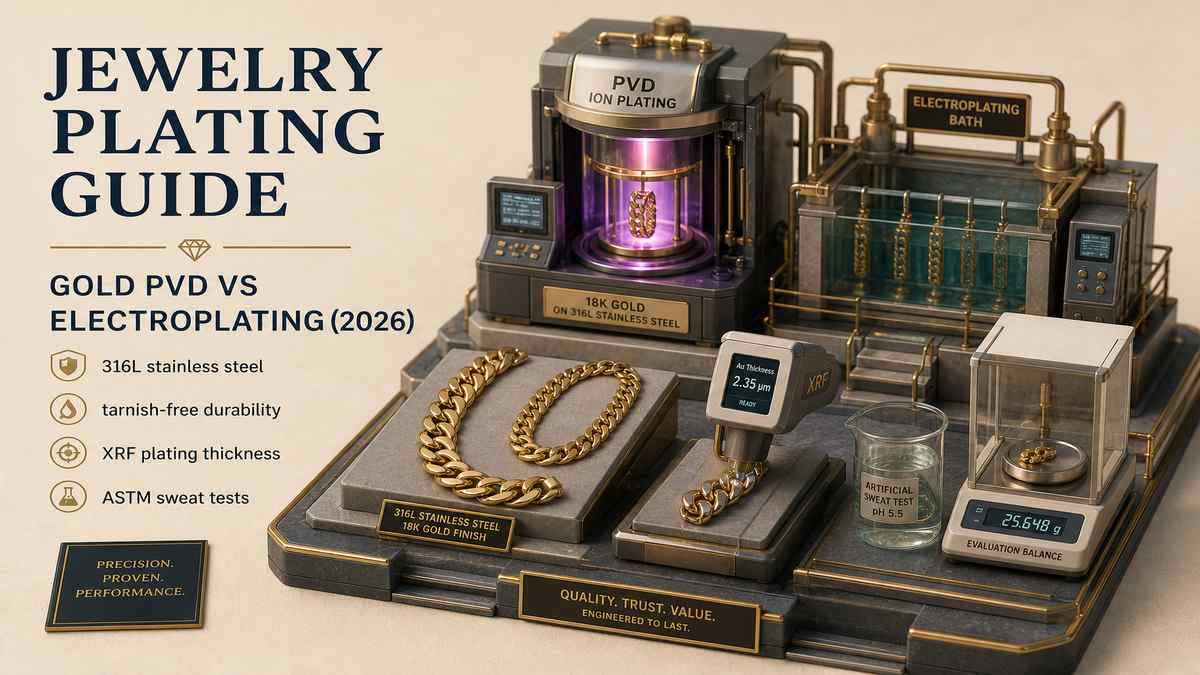
Direct Answer: In 2026, the fundamental choice between Gold PVD Coating (Physical Vapor Deposition / Vacuum Ion Plating) and Traditional Electroplating (Chemical Dip Plating) is a direct trade-off between wear durability, base metal compatibility, skin safety, and manufacturing costs. (1) Gold PVD on 316L Surgical Stainless Steel or Titanium is the premier choice for modern DTC waterproof jewelry brands, luxury watches, and daily-wear fashion accessories; it utilizes a high-temperature vacuum plasma process to bond titanium nitride and real 18k gold at an atomic level, creating an indestructible, 100% waterproof, sweatproof, and tarnish-free surface that lasts 3 to 5+ years without fading or turning skin green (\$0.30–\$1.50/pc processing cost); (2) Traditional Electroplating on Brass, Zinc Alloy, or 925 Sterling Silver (Flash Gold to Gold Vermeil) uses chemical electrolytic dip baths; while it delivers a rich, traditional fine jewelry luster on silver (\$0.15–\$0.80/pc), electroplated brass wears off within 3 to 6 months of sweat contact, exposing copper that oxidizes green. Modern private label jewelry founders are rapidly standardizing on 316L Stainless Steel with 18K Real Gold PVD.
For jewelry and lifestyle brand owners sourcing from China’s primary manufacturing hubs in Yiwu (Zhejiang) and Guangzhou/Dongguan (Guangdong), customer returns caused by “tarnished gold chains” and “green neck complaints” can destroy an e-commerce brand overnight.
Why do some \$40 gold necklaces last for 4 years in swimming pools while others turn black after two weeks of gym workouts? The secret lies entirely in the surface plating technology and substrate metallurgy.
In this comprehensive 2026 engineering guide, we put Gold PVD Coating and Traditional Electroplating into an 8-dimensional head-to-head showdown, decode the jewelry plating hierarchy (Flash Gold vs. Micron Plating vs. Gold Vermeil vs. PVD), expose 3 common factory misrepresentation tricks, explain mandatory ASTM sweat and XRF testing standards, and outline a 5-step SOP to source tarnish-free jewelry in China.
Gold PVD Coating vs. Traditional Electroplating: 8-Dimensional Comparison Matrix
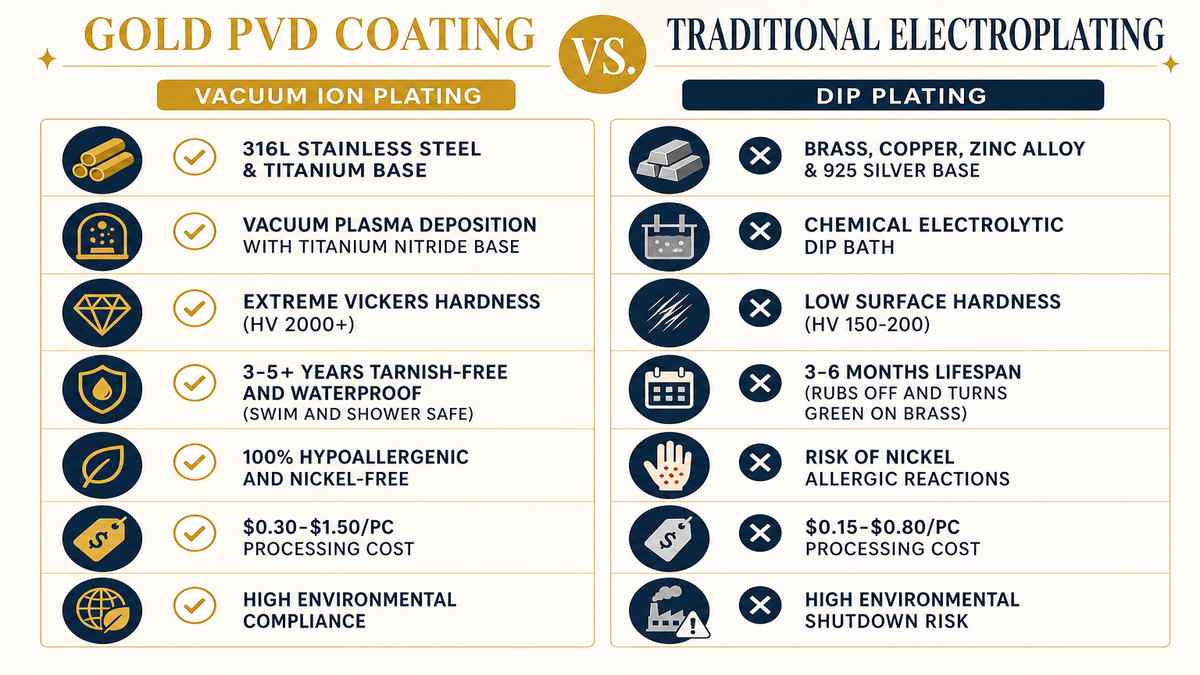
To evaluate these two surface finishing technologies side by side, review this comparative engineering matrix:
| Evaluation Dimension | 1. Gold PVD Coating (真空离子镀金) | 2. Traditional Electroplating (化学水电镀) |
|---|---|---|
| Deposition Technology | Physical Vapor Deposition (PVD) inside a high-temperature vacuum plasma chamber. | Electrolytic Chemical Bath; electric current deposits metal ions in solution. |
| Ideal Base Metal Substrate | 316L Surgical Stainless Steel, Titanium (Grade 5), Tungsten Carbide. | Brass, Copper alloys, Zinc Alloy, 925 Sterling Silver. |
| Surface Hardness Rating | Extreme Hardness: HV 2000+ (Vickers Hardness; scratch-proof). | Soft to Moderate: HV 150 – 250 (Prone to surface scratching). |
| Waterproof & Sweat Lifespan | 3 to 5+ Years Tarnish-Free; 100% safe in showers, pools & oceans. | 3 to 6 Months on Brass (Oxidizes green); 1–2 years on 925 Silver. |
| Skin Safety & Hypoallergenic | 100% Hypoallergenic; completely nickel-free and lead-free. | Risk of Skin Allergy if factory uses nickel undercoating for shine. |
| Color Consistency (14k/18k) | Ultra High Consistency; digital plasma control prevents color drift. | Moderate; bath chemical concentration drifts over time. |
| Per-Piece Processing Cost | $0.30 – $1.50 per piece (Based on vacuum furnace batch load). | $0.15 – $0.80 per piece (Economical for low-end brass). |
| Environmental Rules | 100% Eco-Friendly; zero toxic chemical waste or heavy metal run-off. | High pollution risk (Cyanide/acid baths); subject to factory shutdowns. |
Jewelry Gold Plating Hierarchy: Flash Gold to Gold Vermeil to PVD
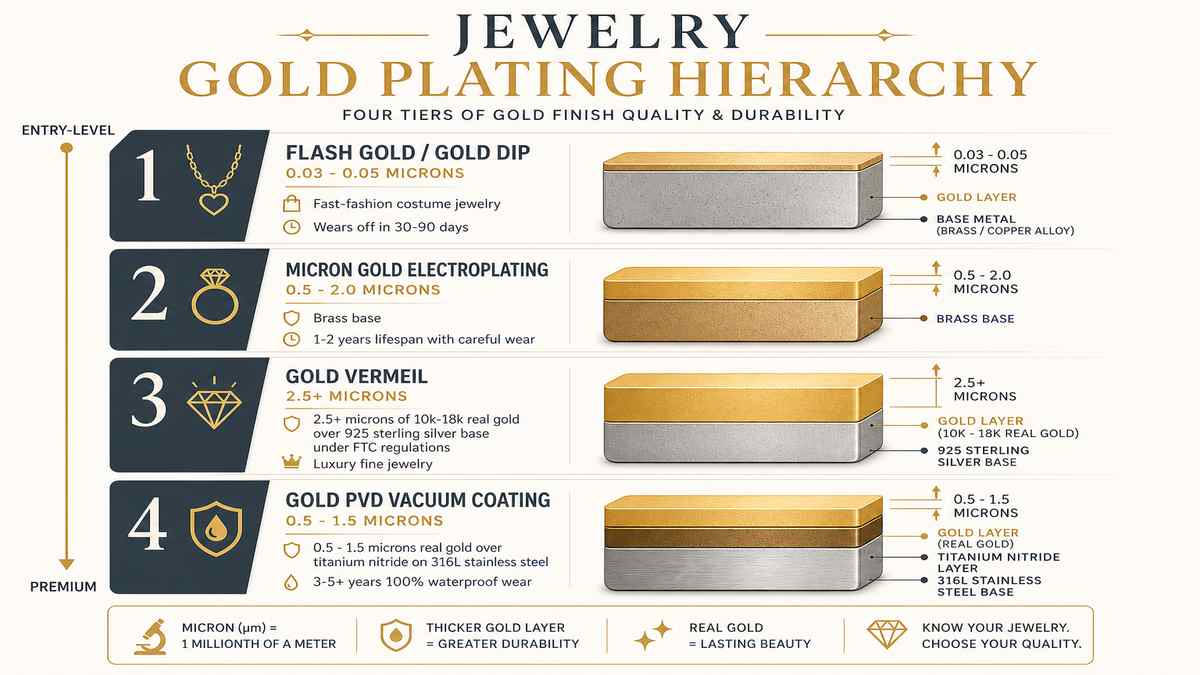
To avoid confusing your customers and ensure proper marketing claims under Federal Trade Commission (FTC) Jewelry Guides, understand the four levels of gold plating:
14K vs. 18K vs. 24K Gold PVD Color Matching
In vacuum PVD coating, controlling the exact tone of gold is achieved by adjusting the ratio of gold and titanium plasma vapor:
| Gold Plating Tone | Color Appearance | Best Target Retail Market |
|---|---|---|
| 14K Light Gold PVD | Subtle, pale, champagne gold luster; understated modern luxury. | North America & Scandinavian minimalist brands. |
| 18K Classic Warm Gold PVD | Rich, warm, classic yellow gold hue; high perceived value. | Global fashion jewelry & European luxury retail. |
| Rose Gold PVD | Warm pink-copper hue achieved with copper-titanium co-deposition. | Women’s fashion watches & romantic jewelry lines. |
3 Dirty Tricks in Jewelry Sourcing & How to Prevent Them
Unethical jewelry suppliers exploit buyer confusion between PVD and electroplating. Protect your jewelry brand against these three common practices:
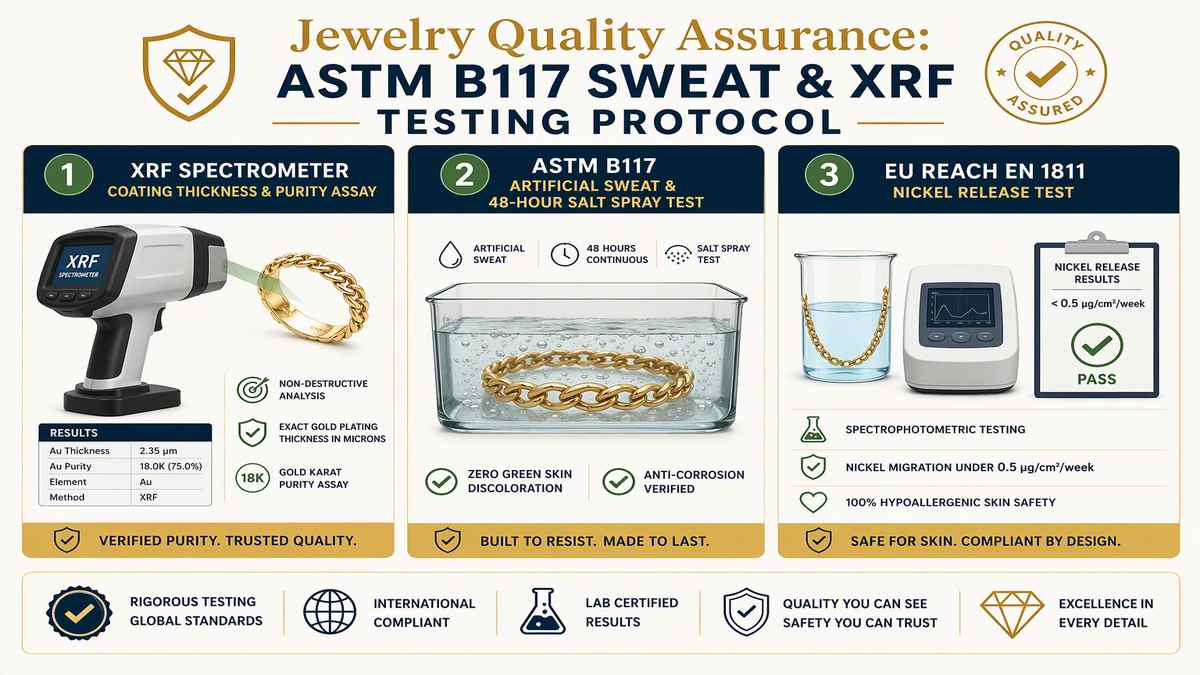
3 Mandatory Quality Control Tests for Gold Jewelry
To guarantee that your jewelry line is truly 100% waterproof and tarnish-free, mandate these three testing protocols before shipment:
5-Step SOP for Sourcing Tarnish-Free PVD Gold Jewelry in China
Follow this end-to-end standard operating workflow to execute your private label jewelry line smoothly:
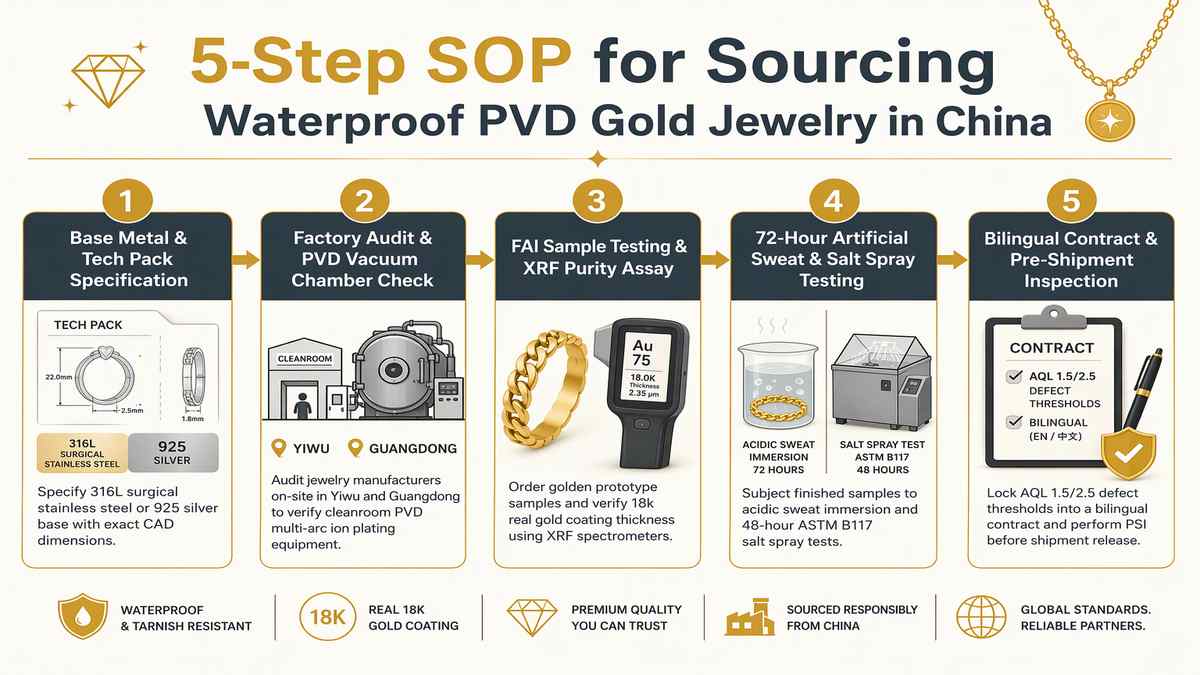
- Define Base Metal & Tech Pack Specifications: Specify 316L surgical stainless steel (or 925 silver for Vermeil), provide vector artwork for custom laser-engraved logo tags as outlined in our guide on how to put your logo on products from China, and specify 18K Real Gold PVD with TiN base.
- Audit Jewelry Manufacturer & PVD Cleanroom Facilities: Audit bidding jewelry factories in Yiwu and Dongguan under our China factory audit checklist review, checking multi-arc vacuum ion plating furnaces and ultrasonic cleaning lines.
- Execute Enforceable Bilingual Tooling & Plating Contract: Lock plating thickness, gold karat purity, and mold ownership into an enforceable bilingual manufacturing sales contract under PRC law, applying insights from our guide on OEM vs ODM product customization models.
- Inspect Pre-Production Golden Samples with XRF Assays: Order physical samples and execute a formal first article inspection (FAI) sample review, checking link soldering, clasp tension, and XRF coating thickness.
- Perform ASTM Sweat Immersion & Pre-Shipment Inspection (PSI): Conduct 48-hour artificial sweat testing and execute a comprehensive pre-shipment inspection (PSI) in China under strict AQL 1.5 standards for cosmetic jewelry before releasing final container balances.
Illustrative Scenario: How a Miami Brand Cut Returns to 0.3% with PVD Gold
To see how upgrading to PVD gold transforms brand profitability, review this waterproof jewelry case study:
A direct-to-consumer fashion jewelry brand in Miami, Florida ordered 5,000 custom 18K gold-plated Cuban link chains and pendants (\$28,000 total order value) for their summer activewear campaign.
- The Brass Electroplating Disaster: The brand’s first production run used standard 1-micron gold electroplating over brass. Within 60 days of launch, customers wearing the chains during beach workouts complained of green neck stains, tarnish, and peeling clasps. Customer return rates soared to 14.2%, severely damaging their Shopify store rating.
- The 316L Stainless Steel PVD Upgrade: Sourcing Pioneer helped the brand transition the entire product line to marine-grade 316L surgical stainless steel with vacuum 18K Real Gold PVD ion plating (with TiN base layer). The unit processing cost increased by only \$0.45 per chain.
- Strict Lab Validation: Sourcing Pioneer’s inspection engineers in Yiwu tested production samples under 72-hour ASTM B117 artificial sweat immersion and XRF thickness a check, achieving Grade 10 zero-tarnish performance.
- The Commercial Outcome: The brand relaunched with an unconditional “100% Waterproof & Sweatproof Lifetime Guarantee.” Product return rates plummeted from 14.2% down to 0.3%, driving over \$1.2 million in annual Shopify and TikTok Shop sales.
Frequently Asked Questions (FAQ)
What is Gold PVD coating and what does PVD stand for?
PVD stands for Physical Vapor Deposition. In gold PVD coating, titanium and genuine real gold (14k, 18k, or 24k) are vaporized in a high-temperature vacuum chamber into a plasma, which bonds at an atomic level onto 316L stainless steel jewelry, creating a super-durable, waterproof, and tarnish-free gold finish.
Is Gold PVD coating better than traditional electroplating for jewelry?
Yes, for daily waterproof wear. Gold PVD on 316L stainless steel lasts 3 to 5+ years without tarnishing, peeling, or turning skin green, and is 100% hypoallergenic (nickel-free). Traditional electroplating on brass typically tarnishes within 3 to 6 months when exposed to sweat, water, and perfumes.
Can you wear PVD gold jewelry in the shower or swimming pool?
Yes. 316L stainless steel with vacuum PVD gold coating is 100% waterproof, sweatproof, and resistant to chlorine and saltwater, making it the premier choice for modern active lifestyle and DTC waterproof jewelry brands.
What is the difference between Gold Vermeil and Gold PVD?
Gold Vermeil is a legal FTC jewelry standard requiring at least 2.5 microns of gold electroplated over a 925 sterling silver base. Gold PVD is a vacuum plasma deposition process bonding real gold and titanium nitride onto 316L stainless steel. Vermeil feels heavier like fine jewelry, while PVD is significantly more scratch-resistant and tarnish-proof.
How do quality inspectors test gold plating thickness and durability in China?
Inspectors use XRF (X-ray Fluorescence) spectrometers to measure exact gold coating thickness in microns and gold purity, conduct 48-hour ASTM B117 salt spray and artificial sweat immersion tests, and run EU REACH EN 1811 nickel release tests.
Source Tarnish-Free 18K Gold PVD Jewelry with Lab-Tested Durability
Our China jewelry sourcing team audits PVD cleanroom plating lines, checks 316L stainless steel base alloys, tests 18k gold thickness with XRF spectrometers, and supervises on-site ASTM sweat testing.
Get Free Jewelry Plating & Sourcing Review
Questions & Comments
We read every one and reply within 24 hoursSourcing private label jewelry in Yiwu or Guangdong, comparing Gold PVD vs Gold Vermeil, or need on-site XRF gold thickness testing in China? Post your jewelry sourcing questions below — our on-the-ground manufacturing engineers will guide your technical specifications.