
Shein Warehouse Locations: What a Seller Can Actually Check
 ·
Updated October 14, 2026
·
15 min read
Shein does not publish a list of its warehouses. So a real answer has to be built from property records, trade press and the company's own statements. This guide does that. It separates what is documented from what is only repeated. Then it explains why the answer matters to a seller and not to a shopper. The warehouse map tells you how fast a parcel travels. The model behind the warehouse tells you how the stock was ordered in the first place. That second part is the one worth copying.
| The question | What is documented | What is not |
|---|---|---|
| Where are the United States sites? | A 565,500 sq ft building in Whitestown, Indiana, leased to Shein's distribution arm, Style Link Logistics, LLC | The complete list of United States sites |
| Is there an automated site? | A 737,000 sq ft automated facility in Lebanon, Indiana | Its live throughput and exact start date |
| Where is the European hub? | A large logistics hub in Poland, developed by GLP | The often repeated site at Liege, Belgium |
| How many suppliers does Shein use? | More than 3,000 as of 2022 | The 15,000 figure that many blogs repeat |
| How does the ordering model work? | A first batch of 100 to 200 pieces per item, then reorder on demand | Which factory makes which item |
The Short Answer
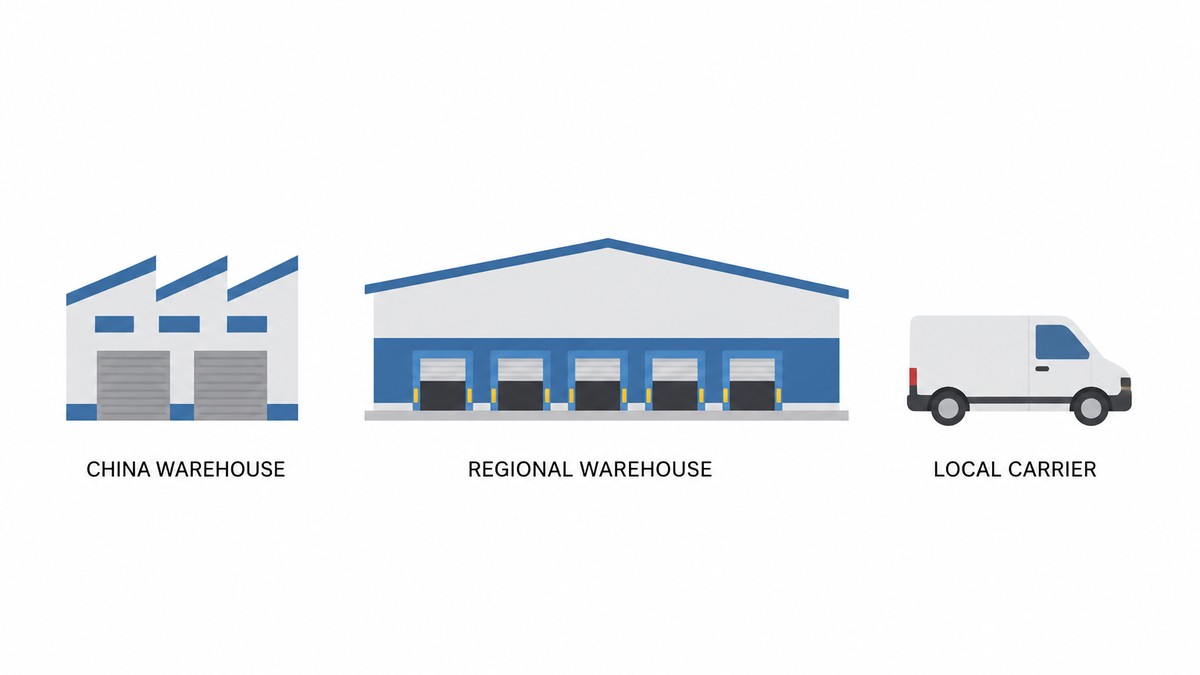
Shein moves goods in three tiers. The first tier is China, where the goods are made. The second tier is a regional warehouse, which breaks a bulk shipment into local stock. The third tier is the last mile, run by a parcel carrier in the buyer's own country.
Most of what people call a Shein warehouse sits in the second tier. That is the tier that decides whether a parcel takes four days or three weeks. It is also the tier the company talks about least.
Three sites are documented well enough to repeat. A 565,500 square foot building in Whitestown, Indiana, which property records show was fully leased to Shein's own distribution business, Style Link Logistics, LLC. A 737,000 square foot automated facility in Lebanon, Indiana, reported by trade press as opening this year. And a large logistics hub in Poland, which a developer built for the European market.
Everything else you will read online is a list of cities with no source behind it. Some of those cities may be right. Several of the sources are not pages a buyer should trust. Some exist only to collect ad traffic.
So the first useful skill here is not finding the list. It is telling a document from a repeat.
Why a Seller Should Read This, and a Shopper Should Not
A shopper wants one number: how many days until the parcel arrives. A seller wants two different things, and neither of them is that number.
The first thing a seller wants is a comparison. If a competitor can hold very little stock and still ship in a few days, then stock is not the advantage. The warehouse is doing work that used to sit in a merchant's back room. That changes what a seller needs to buy, and when.
The second thing is a model. Shein does not guess how much of a style to make. It makes a small first batch and lets real orders decide what happens next. A warehouse network only works because of that habit. A small first batch cannot fill a container on its own. It has to be consolidated somewhere. That somewhere is the regional warehouse.
Put those two ideas together and the order changes. The warehouse is the cheaper half of the story. The ordering habit is the half that decides whether a seller ends up with dead stock.
The rest of this guide follows that order. First the documented network. Then the model that feeds it. Then the three claims you will read elsewhere that do not survive a check. Finally, what to do about it if you buy from China.
The United States Network: What Is Documented
Two United States sites are documented well enough to repeat without hedging. Both are in Indiana, and both were found through property and trade records, not through anything Shein published.
The Whitestown warehouse. A 565,500 square foot building inside the 65Commerce Park development. The property record states the building was fully leased to Shein's distribution business, Style Link Logistics, LLC. The site sits next to Interstate 65. That gives it a direct run to Indianapolis International Airport and to the main cities of the Midwest.
Read that paragraph again, because the useful detail is not the city. It is the entity. A buyer who searches for the brand name finds nothing useful. A buyer who searches for the logistics entity finds the building, the size and the lease. That habit transfers straight to China sourcing. When a supplier claims a United States warehouse, ask for the operating company name, not the brand on the box.
The Lebanon warehouse. A 737,000 square foot automated facility, reported by trade press as starting operations this year. Size is the smaller half of that sentence. Automation is the larger half. It changes how fast a single order can be picked, not how much stock can be stored.
What is not documented. The full list of United States sites, and their capacity. There is a reason for that gap. Fulfilment cost and delivery speed are competitive. So a company has no reason to publish a map of where its stock sits. A missing list is not a secret. It is just not published.
That leaves a practical problem for anyone writing about this topic. A list that cannot be sourced has to be either left out or labelled. Most pages choose a third option, which is to present the list as fact. The next section shows what happens when you check.
The three-tier flow is the part worth understanding, because it explains the whole network. Goods are made in China. They are consolidated and shipped in bulk. A regional warehouse receives that bulk and becomes local stock. A parcel carrier then handles the last mile. Every city list you will read is really a guess about tier two. That is also the tier the company discusses least.
For a seller, tier two is the one to study. It is where a bulk shipment becomes a set of small, ready-to-ship orders. That conversion is the same job a third-party warehouse does for you. The picking, packing and courier rates are where most of the avoidable cost sits.
Europe, the Middle East and Asia: What Is Documented
Outside the United States, the record is thinner. There, the difference between a document and a repeat is easier to see.
In Europe, the entry with the most support is a large logistics hub in Poland. A warehouse developer built it for the European market. Trade press reported it late last year. That is a document. It names a country and a developer, and it can be checked.
The city most often repeated for Europe is Liege in Belgium. I could not find a primary source for it. Searches on that claim returned pages that exist to collect advertising. Some use domains registered within the last few weeks. Those pages copy each other, and they copy the same sentence. None of them names a document. So this guide records the claim as unchecked, and does not repeat it as fact.
The Middle East, Australia and Ireland all appear in the same weak category. A sourcing agency site reports a warehouse in Riyadh. A trade page reports one in Sydney. A news item reports a small e-commerce logistics centre in Dublin, with about 30 jobs. Each of these may be true. None of them is a document I can point you to, and that is the whole distinction.
There is a pattern behind the weakness, and it is worth naming. These pages are not written to inform a buyer. They are written to attract a search visit and then sell something, usually a shipping quote or a sourcing service. That is not a crime, and this page sells a service too. The difference is that a page which cannot name its source should say so.
| Region | What a document supports | What is only repeated |
|---|---|---|
| United States | Whitestown, Indiana, 565,500 sq ft, leased to Style Link Logistics, LLC. Lebanon, Indiana, 737,000 sq ft, automated | The complete site list and its capacity |
| Europe | A large hub in Poland, developer-built, reported late 2025 | Liege, Belgium. Monchengladbach and Lyon also appear |
| Middle East | Nothing primary found | Riyadh, Saudi Arabia |
| Asia Pacific | China production and consolidation is well reported | Sydney, Australia as a local stock site |
| Ireland | A small e-commerce logistics centre, about 30 jobs | Whether it holds stock or only routes parcels |
So the honest version of this article's headline answer is short. Two United States sites are documented. One European site is documented. The rest is a list that everyone repeats without a source. If you need the network for a business decision, use the tier logic and ignore the city list.
The Mechanism Behind the Warehouses: 100 to 200 Pieces
A warehouse network is expensive. It only pays for itself if goods arrive in a certain way. So the useful question is not where the buildings are. It is why this company needs them at all, and the answer sits in how it buys.
Shein describes the method on its own corporate site. For each item it produces only a small first batch, of roughly 100 to 200 pieces. It then lets real customer demand decide the orders that follow from its suppliers. The company calls this its on-demand model.
Read the order of operations carefully, because it is the opposite of the normal one. A normal buyer guesses a quantity, places one order, and then hopes the stock sells. This method places a small order, watches what sells, and then decides the quantity. The quantity is the last thing decided, not the first.
That single change is what makes the warehouse necessary. A first batch of 100 to 200 pieces cannot fill a shipping container on its own. So batches from hundreds of factories have to be gathered and combined before they can travel. The place where they are combined is the regional warehouse. The warehouse is not a storage idea. It is a consequence of ordering small.
It also moves the risk. In clothing, the main danger is unsold stock. When the first order is small, most of that danger shifts away from the brand. The factory has to hold the ability to make more at short notice. A factory only accepts that arrangement when the price per piece is higher. That is the real trade behind the model. You pay more per piece in exchange for a smaller first order.
Two numbers about suppliers are worth putting side by side, because they do not agree. An encyclopaedia entry records more than 3,000 suppliers as of 2022. Many blog posts say 15,000, usually with no source at all. Both may be counting different things. One number may count factories under contract. The other may count every workshop that touches an order, including secondary ones. The gap is a good reminder to ask what a number is counting before you repeat it.
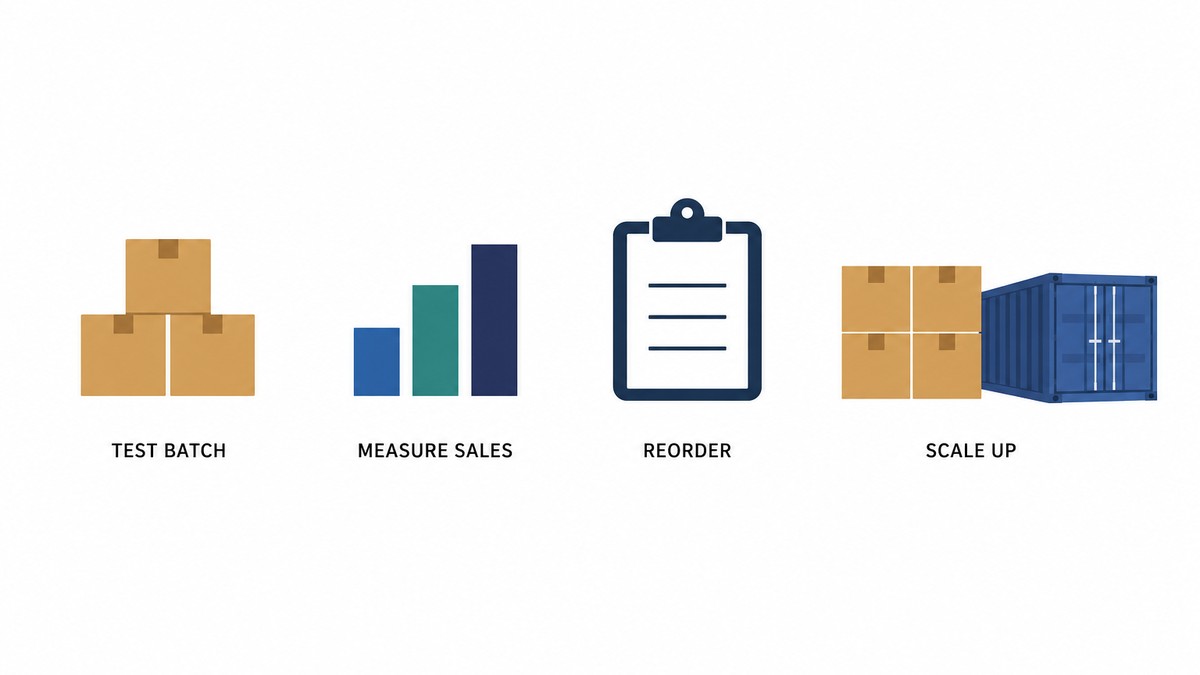
For a buyer in China, there is one idea here worth copying, and it does not need a warehouse. Test in small batches, then reorder on evidence. Ask your factory for two prices on the same item: one at 100 pieces and one at 1,000. The difference is the price of learning whether the item sells. That number is worth knowing before you commit to a container.
Three Claims That Do Not Survive Checking
Most pages on this topic repeat the same three ideas. Each one fails a simple test, and the test is worth learning because you can apply it to any sourcing claim.
Claim one: the supplier count is 15,000. What is documented is more than 3,000 as of 2022. The larger figure appears in hundreds of posts and almost never names a source. It may come from counting workshops instead of contracted factories. Or it may come from counting across several years. Treat it as a repeat until someone shows the count behind it.
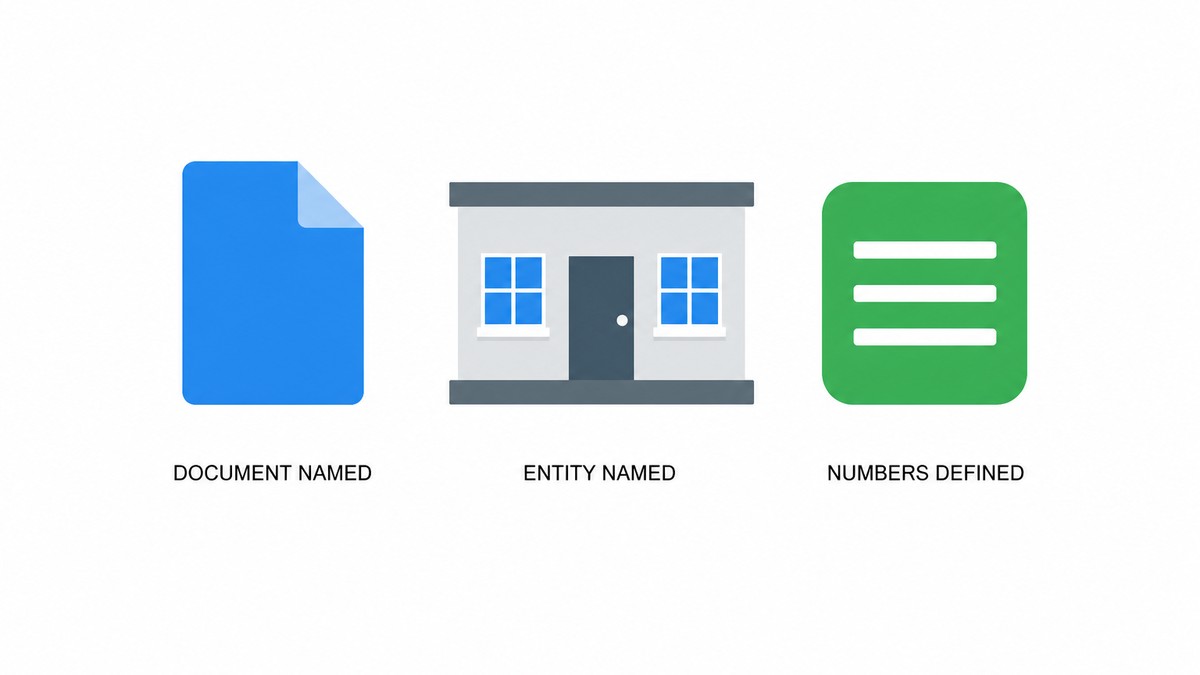
Claim two: the warehouse is in a specific city. This is the most common claim and the hardest to check, because a city name sounds like a fact. Ask two questions of the page. Does it name a document, such as a lease, a permit or a company filing? Does it name the operating entity, and not just the brand? If both answers are no, you are reading a repeat, however confident the wording.
Claim three: the tracking number tells you which warehouse shipped the order. Several pages say a parcel starting with certain letters came from a local warehouse. They say other letters mean it came from China. That reading is wrong. The opening characters of a tracking number identify the carrier and the service, not the building. So the prefix tells you which company is moving the parcel. It does not tell you where the parcel slept last night.
Those three failures share one cause. A claim that is easy to write spreads faster than a claim that is hard to check. So the practical skill is not memorising the answers. It is recognising the shape of an unchecked claim.
| Test the claim | Passes | Fails |
|---|---|---|
| Is a document named? | A lease, a permit, a filing, a developer announcement | The sentence stands alone with no source |
| Is the operating entity named? | A logistics company name you can search | Only the brand name appears |
| Is the number defined? | You are told what is being counted and when | A round figure with no date and no definition |
| Is the checkable part marked? | The page separates what it knows from what it repeats | Every sentence carries the same level of confidence |
What a Seller Should Do With This
You cannot copy a warehouse network, and you do not need to. What transfers is the ordering habit, and it costs less than a container to test.
Price the small order first. Ask your factory for two quotations on the same item, one at 100 pieces and one at 1,000. Write both down. The gap between them is what you pay for the right to learn. Then decide whether the lesson is worth that price.
Measure before you reorder. A test batch only helps if you actually count what sells. Set the number in advance, such as a sell-through figure you will accept, and hold to it. Without a number, every batch looks like it worked.
Find one consolidation point. Small orders from several factories cannot each ship alone, or the freight eats the margin. You need a single place where they are combined. That can be a warehouse in China or one in your own market. The picking, packing and courier rate side of that job is where the avoidable cost usually hides.
Keep the paperwork chain clean. If you dropship, the parcel should arrive without your supplier's identity on the outside. That is a small operational detail with a large effect on complaints. It is the supplier invoice and packing slip side of blind shipping.
Scale only after the evidence. When a style proves itself, move to a bulk order and negotiate again, because you now have a track record to trade with. Moving from small test orders into bulk wholesale is a different negotiation. The numbers change in your favour once you can show repeat volume.
If you would rather not run these steps yourself, that is what an agent is for. Before you hand over a first payment, the checks that separate a real sourcing agent from a reseller are worth doing. A product directory is the other route. Before you pay either one, compare the pricing and what the supplier network of a directory like Doba covers against an agent.
Questions Buyers Ask About Shein Warehouses
Where are Shein's warehouses located?
Two United States sites are documented: a 565,500 square foot building in Whitestown, Indiana, leased to Shein's distribution business, Style Link Logistics, LLC, and a 737,000 square foot automated facility in Lebanon, Indiana. In Europe, a large hub in Poland is well reported. Beyond those, most published city lists name no source. Shein does not publish a warehouse map, and there is no reason for a company to publish its fulfilment footprint.
Does Shein have a warehouse in the United States?
Yes. The Whitestown, Indiana building is supported by a property record that names both the size and the tenant, and the Lebanon, Indiana facility has been reported by trade press. What is not available is a full list of United States sites with their capacity. If you need that for a business decision, treat any page that gives a complete list without a source as unreliable.
How many suppliers does Shein use?
The figure you can trace is more than 3,000 suppliers as of 2022. A much larger figure, 15,000, is repeated across many blog posts without a source. The two numbers may be counting different things, such as contracted factories against every workshop that touches an order. Unless a page tells you what it counted and when, treat the number as a repeat, not a fact.
Can I tell which warehouse shipped my order from the tracking number?
Not from the opening letters. Those characters identify the carrier and the service, not the building. Many pages claim that one letter prefix means a local warehouse and another means China, but that reading confuses the carrier with the origin. Tracking data can show you the route a parcel has taken after it starts moving, which is a different thing from where the stock was held.
Can a small seller copy this model?
The warehouse network, no. The ordering habit, yes, and it is the valuable part. Ask your factory for a quotation at 100 pieces and another at 1,000, decide in advance what sell-through you will accept, and let the test batch decide whether you reorder. The cost of the method is the price gap between the two quotations. That gap is usually far smaller than the cost of a container of unsold stock.
Do I need my own warehouse to sell this way?
No. What you need is one consolidation point, so that small orders from several factories can be combined before they ship. That can be a third-party warehouse in China or one in your own market. The choice depends on your delivery promise and your return policy. A local consolidation point gives faster delivery and easier returns, while a China-based one usually costs less per unit and takes longer.
Price the small order before you price the container
Send us the item and the quantity you want to test. We will get two quotations, one for a small first batch and one for a bulk order, then show you the gap between them in writing. That gap tells you what learning costs before you commit any real stock.
Request a Test Batch Quote
Questions & Comments
We read every one and reply within 24 hoursTell us the item and the quantity you want to test. We will price a small first batch and a bulk order on the same specification, then show you the gap in writing. Ask about consolidation, courier rates or invoice handling and we will answer before you commit.