
Blanket Material Types: How to Choose Fabric for Bulk Orders in 2026
 ·
Updated September 23, 2026
·
Updated September 23, 2026
A blanket can feel perfect in the showroom and still disappoint your customer after the first wash. The better question is not simply, “Which fabric feels softest?” You also need to ask whether it suits your buyer, keeps its shape, fits your shipping plan and matches the quality you promised on the product page. That is the real reason to compare blanket material types before you ask for a bulk quote.
This guide is for private-label brands, Amazon sellers, hotel and gift buyers, and retailers sourcing from China. We will look at what each main fabric is good at, where it tends to fail, and what you should ask the factory to prove with a sample.
Quick answer: which blanket material should you choose?
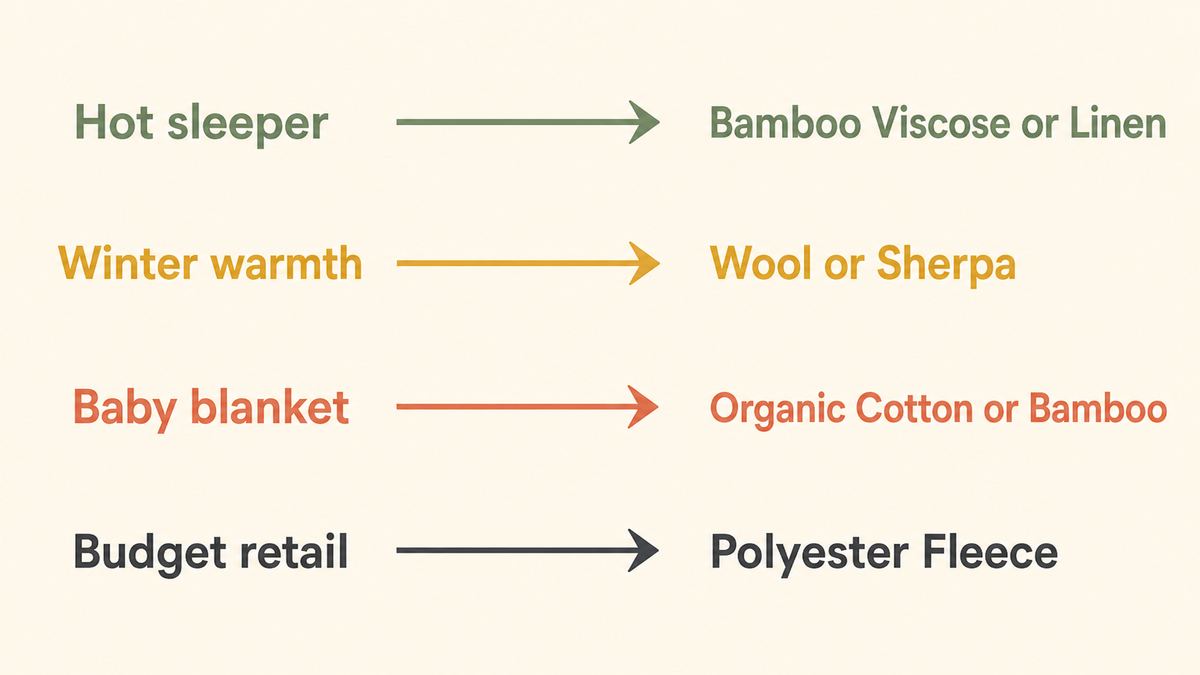
Use the buyer and product goal first, then choose the material family:
The graphic below is a starting point, not a promise that one fabric works for every use. The same fiber can feel very different when the yarn, weave, finish and finished weight change.
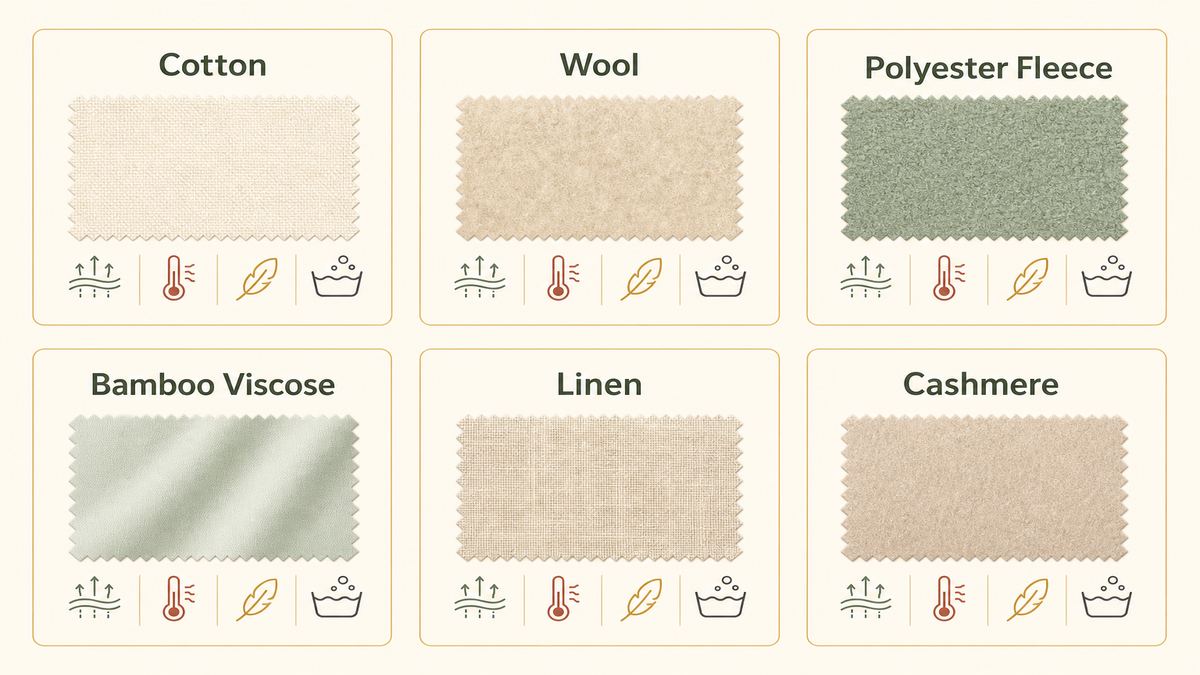
Blanket material types compared for buyers
Every material gives you something and asks you to give something back. Wool brings warmth but needs more care. Fleece keeps the price down but can pill. Linen feels light and natural but will wrinkle. Use the table to narrow your shortlist before you start asking factories for samples.
| Material | Warmth | Breathability | Typical buyer fit | Main risk to check |
|---|---|---|---|---|
| Cotton | Medium | Good | All-season, baby, hotel and home textile | Shrinkage, wrinkles and color change |
| Wool | High | Good | Winter, outdoor and premium lines | Scratchy feel, fiber claim and wash care |
| Polyester fleece | Medium to high | Low to medium | Mass retail, gifts and printed throws | Pilling, shedding and static |
| Sherpa | High | Low | Plush winter throws and reversible blankets | Pile loss, loose seams and bulky packing |
| Bamboo viscose | Medium | Good | Summer, hot-sleeper and soft-touch lines | Weak claims and finish changes after washing |
| Linen | Low to medium | Very good | Summer, resort and natural home brands | Rough first hand feel, wrinkles and high cost |
| Cashmere | High | Good | Luxury gifts and high-price home lines | Fiber purity, pilling and high loss risk |
| Minky or plush polyester | Medium to high | Low | Baby gifts, photo blankets and craft buyers | Shedding, direction of pile and print quality |
1. Cotton: the safe all-season choice
Cotton is usually the easiest place to start. Buyers know what it is, it takes color well, and it can work in anything from a light summer blanket to a heavier woven throw. That makes it a comfortable choice for hotels, baby products and general home-textile ranges.
But “cotton” is still too broad to put in an order. Ask whether the blanket is woven, knitted, brushed, quilted or made from cotton fleece. Ask about the yarn and the finished weight too. A thin cotton gauze blanket and a dense cotton jacquard throw may share the same fiber name, but they will feel and sell very differently.
Best fit: all-season throws, muslin blankets, waffle blankets, hotel bedding, baby blankets and simple private-label ranges.
What to check: wash shrinkage, color bleeding, loose yarns, edge shape after washing and whether the supplier has used a soft finish that disappears after the first wash. If you need a smooth premium hand feel, request a combed or long-staple option, but ask the supplier to state the fiber content on the written quotation instead of relying on a sales phrase.
2. Wool: strong warmth with a clear care burden
Wool gives a blanket a strong winter and outdoor story. It can feel warm without being as heavy as some thick synthetic blankets, and many buyers like its natural origin. Merino, lambswool, alpaca blends and ordinary wool can sit in very different price and feel groups.
The first sample question is not “Is it soft?” Ask, “What is the fiber content of the finished blanket?” A wool blend may be the right choice for your range, but the label and product page must say what it is. Then check the surface under a bright light. Short fibers and a loose surface can turn into early fuzz or pilling after use.
Best fit: premium winter throws, travel blankets, outdoor goods and gift collections.
What to check: scratch level against the skin, smell after the sample has been sealed for two days, color transfer on a damp white cloth, edge stability and the care instruction. If the blanket is sold as cashmere, alpaca or a special wool grade, ask for a fiber report tied to the actual lot. A generic factory brochure is not proof for your shipment.
3. Polyester fleece: the workhorse for mass retail
Polyester fleece earns its place in mass retail for a simple reason: it can feel soft and warm without becoming too expensive. It also prints well and usually shrinks less than cotton. Coral fleece, microfleece, polar fleece and anti-pill fleece are not interchangeable, though. Some are smooth and short; others have a brushed or raised surface.
So “soft fleece” is not a usable order description. Give the factory a target finished weight, a surface reference, an edge method and a color reference. Then ask to see the same design after washing. Cheap fleece often feels lovely when it is new and turns rough, linty or full of pills after a few washes.
Best fit: budget and mid-market throws, branded gifts, printed blankets, travel blankets and seasonal promotions.
What to check: pilling after repeated rubbing, loose fibers on a dark shirt, static, print sharpness, odor and whether the reverse side is even. If the blanket is packed by vacuum, open one sample and leave it flat overnight. A blanket that looks thin after recovery may not have the same shelf appearance as the factory sample.
4. Sherpa and berber: high warmth and high volume
Sherpa is a fluffy polyester pile often used on one side of a reversible blanket. Berber has a more textured, curly surface. Both can look rich in a product photo, but pile height and density change the result more than the name on the quotation.
Check the blanket after shaking it over a clean dark sheet. Look for loose fibers. Rub a small area with a dry white cloth and inspect the cloth. Then turn the blanket over and inspect the seam that joins the two sides. The seam should stay flat and should not pull the pile into a thin line.
Best fit: winter throws, gift blankets, reversible blankets and cozy home ranges.
What to check: pile height, pile direction, loose fiber loss, seam strength, edge binding and packed volume. Sherpa can take more space than a smooth fleece blanket with the same surface size. Ask for the packed carton size and gross weight before you compare freight quotes.
5. Bamboo viscose: soft and cool-feeling, but label claims need care
Many “bamboo blankets” are made from viscose or rayon made from bamboo. The fiber can feel smooth and cool, which makes it attractive for summer and hot-sleeper products. That does not mean every bamboo blanket has the same heat or moisture behavior. The weave, blend and finish still matter.
Ask the supplier to name the generic fiber in the written material breakdown. Do not copy “natural bamboo” into a product page unless the actual product and the target market rules support that wording. A soft bamboo-viscose blanket can still stretch, change hand feel or lose shape if the finish is weak.
Best fit: summer blankets, soft-touch home goods, baby ranges after the right checks, and brands that want a smooth drape.
What to check: fiber content, wash shape, color change, seam strength, pilling after washing and the exact wording the supplier wants you to use in the listing. Ask for a second sample after the factory has washed it using the care method you plan to print.
6. Linen: breathable and natural-looking
Linen is made from flax and is a strong fit for summer, resort and natural home brands. It is breathable, has a clear textured look and becomes softer with use. The first sample can feel firm or rough, especially when the fabric has not had a soft wash finish.
Linen also wrinkles. That is part of its look, but you still need to decide whether the buyer will see the result as relaxed or poor quality. Send the factory a reference photo showing the amount of texture and crease that you want. “Natural linen style” is too open to interpretation.
Best fit: lightweight throws, summer coverlets, hotel and resort ranges, and home brands with a natural design style.
What to check: linen percentage, blend ratio, surface evenness, loose slubs, shrinkage, edge fraying and the result after a wash and dry cycle. If your buyer expects a soft blanket straight from the pack, ask for stone-washed or another named finish and compare the finished sample, not only the fabric roll.
7. Cashmere and fine wool: premium feel with a high proof burden
Cashmere can support a high retail price, but it is also one of the easiest blanket materials to mislabel. A product that contains a small amount of cashmere is not the same as a blanket made from cashmere. Wool, viscose and other fibers can be blended into a useful product, but the blend must be clear.
Do not judge a cashmere sample by touch alone. Ask for the fiber content, the source of the report, the test date and whether the report matches the production lot. Check the surface after rubbing, pulling and folding. A soft sample that pills quickly will create more returns than a slightly firmer sample with better surface control.
Best fit: luxury gifts, premium home brands and small collections where the selling price can support careful checking.
What to check: fiber report, yarn or ply detail, pilling, color consistency, edge finish, smell and the final label wording. For this material, one independent test before a large order can save more than it costs.
8. Minky, plush polyester and flannel
Minky and plush polyester are common in baby gifts, photo blankets and craft products. They feel smooth or fluffy and can carry printed designs well, but the pile direction changes how the color looks. A design that looks bright in one direction may look dull when the fabric is turned.
Flannel can mean brushed cotton, a cotton blend or another brushed fabric, so ask the supplier to state the fiber and construction. Double-sided brushing often feels richer, while a loose surface may shed or change after washing.
Best fit: personalized gifts, baby gift ranges after proper product checks, craft yardage, children’s designs and soft winter throws.
What to check: print direction, pile loss, edge curl, wash shape, loose lint and whether the photo print reaches the edge without a pale border. Ask the factory for a cut sample that shows the direction of the pile and include that direction in your artwork approval.
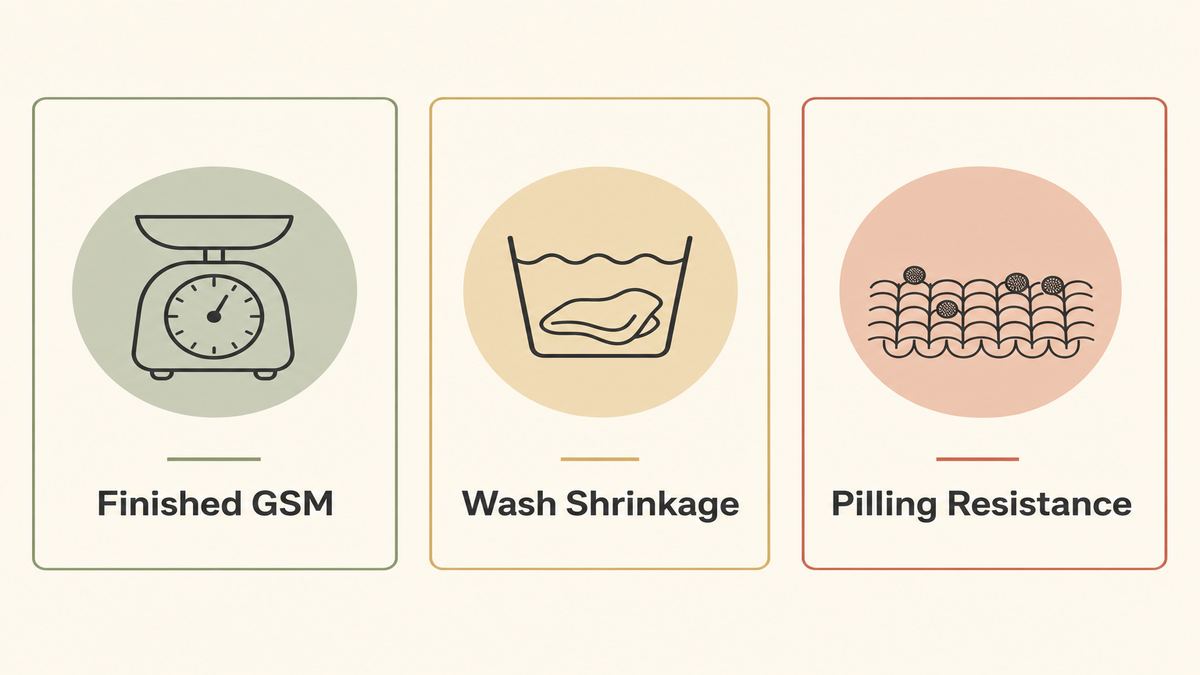
The four specs to put in a blanket quote
A fabric name gives the factory a starting point. It does not give you a repeatable product. Write the following items into the request for quotation and the approved sample sheet.
1. Finished GSM, not only fabric GSM
GSM means grams per square metre. For a finished blanket, the number should describe the product you will sell, including the main fabric and the way it is made. Ask the factory to weigh a finished sample, record the size and state whether the number includes binding, quilting or a second layer.
2. Construction and surface
State woven, knitted, brushed, fleece, sherpa, quilted, double layer or another construction. Add the surface words that matter: smooth, short pile, long pile, waffle, ribbed or brushed. A small fabric card with a written note is better than a long message full of adjectives.
3. Wash result
Tell the factory which wash method the final label will show. Wash the sample with that method, then measure length and width before and after. Photograph the surface in the same light. This catches shape change, color loss and new roughness that a touch test misses.
4. Surface wear and edge finish
Ask how the supplier checks pilling or surface wear. If there is no named test method, do a simple in-house rub test on the sample and compare two suppliers side by side. Inspect the binding, overlock, corner shape and thread ends. Edge defects are easy for a buyer to see and hard for a brand to explain away.
Keep one approved sample in your office and one with the inspection team. The production check should compare the order to the approved sample, not to a new sample the supplier sends later.
Choose the material by the buyer’s use case
Start with the way the blanket will be used. This prevents a common mistake: choosing a fabric because it looks premium in a photo, then finding that it is too hot, too hard to wash or too bulky to ship.
| Product goal | First materials to sample | Materials to question first | Reason |
|---|---|---|---|
| Hot sleeper or summer | Linen, cotton, bamboo viscose | Thick sherpa and heavy fleece | Air flow and surface feel matter more than deep pile |
| Winter warmth | Wool, sherpa, thick fleece | Very light linen | Warmth comes from fiber, structure and finished weight |
| Baby or sensitive skin | Soft cotton and carefully checked blends | Loose pile and strong chemical smell | Surface, care and finished-product checks matter |
| Budget gift | Coral fleece, microfleece, plush polyester | Cashmere and high-cost linen | Hand feel and print matter, but the cost must leave room for packing |
| Luxury home | Cashmere, fine wool, linen | Unclear mixed-fiber claims | The story on the label must match the actual fiber |
| Pet blanket | Tightly made fleece or cotton | Loose long pile and open weave | Claws, hair and washing put stress on the surface |
A practical sample process before a bulk order
One soft sample is not enough reason to place a bulk order. A safer approach is simple: ask the same questions of each supplier, run the same checks on each sample, and keep one approved sample as the standard for production.
If you are not sure whether a seller makes the blanket or buys it from another workshop, compare the product details, sample control and factory address. Our guide to factory versus trading company explains the questions that help you tell the two apart.
What to ask for in the quotation
Blanket prices change with size, fabric width, finished weight, color count, print, edge, packing and order quantity. A single price per piece without those details is not a useful comparison. Ask every supplier to fill the same sheet.
| Quote line | What the supplier should state | Why it matters |
|---|---|---|
| Material | Generic fiber name and blend percentage | Stops two suppliers using the same sales name for different goods |
| Finished size | Length and width after the stated wash method | Links the quote to the product you will sell |
| Finished weight | Weight of one packed blanket and one loose blanket | Helps compare freight and shelf feel |
| Surface and edge | Pile, brushing, binding, overlock or stitch detail | Prevents a cheaper finish replacing the sample |
| Sample timing | Days to make, days to send and what is included | Separates a fast reply from a workable schedule |
| Bulk terms | Order minimum, price basis, packing and payment stages | Lets you compare the real order, not only the piece price |
Ask for the packed carton size as well. A fluffy blanket can take more space than its weight suggests, so a shipping quote based only on kilograms may not show the final cost.
Labels and market rules: do not copy the supplier’s wording
If you sell blankets in the United States, the FTC says most household textile products, including blankets, are covered by fiber-label rules. The label normally needs the fiber content, country of origin and the identity of the manufacturer or another responsible business. The fiber names and percentages must match the finished product.
Read the FTC’s textile and wool labeling guide before you approve artwork. The rule also covers imported goods and has special points for wool and cashmere claims. The exact label setup depends on the product and market, so ask a qualified trade or legal adviser when the product is for children, bedding or another regulated use.
For any destination, keep these three files together: the supplier’s material statement, the approved sample and the final label artwork. If those three do not match, the problem is usually found only after the goods are packed.
“Bamboo” in a sales title does not replace the generic fiber name on the finished-product paperwork. Ask what the fabric is made of and use wording that matches the actual goods and the market where you sell.
Six mistakes that make blanket orders go wrong
- Choosing by touch only. A new sample cannot show wash change, pilling or packed volume.
- Comparing different sizes. A smaller blanket can look cheaper because the quote is not based on the same finished size.
- Leaving “soft” undefined. Use a reference sample, surface description and wash result instead.
- Ignoring the reverse side. Reversible blankets often fail at the seam or use a cheaper reverse fabric than the front.
- Accepting a material claim without a paper trail. The label, quotation and test report should describe the same product.
- Looking only at the piece price. Finished weight, carton size, packing and inspection can change the delivered cost.
If you are buying several blanket types from more than one supplier, plan how they will be checked and combined before you place the orders. Our China quality inspection guide covers the role of pre-shipment checks, sample comparison and defect records.
Blanket material types: common questions
What is the best fabric for blankets?
It depends on the use. Cotton is a strong all-season choice, wool gives natural warmth, fleece works well for mass retail, and linen or bamboo viscose can suit warmer weather. Choose the use case before the fabric name.
What is the warmest blanket material?
Wool, sherpa and thick fleece can all give strong warmth. The final result also depends on the finished weight, pile and construction, so compare finished samples instead of choosing from the fiber name alone.
Which blanket material is best for hot sleepers?
Linen, cotton and some bamboo-viscose blankets are common starting points because they can feel lighter and let more air move through than thick fleece or sherpa. The weave and finished weight still matter.
Is bamboo blanket fabric really bamboo?
Many products sold as bamboo blankets use viscose or rayon made from bamboo. Ask the supplier for the generic fiber name and blend percentage, then use wording that matches the finished product and the market rules.
What should I ask a blanket factory before ordering?
Ask for the generic fiber content, finished size, finished weight, construction, edge method, sample timing, order minimum, packing size and the checks they can show for wash change and surface wear.
How do I compare two blanket fabric samples?
Compare the same size and color under the same light. Wash both with the planned care method, measure them again, rub the surface, inspect the edges and record the packed size. Keep the better sample as the approved reference.
The short version
Material names are only useful when they help you make a better product. Start with the way your customer will use the blanket, then narrow the choice to two or three fabrics. After that, write down the details that make the product repeatable: construction, finished weight, wash result, surface wear, edge finish and label wording.
Cotton is a flexible starting point. Wool and fine wool suit warm premium lines. Fleece and sherpa work well for mass retail and gifts. Linen and bamboo viscose are worth testing for warmer weather. Minky and plush polyester fit soft gifts and printed designs. Whichever route you take, approve one written sample and compare the bulk order against it before you release the final payment.
Questions & Comments
We read every one and reply within 24 hoursHave you received a blanket sample that felt good at first but changed after washing, packing or printing? Tell us which material you tested and what changed.