
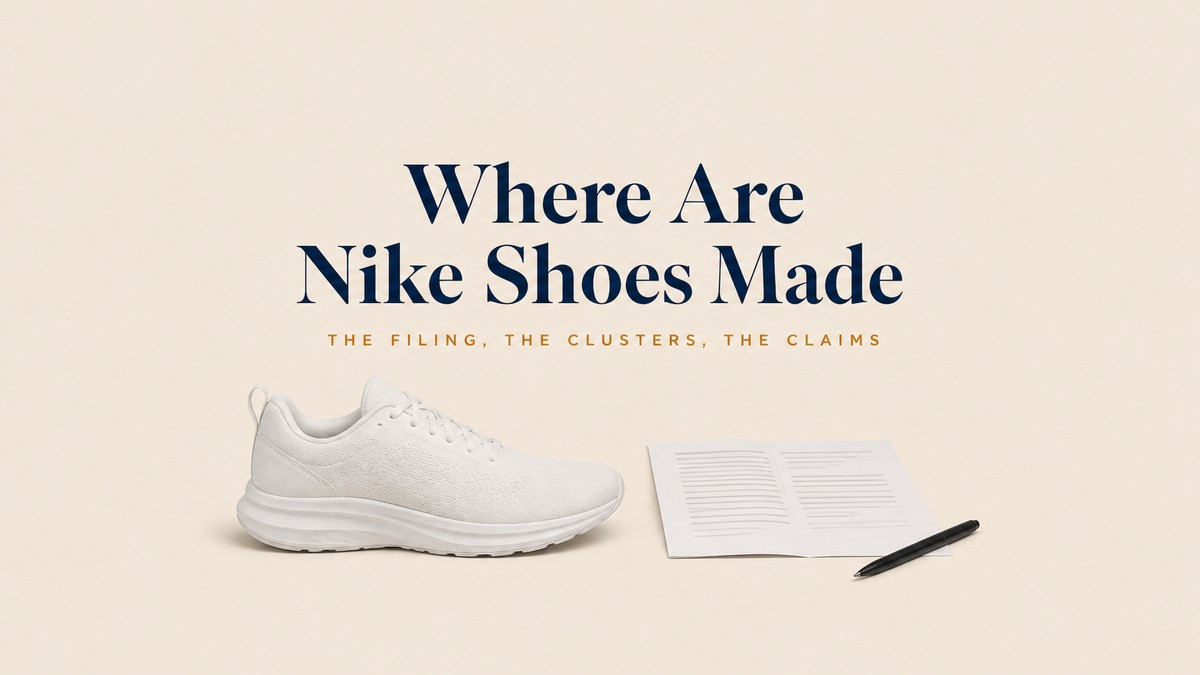
Where Are Nike Shoes Made? The Filing, the Clusters and the Claims
 ·
Updated October 14, 2026
·
16 min read
Nike answers this question itself, in a document filed with a regulator. Its annual report names three things. It gives the number of factories, the number of countries and the share of production by country. So the answer is not a guess, and it is not a blog estimate. This guide quotes the filing, then does the part the filing cannot do. It shows where the open Chinese shoe cluster sits. It shows what a buyer can order there. And it shows how to check a factory that claims to make shoes for a big brand.
| The question | Footwear | Apparel |
|---|---|---|
| How many finished goods factories? | 95 | 321 |
| Across how many countries? | 11 | 34 |
| Made by how many contract manufacturers? | 15 | 64 |
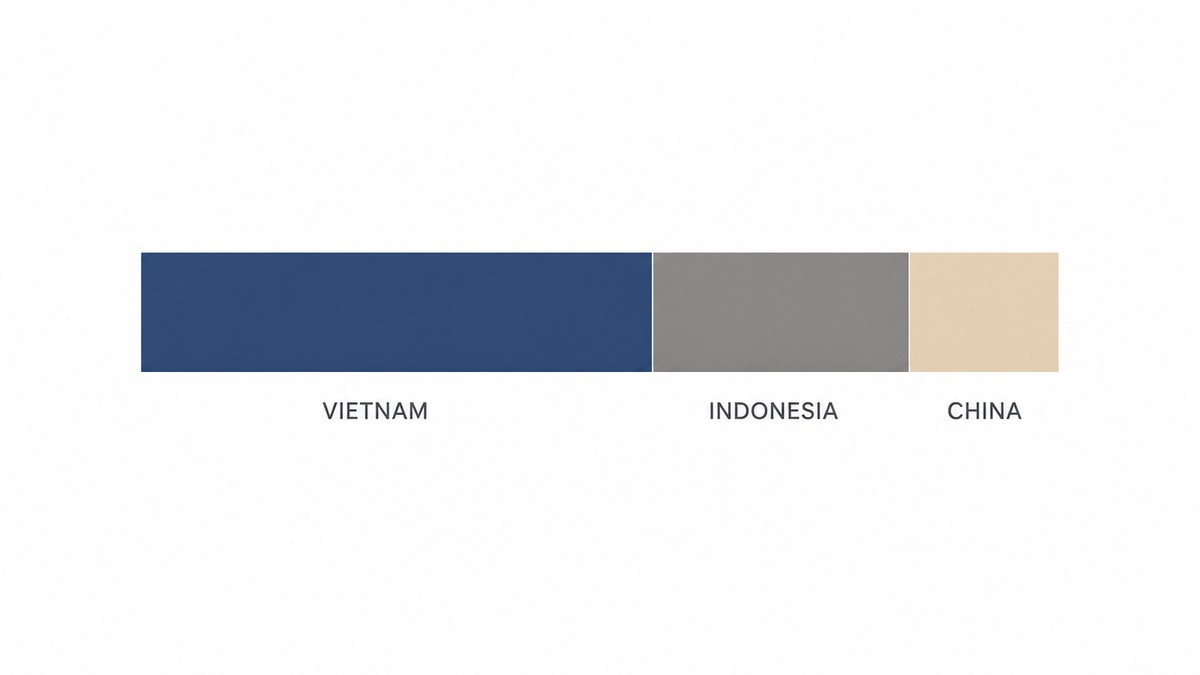
| Three largest countries by share | Vietnam 52%, Indonesia 27%, China 16% | Vietnam 34%, Cambodia 15%, China 12% |
| How many makers matter? | Four makers each above 10%, together about 60% | Largest six together about 54% |
The Short Answer From Nike's Own Filing
Nike's annual report covers the year ending 31 May 2026. It states that almost all footwear and apparel is made outside the United States. The makers are independent firms, which Nike calls contract manufacturers. Nike does not own those factories. It buys from them.
For footwear, the filing says contract manufacturers operated 95 finished goods factories across 11 countries. They worked with 15 contract manufacturers. For apparel the numbers are much wider: 321 factories across 34 countries, made by 64 contract manufacturers.
By country, the footwear split for that year was roughly Vietnam 52%, Indonesia 27% and China 16%. So those three countries made about 95 per cent of Nike footwear between them. For apparel, the three largest were Vietnam 34%, Cambodia 15% and China 12%, which is spread far wider.
One more line in the filing matters more than it looks. For footwear, four contract manufacturers each made more than 10 per cent of production. Together they made about 60 per cent. That tells you the field is not a long tail of small workshops. It is a handful of very large groups.
You can read the whole section yourself. Nike's own annual report carries it under a heading called Manufacturing. All the figures above come from there, not from a summary of it.
Nike Publishes a Factory Map, and That Is Unusual
Most brands in this trade do not name the factories that make their goods. Nike does, and it has done so for years. Its manufacturing map is a public tool. It lists factories by name and site, and states which kinds of product each makes.
The map goes further than a country list. For finished goods factories it also publishes details about the workers at each site. That makes it the most useful page on this question. It is also why so many other articles are simply copies of it.
Here is how to use it properly. Search by country first, then by product type. If you are buying footwear, filter to finished goods footwear and not materials. The two lists do not work the same way. Then note the factory name. That name is the useful part. It matters later, when you need to test a claim.
One caution about the map. It is a public filing, not a sourcing directory. It tells you who makes goods for Nike. It does not mean those factories will take your order, and most will not. A factory that spends its capacity on a brand programme has little reason to help. It will not stop a line for a small buyer.
What the Numbers Say, and Which Numbers to Trust
The filing names a number and a date. That makes it easy to compare with what other pages say. That comparison is worth doing, because the numbers on this topic do not agree.
Some pages describe a far larger network. Others quote older figures. A report from a few years ago said Nike was supplied by 122 footwear factories in 12 countries. The current filing says 95 factories in 11 countries. Both statements can be true, because they describe other years, and the network has been getting smaller.
That is the first lesson for a buyer. A number on its own is not a fact. A number with a date is. When a page says "Nike uses 500 factories", ask which year and which category. Footwear, apparel and materials are counted separately, and adding them together produces a big figure that means nothing.
The second lesson concerns percentages. A share of production is a moving figure. It shifts with tariffs, freight rates and wage levels. Vietnam's share has risen for years while China's has fallen. No blog post can keep up with that. The filing can, because it is filed every year. Use the filing for proportions and use other pages only for colour.
| What a page claims | How to test it | Why it fails |
|---|---|---|
| "Nike uses 500 factories" | Ask which category and which year | Usually footwear, apparel and materials added together |
| "Nike's biggest factory is in X" | Ask whether the source owns the plant or buys from it | Confuses the brand with the contract manufacturer |
| "Most Nike shoes come from Vietnam" | Check the current filing's share by country | True today, and it was not true a decade ago |
| "We make shoes for Nike" | Search the named factory on Nike's own map | The claim is checkable, and often is not checked |
Who Owns the Factories: Not Nike
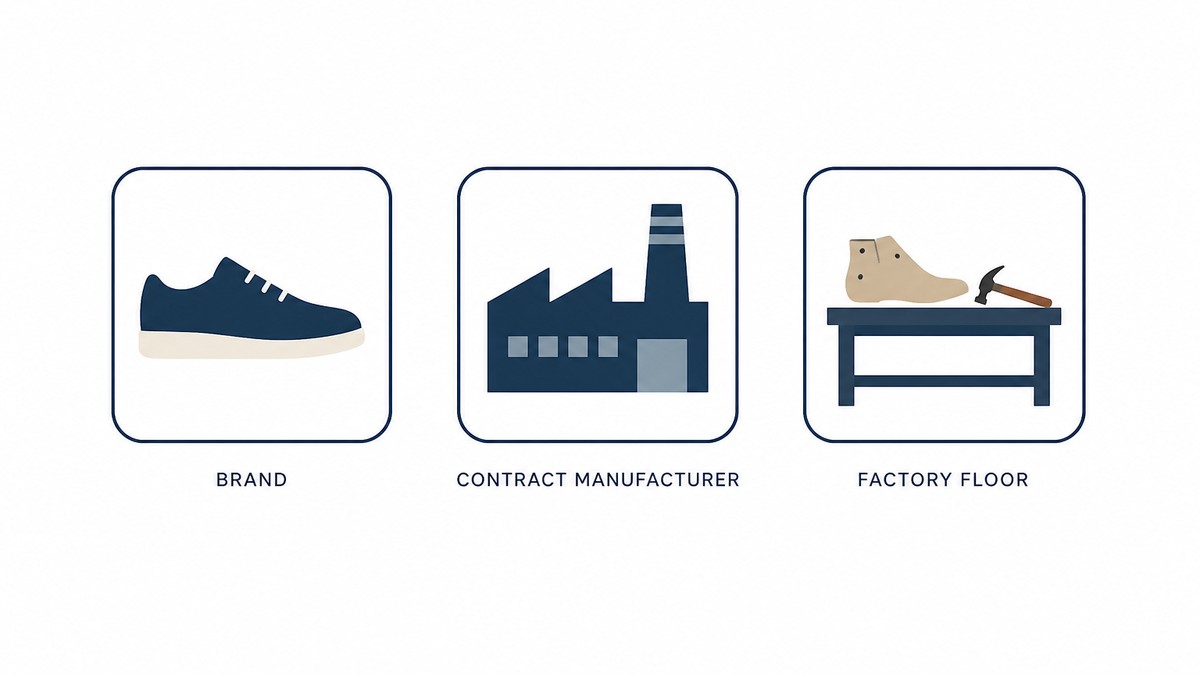
The filing uses one phrase that answers a lot of confused questions. It says nearly all products are made by independent manufacturers, which it calls contract manufacturers. That is a precise legal description. Nike does not own the buildings.
So "a Nike factory" is the wrong phrase. The right phrase is "a factory that Nike buys from". Those factories also make goods for Nike's competitors. Often that happens in the same plant, and sometimes on the same line. A change of tooling and colour is all that splits the runs.
This has a real consequence. A claim that a factory makes for Nike is not a quality promise. It is not a price signal either. The same group may make an expensive shoe and a budget shoe at the same time. They run on other lines, for other brands.
It also gives you a way to check capacity without asking the supplier anything. The large contract manufacturers are listed firms, mostly in Taiwan and South Korea. A listed firm files public reports. Those reports name its customers, its factory count and its capacity. So you can read the numbers from a filing, not from a sales email.
One more distinction is worth holding on to. The brand owns the design, the moulds and the tooling. The contract manufacturer owns the machines, the building and the workforce. A buyer who tries to order a branded design directly will hear no. The design is not the factory's to sell.
The Open Chinese Cluster That Nobody Maps
Nike's disclosed network is largely closed to a small buyer. Those factories are booked with brand programmes. A first order of a few hundred pairs will not move a line. But China has a second cluster, and it is open.
It sits in Jinjiang, a county-level city in Fujian province. The centre of it is a town called Chendai. The numbers there are worth reading twice. Chendai produces over a billion pairs of sneakers a year, with an output value above 50 billion yuan. Globally, roughly one in every five pairs of sneakers comes from that one town. It covers just 38.8 square kilometres and holds more than 7,000 shoe manufacturers and related firms. Anta, Xtep and 361 Degrees — three of China's four largest sportswear brands — are all from there. The cluster report from China Daily carries those figures.
Why does this matter to a buyer who is not a brand? Those factories make shoes to the same standard as the brand programmes. They use the same supply base. And they take orders a brand programme would never accept.
The supply base is the real asset, not the factories alone. Sole moulds, EVA, mesh uppers, laces, insoles, boxes and printing all sit within a short drive. That is why a new design can be sampled in days instead of weeks. It is also why a sole can be changed without adding a supplier.
The entry point is a design and a target cost. Bring both, because the cluster prices against a target and not against a catalogue. Expect the minimum order to be counted in pairs per colourway. Count in the hundreds or low thousands, not in containers.
Two cautions. The same cluster holds a large number of trading firms that describe themselves as factories. And the town's reputation rests on local brands, not on export programmes. So an export buyer should expect to explain documents, testing and packing. Write those requirements down before you ask for a price. That document is the specification sheet a Chinese factory actually quotes from. It is also the difference between two comparable quotes and two unrelated guesses.
How to Check a "We Make for Nike" Claim
This sentence appears often in supplier emails. It is also one of the easiest claims in sourcing to check, because Nike publishes the names. The check takes about five minutes.
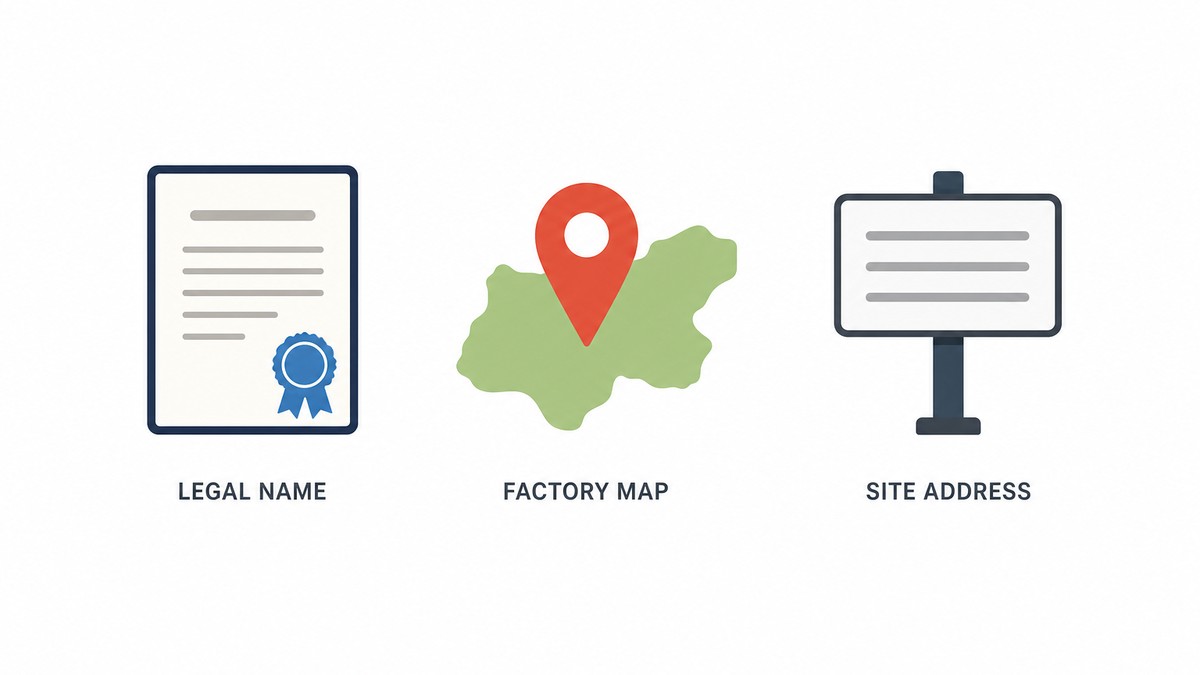
Get the legal name, not the trading name. Ask for the full registered company name and its business licence. A trading company will often give a short trading name, which cannot be looked up anywhere.
Search that name on Nike's manufacturing map. If the name is absent, the company is not a Nike supplier in the latest filing. Do not accept "we are listed under another name" without a document that links the two.
Check the product type on the map. The map states what each factory makes. A factory listed for footwear cannot be the source of a bag order, even if the name matches.
Match the registered address to the site. The licence address and the place you are invited to visit may differ. If they do not match, ask why in writing. This single question separates a factory visit from a showroom visit.
One point of fairness. Being absent from that map does not mean a factory is bad. It means it does not sell to Nike. Thousands of good factories make for local brands, for regional brands or for other export buyers. The map answers one question only, and it answers it well.
So ask a better question than "do you make for Nike". Ask which brands the factory can name as current customers. Then ask for the last three programmes with dates. A factory with real programmes can answer in a minute. A trading company changes the subject, and that is your answer. If buying in China is new to you, read the full buyer's guide to buying from China. It covers the steps before and after this check.
What This Means If You Buy Footwear
The filing is interesting on its own. It becomes useful when it changes a decision, and for a buyer it changes three.
The country follows the material, not the wage. Vietnam, Indonesia and China are close in labour cost and far apart in what they can supply. Your design may need a specific sole compound, a knit upper or a certain foam. The cluster that already makes that material then decides where you order. Choosing a country first and a material second almost always costs a sampling round.
Do not chase the brand's supplier. Chase its supplier's supplier. The 95 footwear factories are effectively closed to small orders. The materials layer underneath them is not. Soles, uppers, linings, laces, insoles and packaging are made by separate firms. Many of them will take a modest order, and some will also finish a shoe. A buyer who needs a few hundred pairs is usually better served by that layer. A finished-goods factory with a brand programme is a harder door.
Use your size honestly. A brand programme runs in the hundreds of thousands of pairs and plans a year ahead. Your order is a fill-in order. That is a weak position on price and a strong one on timing. A factory with a gap in its schedule will take work it would refuse in a busy month. Ask when the gap is, not for a discount.
The sequence that follows from all this is short. Pick the cluster from the material. Find the material supplier first. Then find the assembly factory that already works with that supplier. Then write the requirements down and sample. You may prefer to meet factories face to face instead of finding them online. In that case, one decision shapes the trip. The choice between a trade fair and a wholesale market decides how the trip is planned. And if your first order is small, place it carefully. Read what a small-quantity marketplace like DHgate is and is not safe for first.
Questions Buyers Ask About Nike Manufacturing
Where are Nike shoes made?
Nike's annual report for the year ending 31 May 2026 states that factories in Vietnam, Indonesia and China made approximately 52 per cent, 27 per cent and 16 per cent of total Nike brand footwear. So those three countries account for about 95 per cent of production between them. The same filing says contract manufacturers operated 95 finished goods footwear factories across 11 countries, working with 15 contract manufacturers.
Who actually makes Nike shoes?
Independent firms, not Nike. The filing describes them as contract manufacturers and states that nearly all footwear and apparel is made outside the United States. For footwear there were 15 such manufacturers. Four of them each made more than 10 per cent of production, and together about 60 per cent. They are separate businesses, mostly listed groups in Taiwan and South Korea, and they also make goods for other brands.
Are any Nike shoes made in the United States?
The filing states that nearly all of Nike's footwear and apparel products are manufactured outside the United States by independent manufacturers. That is the company's own description of its production base. Anything you read about a specific American plant should be checked against the filing and Nike's manufacturing map, not taken from a blog. Some American facilities handle finishing or decoration, not full shoe assembly.
Can I buy directly from a factory that makes Nike shoes?
You can approach the factory, but you cannot buy the branded design. The brand owns the design, the moulds and the tooling, so those are not the factory's to sell. A factory that makes for a brand may still take an unbranded order on your own design if it has spare capacity, and some do. Expect the answer to depend on the season and on how large your order is.
Which Chinese city makes the most sneakers?
Jinjiang in Fujian province, and specifically the town of Chendai inside it. Chendai produces over a billion pairs of sneakers a year and holds more than 7,000 shoe manufacturers and related firms inside 38.8 square kilometres. Roughly one in every five pairs of sneakers sold worldwide comes from that town. It is also home to Anta, Xtep and 361 Degrees, three of China's four largest sportswear brands.
How do I check whether a Chinese factory really supplies Nike?
Three steps, and they take about five minutes. Ask for the full registered legal name and the business licence. Search that exact name on Nike's own manufacturing map. Then check two things: that the product type on the map matches what you are ordering, and that the registered address matches the site you are invited to visit. If the name is absent, the company is not a Nike supplier in the latest filing, whatever the email says.
Source from the cluster, on your own design
Send us your shoe design, the material you need and the quantity you want to test. We will tell you which cluster fits, which layer to buy from first, and what the minimum order really is. Then we put it in writing before anyone samples.
Start a Footwear Enquiry
Questions & Comments
We read every one and reply within 24 hoursTell us the shoe, the material and the quantity you want to test. We will say which cluster fits, which layer to buy from and what the minimum order really is. Ask about sample timing, testing or a supplier's claim and we will answer before you commit.