
Types of Hair Combs & Brushes: Materials, Bristles & Manufacturing Sourcing Guide
 ·
Updated October 8, 2026
·
17 min read
The type of comb you order decides the mould or the saw pattern. The material you pick decides whether it feels warm or cheap in the hand. And the finishing step nobody puts in the quotation decides whether the teeth scrape the scalp or glide through it. This guide covers every comb and brush type a factory will quote you, what each material really is, how the two production routes differ, and how to inspect a batch before your container leaves China.
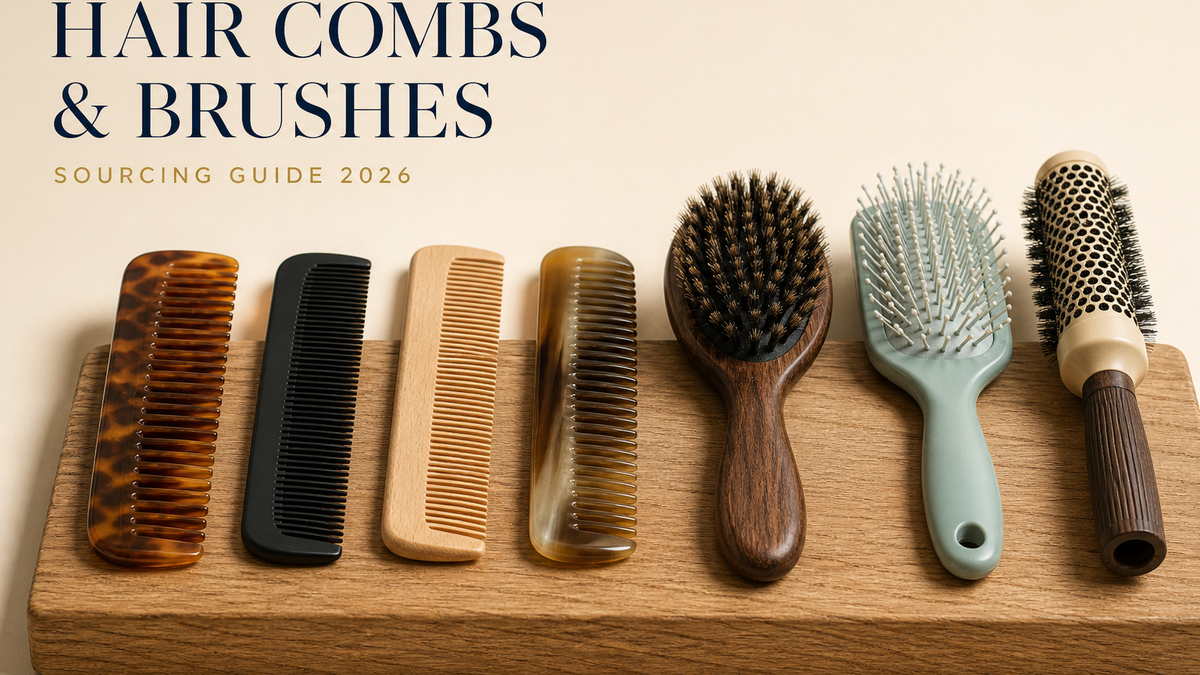
Which Comb or Brush to Order, Matched to What You Are Making
| If you are making | Order this | Because |
|---|---|---|
| A premium retail comb | Cellulose acetate sheet | Saw-cut and tumbled, so no mould lines on the tooth spine. Deep colour and low static. |
| A high-volume budget comb | ABS or polystyrene, injection moulded | Lowest cost per piece. Must include a polish pass, or the teeth arrive with sharp parting lines. |
| A plastic-free comb | Kiln-dried hardwood | Beech, boxwood or sandalwood. Low static, but it cannot be soaked and needs a stated moisture level. |
| A daily detangling brush | Nylon bristles with ball tips | Cheapest safe option. The two failure points are tip loss and tuft pull-out, both testable. |
| A smoothing or frizz-control brush | Boar bristle, or a boar and nylon mix | Boar bristle is pig hair. Its split ends carry scalp oil down the strand, which nylon cannot do. |
| A heat-styling round brush | Ceramic-coated barrel with metal or nylon pins | The barrel does the shaping. The pin material only affects grip and static. |
What this guide covers
- The comb and brush types a factory will quote
- Comb materials: acetate, ABS, wood, horn and metal
- Brush bristles: boar, nylon, silicone and pins
- The two production routes and why they decide quality
- What to write in your request for quotation
- How to check a sample and a bulk batch
- Rules and paperwork buyers forget
- Tooling, MOQ and picking the right process
- A five-step sourcing roadmap
- Frequently asked questions
1. Types of Combs and Hair Brushes: What the Factory Calls Them
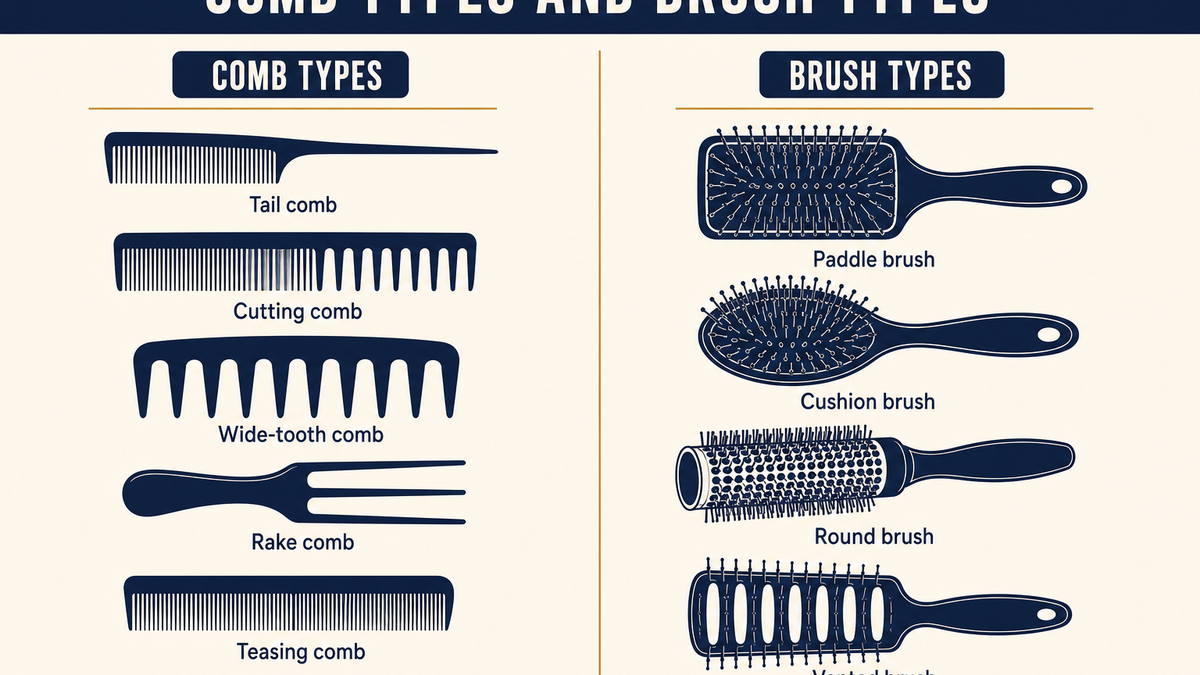
Hair tools split into two families, and the factory quotes them on completely different lines. Combs are a single moulded or cut part. Brushes are an assembly of handle, cushion pad and bristle tufts. Knowing the trade name for each one saves you weeks, because a supplier who hears “wide-tooth comb” knows exactly which mould to reach for.
Comb types and what each one does
Combs are named by tooth spacing and by the job they do. Tooth spacing drives the tooling, so this is the first thing to fix before you ask for a price.
| Comb Type | Tooth Spacing | What It Is For |
|---|---|---|
| Tail comb (rat tail, pin tail) | Fine teeth plus a long thin tail | Sectioning and parting hair before cutting, colouring or braiding |
| Cutting comb (barber comb) | Fine teeth on one end, wide on the other | Scissor-over-comb and clipper work in a barber shop |
| Dressing comb | Fine to medium, long body | Smoothing and finishing styled hair; the standard men’s comb |
| Wide-tooth comb (detangling comb) | Wide, rounded, often curved | Wet detangling and distributing conditioner through curly hair |
| Rake comb | Extra-wide and extra-long teeth | Thick, high-density natural hair; braid preparation |
| Pick (afro pik, styling pik) | Long, widely spaced prongs with a handle | Lifting and shaping coiled and Afro-textured hair |
| Teasing comb | Very fine, tightly packed rows | Backcombing to build root volume |
| Beard and moustache comb | Medium to fine, small body | Detangling facial hair and spreading beard oil |
| Lice comb | Metal teeth, extremely fine | Trapping nits and lice; usually stainless steel, not plastic |
Two of these are worth flagging early because they change the material choice. A lice comb is normally stainless steel, because plastic teeth flex too much to trap anything. A teasing comb needs fine teeth that will not shear off when the customer pulls backwards through a knot, which rules out the cheapest polystyrene grades.
Brush types and what each one does
Brushes are named by the shape of the head and the job it performs. This is where most first-time buyers get the specification wrong, because they order the bristle first and the head shape second. It should be the other way round.
| Brush Type | Head and Bristle | What It Is For |
|---|---|---|
| Paddle brush | Large flat rectangular head, flexible tipped bristles on a cushion | Fast everyday detangling on medium to long hair |
| Cushion brush | Oval head on an air cushion, mixed bristle | The salon workhorse for brushing out and smoothing a blow-dry |
| Round brush (thermal brush) | Cylindrical barrel, ceramic or metal, with pins | Adding volume and forming curves while blow-drying |
| Half-round brush | Part cylinder with a flat back | Men’s styling; the flat edge is used to set a hard side part |
| Vented brush | Hollow body with open vents | Faster drying, because hot air moves through the head not around it |
| Detangling brush | Flexible bristles or soft fins, no ball tips | Wet hair and fragile, colour-treated strands |
| Smoothing brush (boar brush) | Dense boar bristle, sometimes blended with nylon | Pulling oils down the strand and reducing frizz |
| 7-row styling brush | Rows of stiff nylon pins in a half-round body | Drawing sections of hair straight during blow-drying |
The head shape is a mould, and a mould is a fixed cost you pay once. Bristles are a consumable you can change between runs. Fix the head first, then choose bristles, because that order matches how the factory buys tooling.
2. Comb Materials: What You Are Actually Buying
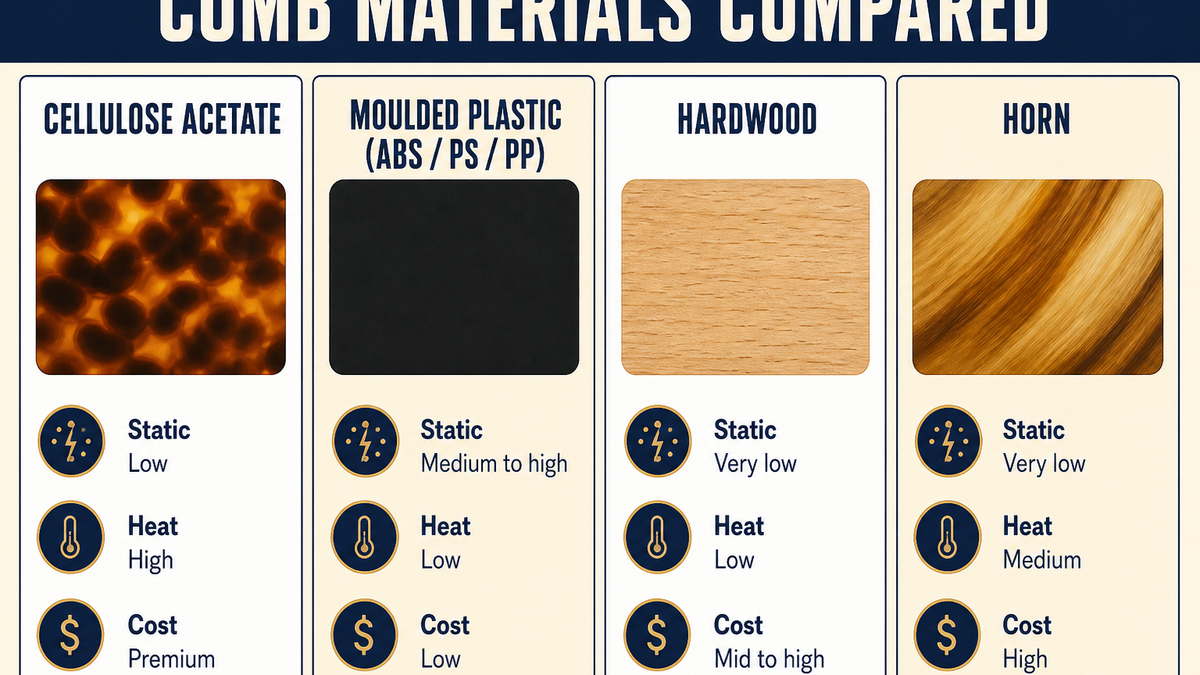
Five material families cover almost every comb sold worldwide: cellulose acetate, the commodity plastics, wood, horn, and metal or carbon fibre. The list is short, but the price gap between the cheapest and the best is wide, and the feel in the hand is wider still.
| Material | How It Is Formed | Static | Heat | Cost Bracket |
|---|---|---|---|---|
| Cellulose acetate | Cast sheet, then saw-cut and tumbled | Low | High | Premium |
| ABS | Injection moulded | Medium | Low | Mid |
| Polystyrene (PS) | Injection moulded | High | Low | Low |
| Polypropylene (PP) | Injection moulded | High | Low | Lowest |
| Hardwood | Sawn and sanded | Very low | Low | Mid to high |
| Horn | Cut and hand-polished | Very low | Medium | High |
| Stainless steel | Stamped or laser cut | High | Very high | Mid |
A. Cellulose acetate: the premium plastic that is not really plastic
Cellulose acetate is made by treating purified cellulose, usually from cotton linters or wood pulp, with acetic anhydride. The result is a plant-derived plastic that behaves quite differently from the oil-based ones sitting next to it on the shelf.
Three things make it the right choice for a premium comb. It is cast into sheets, so the colour runs all the way through instead of being printed on the surface, which is how factories produce convincing tortoiseshell and ivory effects. It takes a high polish, so a properly tumbled acetate tooth has a rounded, almost glassy edge. And it holds heat well enough to sit next to a blow-dryer without warping.
The catch is the process. Acetate combs are not moulded, they are cut from sheet and then polished in tumblers for hours. That extra step is where the money goes, and it is the first thing a cheap factory skips.
B. ABS, polystyrene and polypropylene: the commodity group
These three are injection moulded, which means molten plastic is pushed into a steel mould and ejected as a finished comb in seconds. It is the cheapest way to make a comb, and it shows in three places.
- The mould parting line. Where the two halves of the mould meet, a thin ridge forms. If it lands on the tooth spine, your customer feels a sharp edge on the scalp. A polish pass removes it, but many factories quote without one.
- Static. Polystyrene and polypropylene build up a charge on dry hair. ABS is slightly better but still not in the same class as acetate or wood.
- Tooth root stress. The corner where a tooth meets the spine is a filled corner in a mould, so it is a built-in weak point. Narrow tooth spacing makes it worse, which is why fine-tooth budget combs snap first.
None of this makes ABS a bad material. It makes it the right material for a promotional comb at a very low price, and the wrong material for anything with a premium price tag.
Three checks that tell acetate from ABS in ten seconds. First, weight: an acetate comb is noticeably heavier for the same size. Second, warmth: hold it in your fist for a minute and acetate feels warm, while ABS stays cool and slightly slippery. Third, colour depth: scratch the back of the spine with a fingernail and look at the mark. Acetate shows the same colour underneath because the pigment runs through the sheet. ABS often shows a paler core, because the colour is only in the surface layer.
C. Wood: the material where moisture decides everything
Wooden combs are popular with buyers who want a plastic-free product, and they are the easiest to get wrong. The reason is moisture. Timber keeps exchanging water with the air around it until it settles at a balance point, and a comb cut from timber that was too wet will shrink and crack once it sits in a dry, heated room.
Kiln-dried lumber for interior use is normally held around 6% to 8% moisture, and that is the figure to write into your order. A supplier who cannot tell you the moisture level of the timber they use is guessing, and the cracks will show up after the goods have shipped.
Species matter less than people assume, but they do matter. Beech is dense, even and takes sanding well. Boxwood is harder and polishes to a fine finish, which is why it is used on better beard combs. Sandalwood carries its own scent, which some brands sell as a feature. On the finish, an oil or beeswax rub keeps the wood breathing, while a lacquer coat gives a glossier look but flakes off at the tooth edges after a few months of use.
Never put a wooden or horn comb in water, and never let a supplier claim theirs is dishwasher safe. Both materials take on water, swell, and then crack as they dry. If your product page tells customers to wash their comb under the tap, you have designed a returns problem.
D. Horn, metal and carbon fibre
Horn is keratin, the same protein as hair and nails, which is why it feels warm and glides rather than scrapes. It is cut and hand-polished, so no two pieces look alike, and a good horn comb can be polished to an edge smoother than any moulded plastic. The trade-offs are price, fragility if dropped, and the fact that it is an animal by-product that has to be declared. If you sell into markets with vegan or religious labelling rules, that declaration matters.
Stainless steel is the material for lice combs and for any comb that must survive heat. It is the most static-prone of the group, so it is a poor choice for a consumer smoothing comb. Carbon fibre is lighter and stiffer than steel and is genuinely anti-static, but the material cost puts it in the professional salon bracket rather than the retail shelf.
3. Brush Bristles: Boar, Nylon, Silicone and Pins
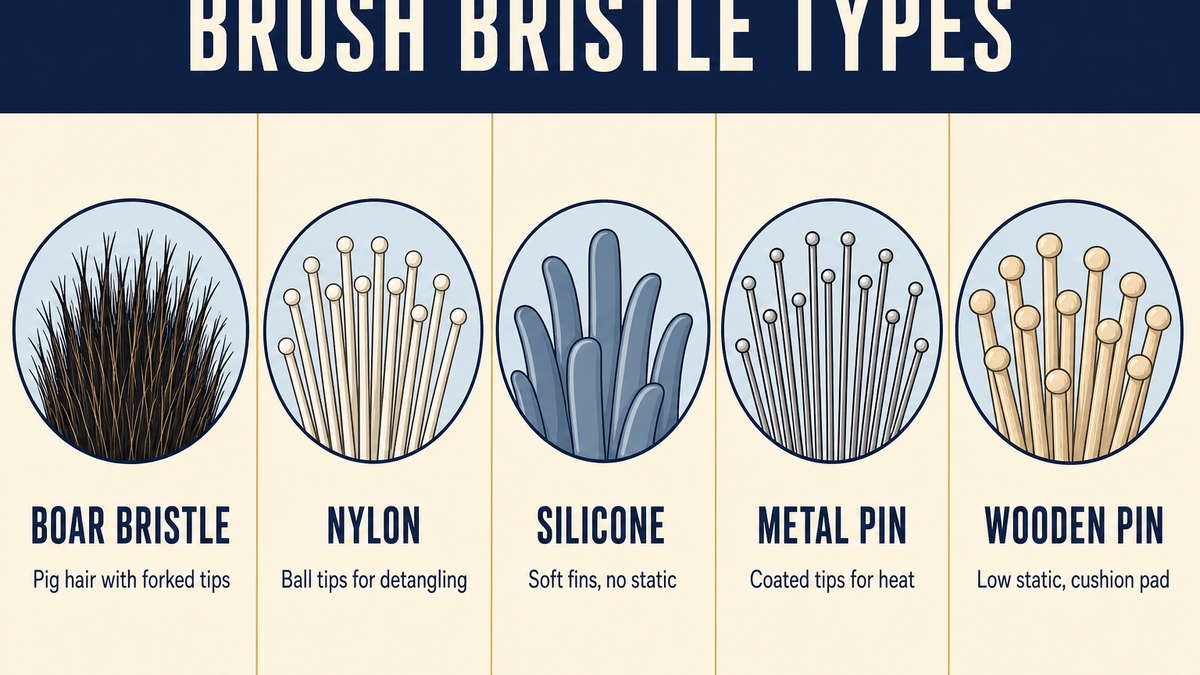
Bristle is where a brush earns its price or loses its customer. It is also the part of the product buyers specify last and understand least. There are five bristle families in commercial production, and each one fails in a different way.
A. Boar bristle is pig hair, and the label hides a blend
The word “boar” is a marketing term. Boar bristle is the hair of a domestic pig, and the trade also calls it hog hair or pig bristle. It has a structure that synthetic filament cannot copy: each strand tapers to a natural split end, and those splits act like tiny brushes that pick up sebum from the scalp and carry it down the length of the hair. That is the real reason a boar brush smooths and adds shine, and no nylon bristle does it.
What the label will not tell you is the blend. A large share of brushes sold as boar bristle are in fact a mix of boar and nylon, usually with the nylon carrying most of the tufts and the boar filling the outer rows. The mix is not dishonest on its own, and plenty of buyers choose it on purpose because pure boar is too soft to get through thick hair. The problem is only when a supplier quotes pure boar and ships a mix.
Four questions settle this before you order:
- What share of the tufts is natural hair? Ask for the ratio in the written specification, not in a chat message.
- Is it first-cut or a lower grade? Grading is by firmness. Soft boar suits fine hair, stiff boar suits thick hair, and the price difference between grades is real.
- Are the natural fibres bleached or dyed? This affects both the look and the animal by-product paperwork.
- Is the animal by-product declared? Some markets and some retailers will ask for that statement.
A burn test is the fastest way to catch a “100% boar” claim that is not true. Pull a few bristles and hold them to a flame. Real hair smells like burning feathers and crumbles to ash. Nylon melts into a hard bead and smells of hot plastic. Do this on the pre-production sample and again on a random brush from the bulk batch, because suppliers have been known to change the blend between the two.
B. Nylon bristles: the ball tip is the whole product
Nylon is the default for detangling and everyday brushes, and for good reason. It can be extruded to a consistent thickness, it takes colour, and it does not absorb water. The design detail that matters is the tip. A cut nylon end is a small blade, so almost every consumer brush sold today uses a ball-tipped bristle, where the end is melted into a smooth sphere.
That single feature creates the most common failure in the category: tip loss. If the melting step is under-run, the ball is only weakly attached and it comes off in the hair within weeks. The other failure is tuft pull-out, where a whole group of bristles leaves the pad. Both are straightforward to test and neither shows up in a product photo.
C. Silicone, metal pins and wooden pins
Silicone fins and soft flexible bristles are used in wet detangling brushes. They produce no static, they do not scratch, and they are almost impossible to break, which makes them a good fit for children’s products and for fragile, chemically treated hair. Their weakness is grip: silicone slides off coarse hair instead of separating it, so they work best in a wide-spaced pattern.
Round and thermal brushes use metal or ceramic-coated pins. Here the barrel does the work of shaping the hair and the pins only need to hold the section. The material choice is mostly about heat transfer and whether the pin has a coated tip. A bare metal tip resting against a hot barrel can scorch a strand, so ask whether the pins are tipped.
Wooden and bamboo pins sit inside a cushioned pad on natural-style brushes. They are the lowest-static option of all, and the risk is moisture again: pins that were not properly dried can shrink, loosen in the pad, and start falling out within a season.
4. How Combs and Brushes Are Actually Made
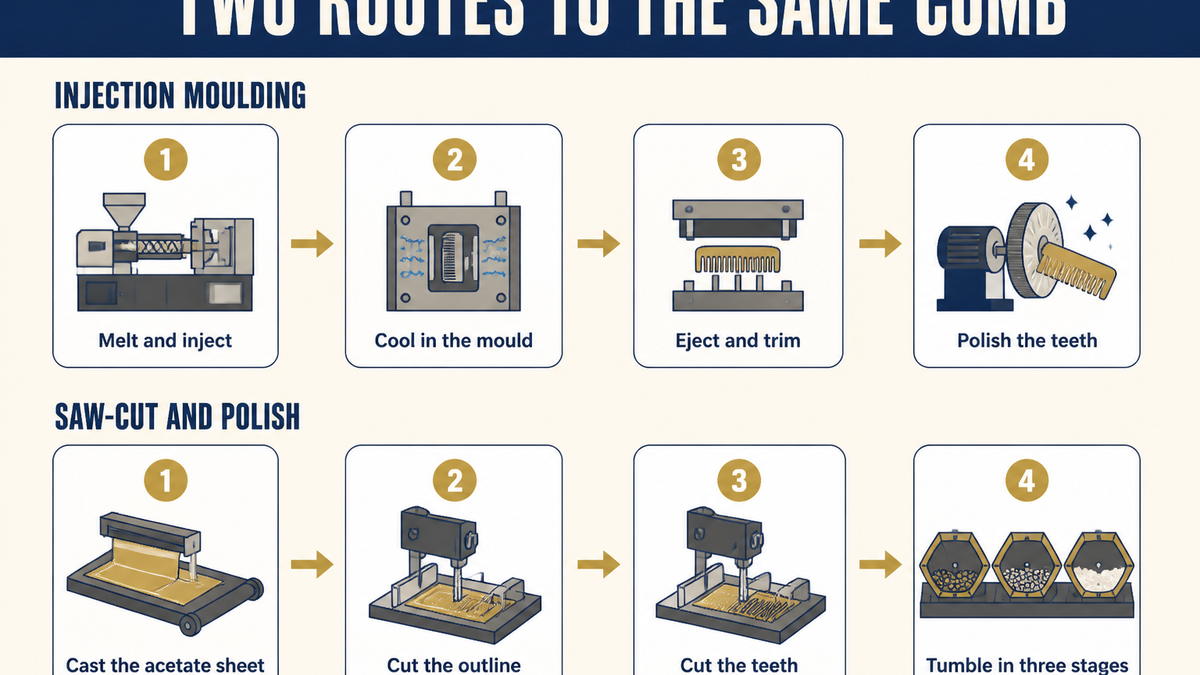
There are three production routes, and the route your supplier uses decides the ceiling on quality far more than the material name does. This is the section most guides skip, and it is the one that explains why two combs made from the same material can feel completely different.
Route 1: Injection moulding
Molten plastic is injected into a steel mould under pressure, cools, and is ejected as a finished comb. A mould runs two or more cavities at once, so a single cycle produces several combs. The cycle takes seconds, which is why this route is cheap at volume.
Four things go wrong on this route, and all four are visible on the finished part if you know where to look.
- Parting line
- The seam where the two halves of the mould close. If it runs along the tooth spine, the customer feels a ridge on the scalp. Ask the factory to move the seam to a face that never touches skin.
- Gate mark
- Where the plastic enters the cavity. On a poorly placed gate it leaves a small nub at an end tooth. It is normally trimmed by hand, and hand trimming is where consistency slips.
- Ejector marks
- Small circular dents on the back of the spine where the pins push the part out. Usually hidden, but on a thin decorative comb they can be seen.
- Unfilled tooth tips
- If the plastic cools before it reaches the end of a long, thin tooth, the tip comes out short or rounded. This is a moulding setting problem, and it gets worse as tooth spacing gets finer.
Every one of these is fixable with a polish pass at the end of the line. That is why the same mould can produce a comb that scrapes and a comb that glides, depending only on whether the factory runs the polishing step.
Route 2: Saw-cut and tumble-polished
Cellulose acetate arrives at the factory as a cast sheet in the finished colour. The comb outline is cut, then the teeth are cut into it, usually on a CNC machine or a dedicated gang saw. At this point the comb is sharp enough to cut skin, and it looks nothing like the finished product.
The finishing is done in tumblers. The parts go into a rotating drum with an abrasive medium, then into a second drum with a finer medium, then usually into a third with a polishing compound. Each stage runs for hours. Wooden and horn combs follow the same logic but are sanded by hand or on a belt rather than tumbled.
Ask how many tumbling stages the factory runs. Three is normal for a quality acetate comb. One is common at the budget end, and a single stage leaves visible fine scratches along the tooth edge and a slightly dull finish. This one question separates the factories that understand the material from the ones that only cut it.
Route 3: Brush assembly
A brush is built in four steps, and a defect in any of them shows up as a customer complaint about a different part. The handle and the pad backing are moulded first. The bristle tufts are then inserted into the pad, held either by a metal staple folded around the base of each tuft or by an anchorless method where the backs are fused with heat. The filled pad is then fixed into the head, usually by gluing or ultrasonic welding. Finally the finished brush is trimmed, cleaned and packed.
Two choices here decide how the brush behaves after six months. The anchorless method gives better tuft retention and leaves no metal inside the head, but it needs a higher machine cost, so many factories only offer it above a certain order volume. On the pad fixing, glue is cheaper, while ultrasonic welding is cleaner and does not fail in a hot car. If your product will be sold in a market where cars get very hot, that difference matters.
5. What to Write in Your Request for Quotation
Most quality problems in this category are specification problems wearing a disguise. If the order sheet says “plastic comb, black, 5000 pcs”, the factory is free to choose the material, the process and the finish, and it will choose whatever costs least. Twelve lines fix that.
- Product type using the trade name from Section 1, plus overall length, width and thickness in millimetres.
- Material by name and grade, not by colour. “Cellulose acetate, cast sheet” or “ABS, injection moulded”.
- Tooth count, tooth spacing and tooth length for a comb. For a brush, the number and pattern of rows.
- Tip treatment where it applies. Ball-tipped, rounded, or as-cut.
- Finish and how many polishing stages it includes.
- Colour reference by Pantone or a physical sample, and whether the colour must run through the material.
- Tolerance on the critical dimensions, so that a “same as sample” claim can be checked.
- Bristle specification for a brush: material, the natural-to-synthetic ratio if mixed, and the tuft density.
- Branding method — pad printing, hot stamping, laser engraving or an in-mould label — and where it sits on the product. If you are new to this, the same choices are covered in our guide to custom logo printing and finishing.
- Packaging — polybag, hang card, blister, or a printed box, with the artwork deadline spelled out.
- Testing and paperwork required, and who pays for it.
- Delivery term and destination, so the quoted price is comparable.
Put these into a single page and send the same page to every supplier you approach. Quotes that come back against the same specification are comparable. Quotes that come back against a vague description are not, and the cheapest one is usually cheap because it dropped a line you did not write.
6. How to Check a Sample and a Bulk Batch
Combs and brushes are cheap to inspect and expensive to recall. A full check of a sample takes under an hour, and it catches nearly every defect that matters to a customer. Do it in this order, because the quickest checks screen out the worst suppliers before you spend time on the slower ones.
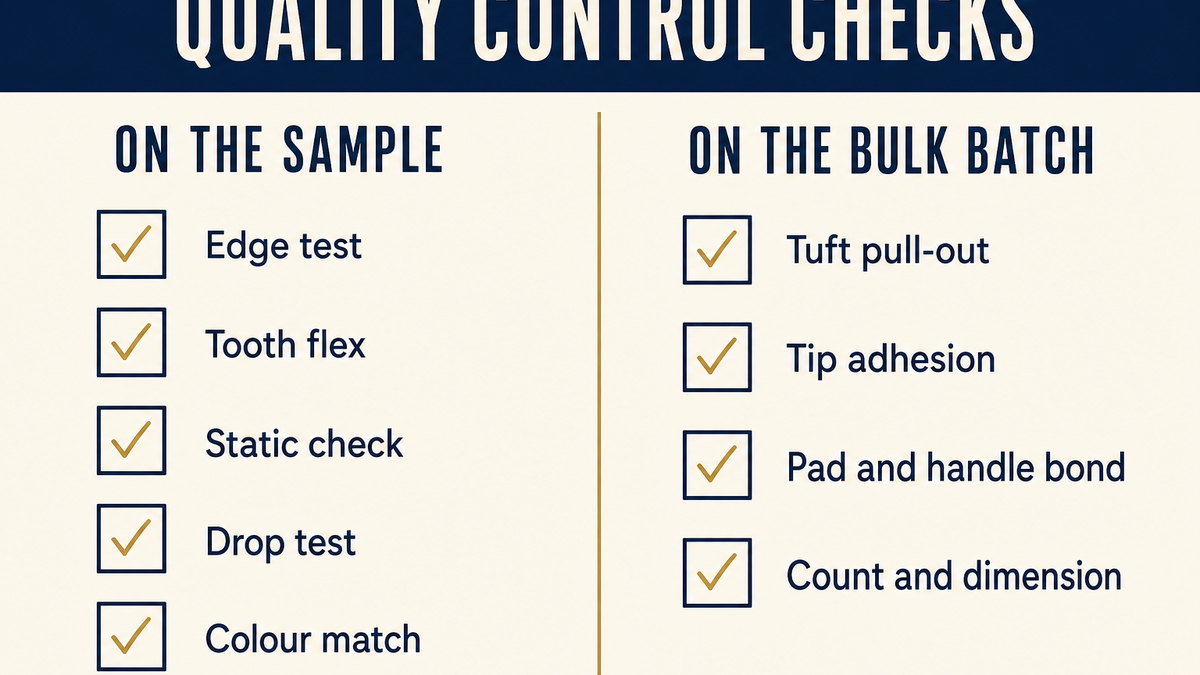
A. Five checks on the sample
- Edge test
- Draw the tooth spine and every tooth edge across the back of your hand, then across a sheet of tissue paper. A comb that leaves a mark or tears the tissue has a burr, which means the polish pass was skipped or the trim was done by hand.
- Tooth flex
- Push each tooth sideways and let go. It should spring back and stay in line. Teeth that stay bent, or that crease white at the root, will snap in use.
- Static check
- Comb a dry strand of your own hair ten times and watch for flyaway. Wood and acetate stay calm. Polystyrene and polypropylene will lift the hair, and that is what your customer will photograph for a one-star review.
- Drop test
- Drop the sample from about waist height onto a hard floor, three times. Acetate and horn can chip at a tooth tip, which is a known trade-off. Polystyrene shatters. Do this before you promise a lifetime guarantee.
- Colour match
- Check the sample against your approved Pantone under daylight, then under a warm bulb. Moulded parts from different cavities can come out a shade apart, and it shows when two combs sit side by side in a retail box.
B. Four checks on the bulk batch
On the production run you are looking for drift rather than single defects, so the method changes. Sample across the whole batch rather than pulling everything from the first carton.
- Tuft pull-out. Pull a set number of bristle tufts out of the pad with a force gauge, spread across the head and across several brushes, and record the lowest reading rather than the average. Set the target with your supplier in writing before production and hold them to it.
- Tip adhesion. Bend the bristles back against the pad and look for balls that have come loose or sheared off. Run this on at least thirty bristles across the batch, not on one brush.
- Pad and handle bond. Push the cushion pad away from the handle with your thumbs. If it moves, the glue or the weld is weak, and the pad will separate in a hot car or a hot shower.
- Count and dimension. Count the teeth or bristle rows against the approved drawing, and measure the overall length. Suppliers quietly drop teeth when a mould wears, and a comb with one missing tooth is a rejected lot.
The check almost every buyer skips is the one on the packaging. Take a finished, boxed or carded product, drop it from counter height, and open it. If the comb has shifted against the card and the tooth tips are now bent, your retailer will be dealing with returns on a product that left the factory perfect. Pack a pilot batch properly before you commit to the full run.
Run these as a formal pre-shipment inspection before the goods leave, and treat the first moulding or cutting run as a separate first article inspection. Defects caught at the factory cost you a rework day. The same defects caught in a retailer’s warehouse cost you the account.
7. Rules and Paperwork Buyers Forget
Hair combs and brushes are simple products, which is exactly why buyers assume there is nothing to declare. There are four areas that come up regularly, and the first one surprises most people.
A. Chemical rules in the European Union
Under the REACH Regulation, a comb or a brush is an “article” rather than a chemical mixture. That matters, because the duties that fall on an article are different from the ones that fall on a formulation. If a substance on the candidate list is present in your article above a set concentration, you have to pass information about it down the supply chain and, on request, to the consumer.
The candidate list of substances of very high concern is maintained and published by the European Chemicals Agency, and it is updated periodically, so the version you relied on two years ago may not be the current one. Practically, this means three things. Ask your supplier for a declaration covering the current candidate list. Ask specifically about the pigments and any coating, because colourants and surface treatments are where the risk concentrates. And keep the declaration on file against the shipment, so that you can answer a retailer’s question months later.
B. Chemical rules in California
California’s Safe Drinking Water and Toxic Enforcement Act of 1986, known as Proposition 65, requires businesses to warn Californians before exposing them to listed chemicals. The list is maintained by the Office of Environmental Health Hazard Assessment and is updated as chemicals are added.
For this product group the practical exposure is on decorated surfaces: painted handles, dyed bristles, printed branding and metal plating on a barrel. If you sell into California and a supplier cannot say what is in the coating, you are carrying the risk of a warning requirement you did not plan for.
C. Wood packaging and wood products are not the same thing
Buyers often confuse the two. ISPM 15, the international standard for wood packaging material in international trade, covers crates, pallets and dunnage made from raw wood. It does not cover your finished wooden comb, which is a manufactured article rather than packaging.
That does not mean wooden goods need no controls. It means the controls sit with your supplier and your specification rather than with a stamp on a pallet. For wooden combs the two things worth writing down are the species and the moisture level of the timber. Interior-grade hardwood is normally dried to roughly 6% to 8%, a figure that is standard in woodworking and is described in extension literature such as this Purdue Extension paper on moisture content in stored lumber. Timber supplied wetter than that will move and crack after shipping.
D. Animal by-products and country of origin
Horn and natural bristle are animal by-products, and some buyers need a written statement for their own customers. Ask for the species and the source at the quoting stage, because retrofitting that paperwork after production is much harder.
Finally, every comb and brush shipped to the United States has to carry a country of origin marking that a shopper can read without a magnifying glass. Shortened country names are a common trap, and an abbreviation that looks obvious to you may not be accepted on a customs form. The rules around what counts as an acceptable marking, including which short forms are and are not allowed, are set out in our breakdown of made in PRC versus made in China labelling.
8. Tooling, MOQ and Choosing the Right Process
The process route you choose should follow your order size, not your taste. Each route carries a different fixed cost, and the fixed cost is what decides whether a small first order is viable at all.
Highest fixed cost. A steel mould is a one-off payment, so this route only pays off once your annual volume is high. Best for combs and brush handles in ABS or polystyrene.
Cut from stock sheet, so you can start small and change the shape between runs without paying for new tooling. The trade-off is a higher cost per piece because every comb is polished individually.
Little or no tooling, but the highest labour per piece and the widest piece-to-piece variation. Suited to small premium ranges and gift sets rather than mass retail.
How to decide between them
Ask two questions. First, how many pieces will you sell in a year? If the answer is measured in thousands rather than tens of thousands, a mould is money you will not get back, and the saw-cut route lets you test the market first. Second, how likely is the design to change? A mould locks the shape. If your range is still moving, keep the shape flexible and accept the higher piece price for one or two seasons.
On minimum order quantities, the honest answer is that they are set by each factory’s setup time, so they vary widely and they move. A cutting shop that runs acetate sheet all day will take a much smaller order than a moulding plant that has to schedule a machine change. Ask for the MOQ at two volumes so you can see where the price breaks, and treat any single quoted MOQ as a starting position rather than a rule. The usual levers apply here as everywhere else: a firm delivery window, a simple colour, and a repeat order all buy you flexibility.
One cost item is easy to overlook. Branding is charged separately from the product on most quotations, and the method changes the price more than the area being printed. Pad printing is cheapest and works on a flat face. Hot stamping gives a metallic look but needs a firm, flat surface and costs more in setup. Laser engraving suits wood and horn and never wears off, but it cannot produce a colour. Decide the method before you freeze the shape, because a logo that falls on a curved edge can force a change to the tooling.
9. A Five-Step Sourcing Roadmap
Worked in this order, these five stages keep the expensive mistakes out of your container.
- Fix the type and the material together. Choose the comb or brush type from Section 1, then pick the material that suits the price point you are selling at. Deciding one without the other is how buyers end up with a premium-looking comb made from the cheapest grade.
- Write the twelve-line specification. Material, dimensions, tooth or row count, tip treatment, finish, colour reference, tolerance, bristle mix, branding, packaging, testing and delivery term, all on one page.
- Check the factory before you check the samples. Ask to see the moulding machine or the cutting and tumbling line, not just the showroom. A short factory audit answers in an afternoon what a month of emails will not.
- Approve the sample by testing, not by looking. Run the five sample checks, keep one approved piece sealed as your golden sample, and write the tuft pull-out target into the order. If you are sourcing several beauty tools at once, the same testing logic is set out in our guide to toothbrush bristle materials, where the filament and tip checks follow the same pattern.
- Inspect before shipping. Pull tufts, run the edge test across the batch, count teeth against the drawing, and check the paperwork. Then book the container.
All of this sits inside our Beauty & Care Products sourcing hub, which collects the material and factory guides for this category in one place.
10. Frequently Asked Questions
What is the best material for a hair comb?
For a premium comb, cellulose acetate. It is cast in sheets so the colour runs all the way through, it takes a deep polish, and it holds its shape near a blow-dryer. For a budget comb, ABS is a reasonable middle option as long as the factory runs a polish pass. For a plastic-free product, kiln-dried hardwood is the safest choice provided the moisture level of the timber is written into the order.
Is boar bristle really better than nylon?
They do different jobs rather than one being better. Boar bristle is pig hair and its natural split ends carry scalp oil down the hair, which is why it smooths and adds shine. Nylon is firmer, does not absorb water and is far cheaper, so it detangles thick or wet hair more effectively. Many brushes blend the two on purpose. The problem is only when a supplier quotes pure boar and ships a mix, which is why the burn test is worth doing.
Why does a cheap comb feel sharp on the scalp?
Almost always because of the mould parting line, which is the thin ridge left where the two halves of an injection mould meet. If that ridge lands on the tooth spine, no amount of nice material will save the feel. It is removed by a polish pass at the end of the line, and that is the step budget quotations leave out. Run the tissue paper test on the sample to catch it.
How do I know a comb is genuinely cellulose acetate?
Three quick checks. It is noticeably heavier than the same size in ABS. It feels warm in your fist after a minute, where ABS stays cool. And if you scratch the back of the spine, the mark shows the same colour underneath, because acetate sheet is coloured all the way through rather than only on the surface.
What is a normal minimum order quantity for a custom comb or brush?
It depends on the route. A factory cutting acetate sheet can often take a small first order because there is no mould to pay for, while an injection moulding plant will set a much higher MOQ to cover the machine change and the tooling. Ask for pricing at two volumes so you can see the break points, and remember that the MOQ is usually negotiable when the design is simple and the colour is standard.
Can I put my own brand on a stock comb design?
Yes, and it is the cheapest way to launch. Using an existing mould avoids a tooling bill entirely, and you add the brand by pad printing, hot stamping or laser engraving. The part you should still write into the specification is the material and the finish, because that is where the difference between an eight cent comb and a good one actually lives.
Get Your Specification and Factory Checked Before You Order
Our team reviews your comb or brush specification line by line, checks the moulding or cutting and polishing line at the factory, runs the edge, flex and tuft tests on the sample, and holds one approved golden sample before bulk production starts.
Request a Comb & Brush Sourcing Quote
Questions & Comments
We read every one and reply within 24 hoursWorking out which comb or brush material to order, checking whether an acetate quotation is really acetate, or not sure how to test tuft strength before bulk? Post your material, tooth spacing, bristle blend or sample results below and our team will help you read them.