
Ball Joint Manufacturer: Cut, Cracked, Bent, Missing
 ·
Updated October 22, 2026
·
12 min read
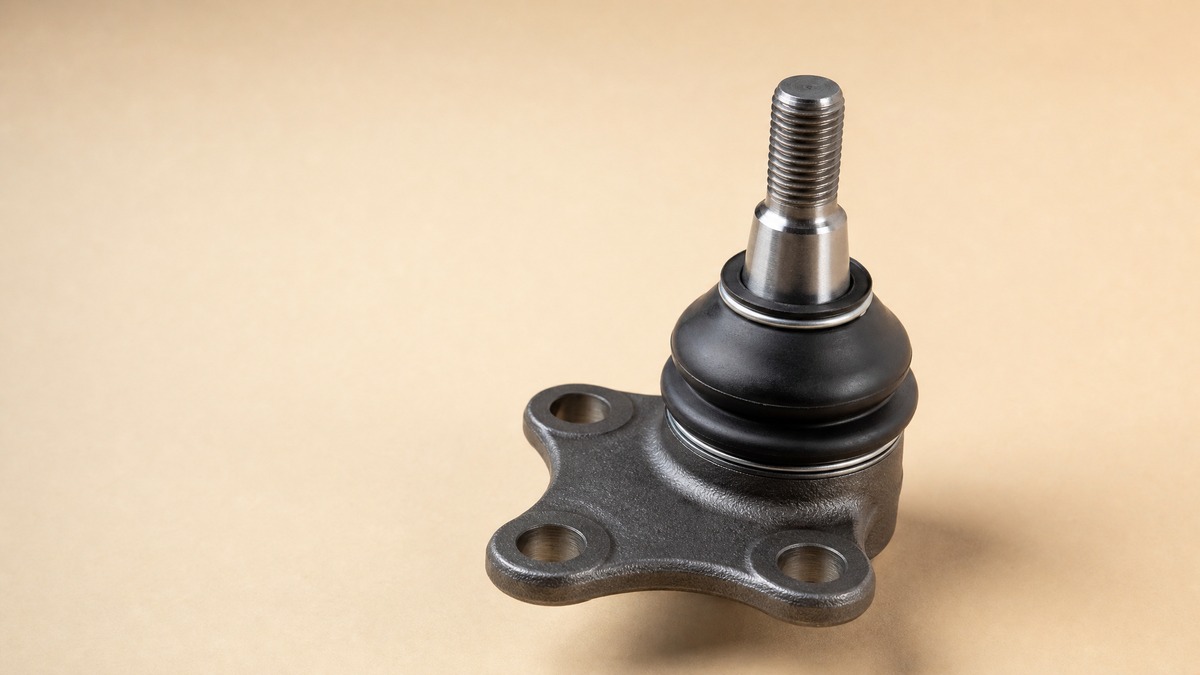
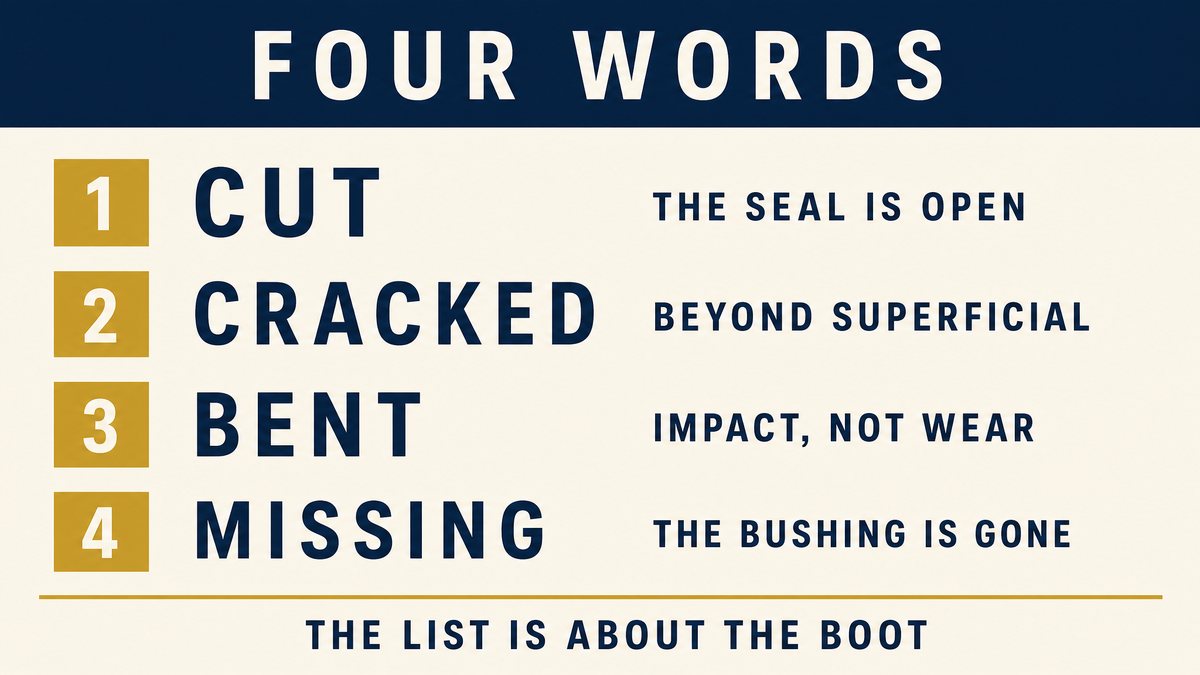
Twenty articles in this series have looked for the sentence that governs a part. For a ball joint the sentence exists, and it is not addressed to the factory. It is addressed to the person inspecting a used vehicle, and it tells them what a failed joint looks like: ball joint seals shall not be cut or cracked, and on heavier vehicles, ball joints and kingpins shall not be bent or damaged.
That is the whole of the federal text about the part. No performance figure, no marking duty, no bench test, no certification. What it has instead is a condition list — four failures named in a sentence, in the order an inspector would find them. For a supplier, that list is more useful than it looks, because it is the only official statement of what “failed” means for a ball joint, and it is written about the seal rather than the steel.
1. A List Written for the Inspector
The text is 49 CFR 570, and it is organised by vehicle weight. Subpart A covers vehicles up to 10,000 pounds GVWR and puts suspension at 570.8. Subpart B covers everything heavier and puts it at 570.61. The two read almost the same, and the heavier one is slightly more explicit.
570.61(a) is the fuller version. In its own words: ball joint seals shall not be cut or cracked, other than superficial surface cracks; ball joints and kingpins shall not be bent or damaged; stabilizer bars shall be connected; springs shall not be broken and coil springs shall not be extended by spacers; shock absorber mountings, shackles and U-bolts shall be securely attached; rubber bushings shall not be cracked, extruded out from or missing from suspension joints; radius rods shall not be missing or damaged.
Read the list for what it is. It is not a specification of the part; it is a specification of the inspection. Every clause describes something a person can see or feel with the vehicle on a lift, which is why the first four words are about a rubber boot and the last five are about whether a fastener is still there.
2. Why the First Clause Is About a Boot
“Seals shall not be cut or cracked” is the only clause that describes a failure of the part itself rather than of its installation, and it is the one worth building an order around.
The boot is not a cosmetic cover. It holds the grease in and keeps water and grit out; once it is cut, the joint loses its lubricant and gains an abrasive, and the wear that follows is the wear the inspector is trying to catch. A joint whose boot survives is a joint whose bearing surfaces were never exposed, which is why a sample cut open belongs in any factory audit before a price is agreed. A joint with a split boot can still feel tight on the day it is fitted and be loose a year later, and nothing in the inspection list will have been violated at the moment of sale.
The parenthetical, other than superficial surface cracks, is the acknowledgement that rubber ages. It draws a line between weathering and failure, and it is the line a buyer should ask a supplier to draw explicitly: which cracks are acceptable after a durability cycle, and which are not.
The rest of the list follows the same logic. “Bent or damaged” is an impact failure, not a wear one. “Rubber bushings shall not be cracked, extruded out from or missing” names the three ways a bushing leaves service: perished, squeezed out of its shell, or gone. None of it is measured. All of it is visible.
3. The Joint That Loads Another Test
There is a second appearance of the part, and it is easy to miss. The steering inspection in the same part of the code tells the examiner to elevate the front end of the vehicle to load the ball joints before checking steering linkage play, then to grasp the tyre and rock it.
That is an odd and useful compliment. The ball joint is not the thing being measured in that test; it is the condition under which another part is measured. The code assumes the joint is loaded whenever the suspension hangs free, which is only true if the joint is intact enough to carry the load. A part that appears in a rule as a precondition for testing something else is a part whose failure changes the meaning of every test around it.
4. The Chain the List Only Catches at the Start
A ball joint fails in a sequence, and the inspection clause is aimed at the first link rather than the last.
The boot is cut or cracked. Grease escapes, water and road salt enter. The bearing surfaces corrode. The stud and the socket stop moving against a film of lubricant and start moving against grit. Clearance grows. The joint develops play that shows up as a knock over bumps and a shimmy at speed. The stud wears into the housing. Eventually the joint can separate, and the wheel loses its location.
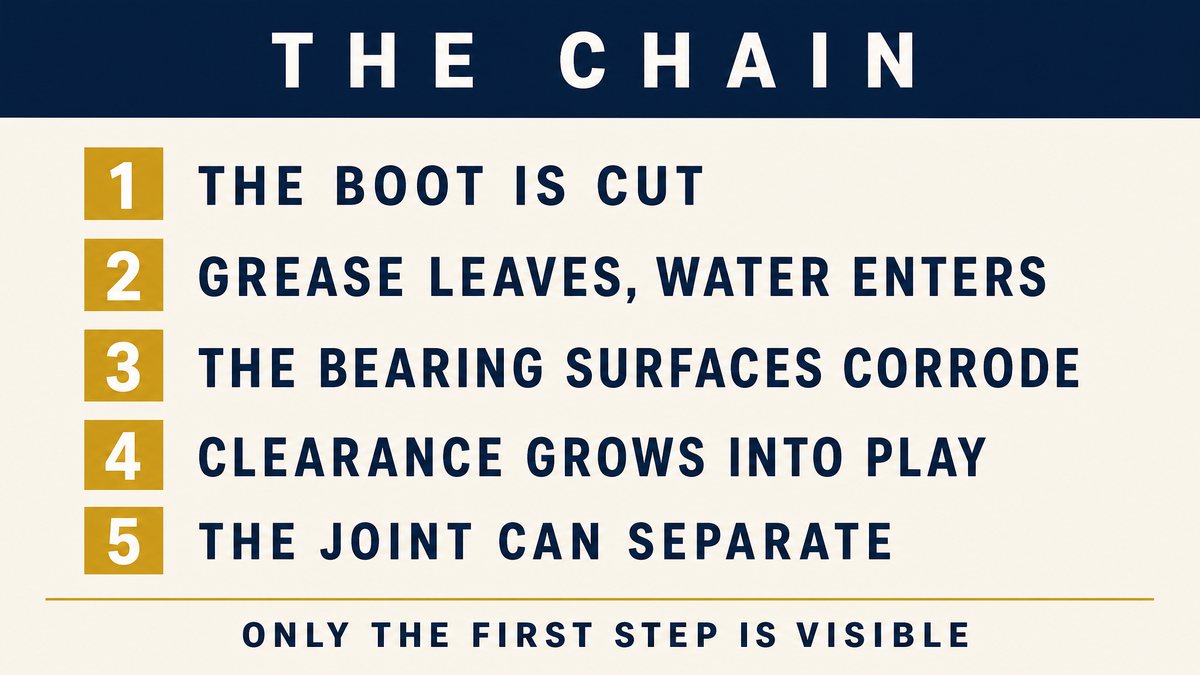
Everything after the first step is invisible from outside. That is why the federal text stops where it does: an inspector on a lift can see a split boot and can feel play in a loaded tyre, but cannot see the clearance inside the socket. The rule is written to catch the part at the only stage where the evidence is still on the surface.
For a buyer, the chain is the specification. A boot that survives salt spray, ozone and a few hundred thousand flex cycles is worth more than a stud that is five per cent harder, because the stud only wears once the boot has failed. This is the opposite of the intuition that a suspension part is about steel.
5. The Clause That Decides Whether It Stays Attached
The list is not only about the joint. It also requires that shock absorber mountings, shackles and U-bolts be securely attached, and the recall taxonomy keeps a heading for exactly this concern: SUSPENSION:CRITICAL FASTENERS, with 327 campaigns.
On a ball joint the fastening is the stud, the nut and the provision that stops the nut turning. A tapered stud seated in a steering knuckle holds by friction and by the nut's preload; a cotter pin or a self-locking nut is what keeps that preload when the joint moves. It is the cheapest item on the drawing and the one that turns a worn joint into a separated one.
That is worth a line in an order, because it is the only part of a ball joint whose quality can be checked by eye: the thread, the nut class, and whether the locking feature is a pin, a nylon insert or a deformed thread.
6. Where the Price Difference Comes From
Two joints with the same taper and thread differ in five places, and the first is the one the federal sentence is about.
The boot. Neoprene, TPE and a cheap rubber compound age differently under salt, ozone and heat. A boot that hardens cracks at the fold; a boot that swells loses its grip on the housing. Both end the same way.
The housing. A forged housing and a cast one can look identical from outside. Forging gives a finer grain and better fatigue behaviour, and fatigue is what a suspension part actually experiences: millions of small loads rather than one large one.
The bearing surface. A machined polymer seat, a sintered metal seat and a simple steel-on-steel socket are three different life expectancies. The grease is chosen to suit the seat, not the other way round.
The stud. Taper, thread and hardness. A taper that does not match the knuckle will not seat, and a stud that is too hard will not yield to the nut's preload — it will crack instead.
The locking feature. A cotter pin, a nylon-insert nut or a deformed-thread nut. Cheap to specify, cheap to omit, and the difference between a service item and a failure. These parts are dense, so the freight follows the scale rather than the carton; the CBM calculation is where the two are reconciled.
7. The Record Knows the Part and Not the Noise
Method unchanged. The federal recall file holds 245,845 records across 15,305 campaigns, no header row, every field scanned, twenty-five terms each with its own pattern. Controls: brake 28,639, air bag 16,162.
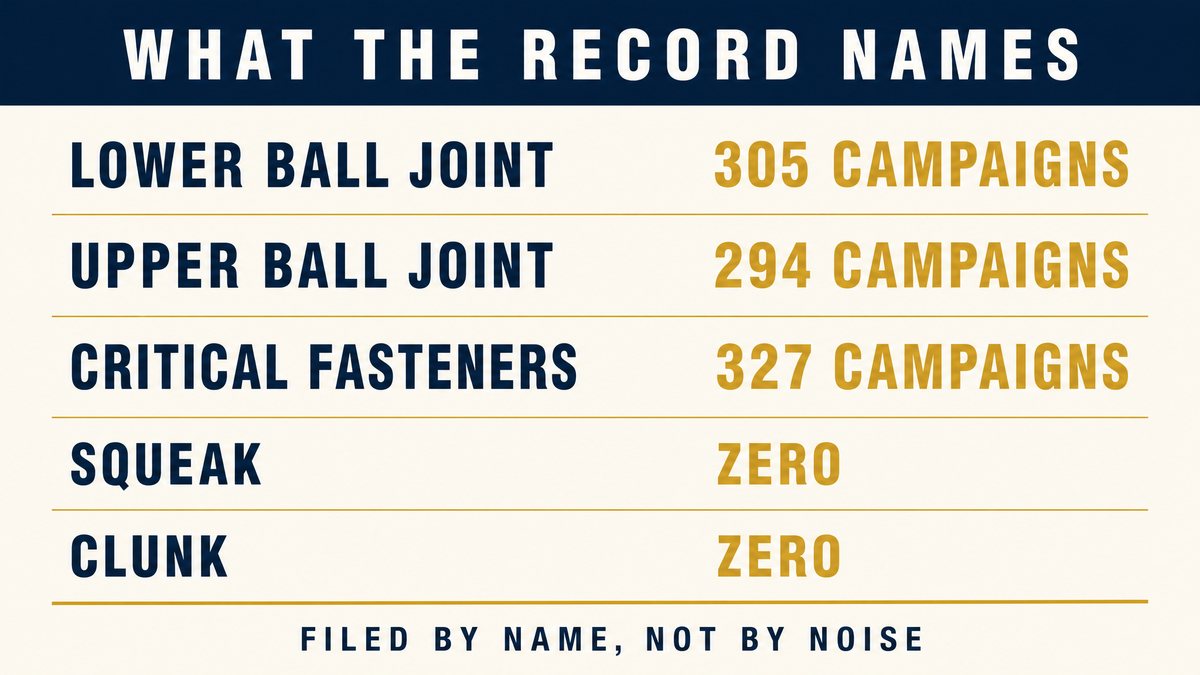
Two terms returned nothing, and they are the two sounds a driver uses to describe a failing joint: squeak and clunk. rattle appears in five records. The vocabulary of the complaint does not exist in the file.
The vocabulary of the part, on the other hand, is unusually precise. The component headings do not lump suspension together; they name the joint and say which one:
| Heading | Campaigns |
|---|---|
| SUSPENSION:FRONT:CONTROL ARM:LOWER BALL JOINT | 305 |
| SUSPENSION:FRONT:CONTROL ARM:UPPER BALL JOINT | 294 |
| SUSPENSION:FRONT:CONTROL ARM:LOWER ARM | 303 |
| SUSPENSION:FRONT:CONTROL ARM | 263 |
| SUSPENSION:CRITICAL FASTENERS | 327 |
| SUSPENSION:REAR | 888 |
The two ball joint headings alone carry 599 campaigns between them — a part with a federal sentence that only describes its condition, and a field record that files it by name, position and side.
The term counts tell the same story from below. joint 2,543 records, ball 1,723, boot only 80, grease 798, cotter 270. And the homonym is present as always: the largest campaign containing ball is a Honda automatic transmission recall covering 1,512,107 vehicles, which has nothing to do with a suspension joint.
Three parts, three different dealings with the record. The air cleaner has no heading at all; the coil has one with nine campaigns, crowded out by a switch that shares its name; the ball joint has two headings carrying nearly six hundred campaigns and cannot hear the noise that brings a car into the workshop. The common thread is that campaigns are opened by manufacturers, in the vocabulary of components, while the failure arrives in the vocabulary of the driver.
8. Seven Questions a Ball Joint Quote Should Answer
A quotation in this category is a photograph, a cross-reference and a price. The seven questions below turn it into a part with a boot specification, which is where the federal sentence points.
- Which joint, exactly? Upper or lower, left or right, and the part number it replaces. The recall taxonomy files them separately, and so should an order.
- What is the boot made of, and what cycle has it passed? Salt spray, ozone and flex. The clause is about the seal, so the seal needs a number.
- Where is the line for surface cracks? The rule allows superficial surface cracks and nothing more. A supplier should be able to say what superficial means on their part.
- Forged or cast housing, and what fatigue evidence? A suspension part sees millions of small loads; the process and the test matter more than the static strength.
- Which bearing seat and which grease? Polymer, sintered metal or steel on steel, with the grease chosen for it.
- Taper, thread and locking feature? The stud's taper must match the knuckle, and the nut has to stay put: cotter, nylon insert or deformed thread.
- Two prices. One as quoted, one with the six items below written into it.
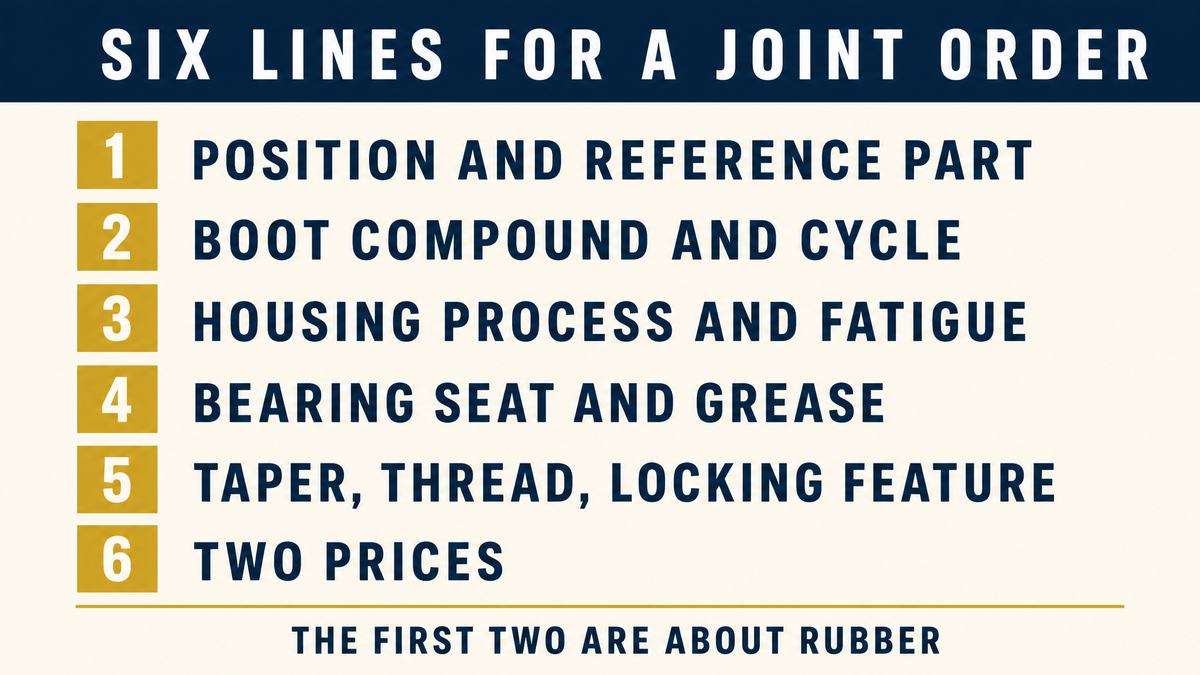
9. Six Lines to Put in the Order
There is no performance figure to quote from the regulation, so the order has to carry the specification. These six lines are the ones the inspection sentence implies.
- Position and reference: upper or lower, left or right, and the part number replaced.
- Boot compound and durability cycle, with the acceptance line for cracking.
- Housing process and the fatigue evidence behind it.
- Bearing seat and grease, named as a pair.
- Stud taper, thread and locking feature.
- Two prices: as quoted, and with the five items above written into it.
One item sits outside the six. A machined stud and an exposed bearing face are bare steel, and bare steel crosses an ocean in whatever conditions the container provides. Corrosion protection and the way the boot is supported in the carton belong in the order too, which is what the packaging checklist covers.
The inspection standard describes a ball joint in four words: cut, cracked, bent, missing. Three concern the boot and the housing, the fourth concerns absence. Nothing on the list mentions play, which is the symptom a driver notices first.
So the check catches a joint that has already failed visibly. Catching it earlier belongs to the specification, where boot compound and seat material decide how long the grease stays where it was put.
Play Measured, Then the Fastener Torque
We return axial and radial play in millimetres against the limit, plus the nut torque and the locking method that held it.
Record My Joint PlayFrequently Asked Questions
Is there a federal standard for ball joints?
Not a product standard. There is no performance figure, marking duty or certification for the part. What exists is a condition list in 49 CFR 570, at 570.8 for vehicles up to 10,000 pounds GVWR and 570.61 above that, which tells an inspector what a failed joint looks like.
What does that sentence actually require?
Ball joint seals shall not be cut or cracked, other than superficial surface cracks; ball joints and kingpins shall not be bent or damaged; rubber bushings shall not be cracked, extruded out from or missing; and mountings, shackles and U-bolts shall be securely attached.
Does the rule apply to new parts being sold?
No. Part 570 is a set of in-use inspection standards, applied to vehicles already on the road. It never tells a factory what to build. Its usefulness to a buyer is that it fixes the meaning of “failed” in official language.
Why does the steering inspection mention ball joints?
Because the procedure elevates the front end to load the joints before checking linkage play. The joint is not being measured in that test; it is the condition that makes the measurement meaningful.
What actually kills a ball joint?
The boot, almost always. Once it is cut, grease leaves and water enters, the bearing surfaces corrode, clearance grows, and the joint develops the play an inspector looks for. A joint that never loses its boot rarely loses its bearing surfaces.
Is a split boot a failure under the rule?
A cut or cracked seal is the first thing the clause names, with an exception for superficial surface cracks. A split that has opened the boot is past that exception, which is why the acceptance line is worth writing into an order rather than leaving to interpretation.
Questions & Comments
We read every one and reply within 24 hoursA ball joint is inspected in four words and tested for play nowhere at all. Send the part number, and we will write the boot and seat requirements the list leaves out.